Ahl al-Bayt and Islamic History
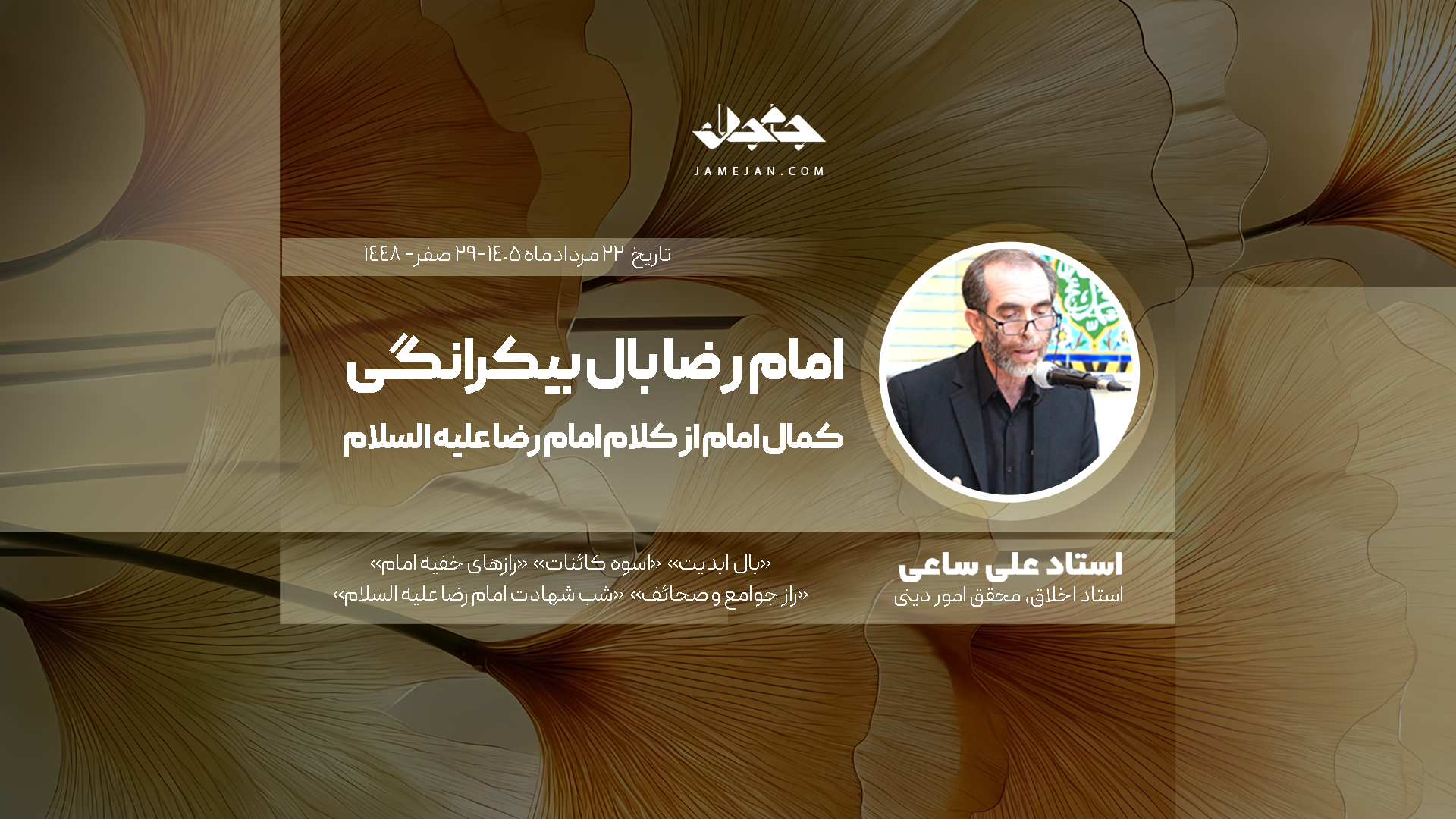
Imam Reza: Wings of Eternity
1405/05/22
116
notifications_active Weekly Meshkat-e Noor Session: Thursdays at 20:30 at Haj Reza Mosque
🌼🔆🌼Doubt-Laden, Yet Seemingly Certain🌼🔆🌼
🔹Weekly sessions on the commentary on Supplication 20 of al-Sahifa al-Sajjadiyya
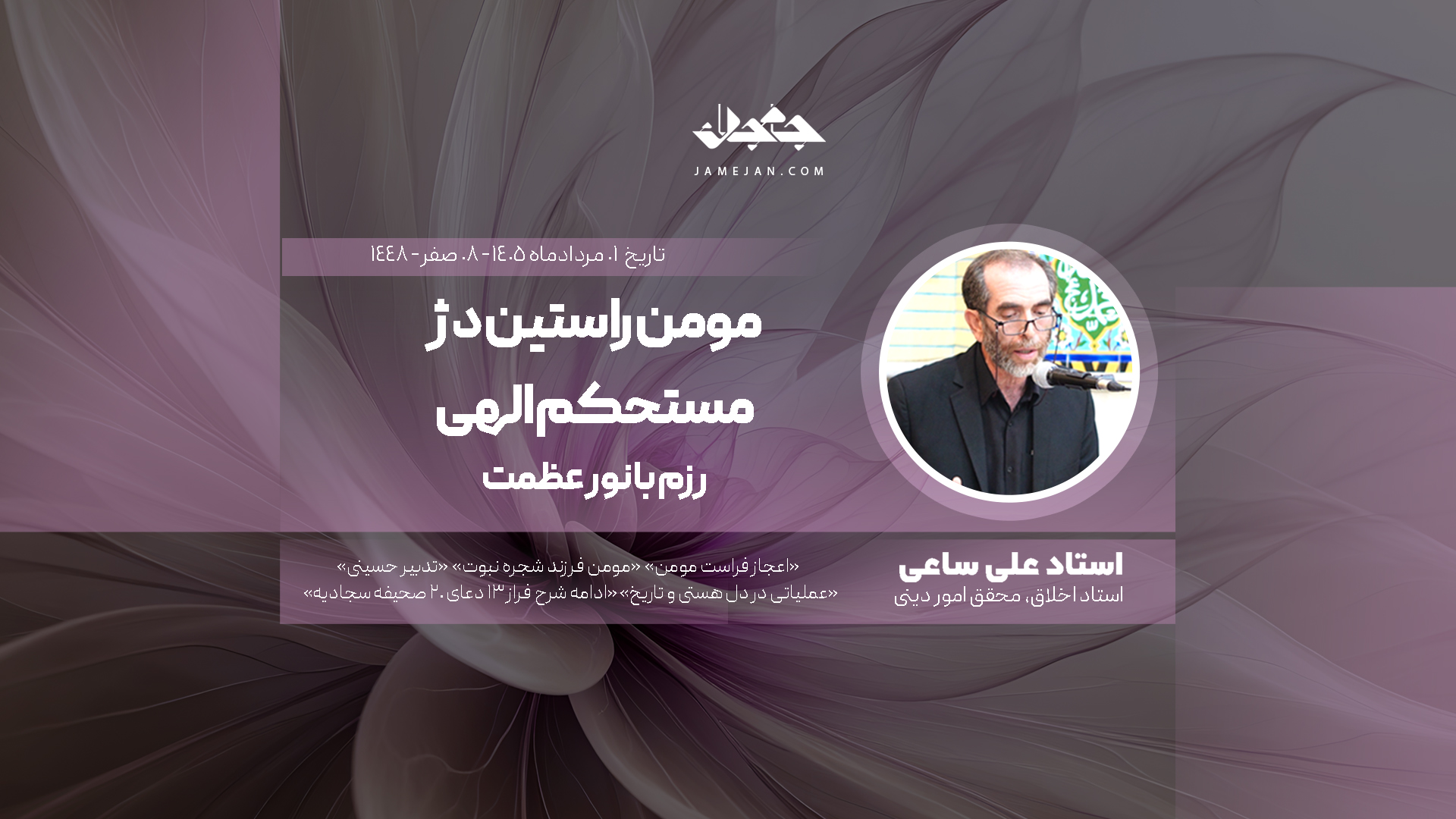
📅 Date: 1405/02/31 – 4 Dhu al-Hijja – Muharram 1447–1448
✨ Session: Meshkat-e Noor
🎤 Speaker: Master Ali Saei
📝 Some topics discussed in the session:
🌹🔅☘️ بِسْمِ اللَّهِ الرَّحْمنِ الرَّحيمِ ☘️🔅🌹
🔅🌹 “Baleful Suspicion,” “A Journey Along an Endless Road,” “The Secret of the Summit of Certainty,” “Continuing the Commentary on Supplication 20 of al-Sahifa al-Sajjadiyya,” “Passage 13,” and more… Summary with an addendum, 1405.02.31, Ali Saei (Abdullah Meshkat), 110.141 (903) 🌹🔅
🌷 🕋 اللَّهُمَّ اجْعَلْ مَا يُلْقِي الشَّيْطَانُ فِي رُوعِي 🕋 🌷
☘️☀️مِنَ التَّمَنِّي وَ التَّظَنِّي وَ الْحَسَدِ☀️☘️
🤲 ✨ذِكْراً لِعَظَمَتِكَ، وَ تَفَكُّراً فِي قُدْرَتِكَ، وَ تَدْبِيراً عَلَى عَدُوِّك✨ 🤲
❇️A systematic summary of “The Prohibition on Halting in Servitude”
📜 An analytical-mystical summary: Struggling against “ru‘” and moving from “suspicion” to “certainty”
1. Identifying the problem: the command center of one’s being (ru‘)
Definition of ru‘: Going beyond the heart (emotion) and the intellect (reasoning), ru‘ is the “command center of one’s being,” where the self, intellect, and spirit converge.
Satan’s aim: to seize the ru‘ and alter a person’s “cognitive software,” so that sin is recast as truth or as legitimate pleasure.
Satan’s weapons (a destructive triad):
Tamannī (false longing): manufacturing a sense of lack and trapping people in consumerism.
Tazannī (destructive suspicions): undermining trust and plunging a person into isolation and mistrust.
Envy: destroying gratitude and turning others’ success into a psychological threat.
Causal relationship: longings are the seeds of suspicions, and both lead to the birth of envy.
2. Conceptual analysis: from “longings” to “suspicions”
Baleful longings (amāniyyāt): desires shaped by the lower self, without regard for external reality. This is a form of “worshipping one’s own desires” and interpreting matters according to personal opinion, leading to the distortion of religion and the choice of unqualified leaders.
Tazannī (the product of longings):
Suspicions lacking any rational substance and presenting a distorted image of reality.
White suspicion: grounded in reason, ascending, and close to knowledge and certainty (above 50).
Black suspicion (baleful): grounded in what is irrational, descending, and close to doubt and ignorance, ultimately leading to polytheism (below 50).
The danger of blind imitation: following one’s own desires or other people without knowledge is a journey through darkness, paving the way for false mysticism and deviant sects.
3. Defensive measures: Imam Sajjad’s (AS) threefold strategy
To counter the seizure of the ru‘, the supplication “اللَّهُمَّ اجْعَلْ مَا يُلْقِي الشَّيْطَانُ…” offers three tools:
Reflection (self-knowledge): understanding oneself, recognizing the workings of the self, and contemplating divine power.
Remembrance (an energy shield): shifting one’s focus from creation to the Creator. Remembering God’s majesty renders desires powerless before His self-sufficiency, conjectures before His knowledge, and envy before His contentment.
Prudent action (putting insight into practice): turning negative energy into good deeds:
turning greed into generosity.
turning suspicion into a loving conversation.
turning envy into prayers for others.
4. An essential distinction: worldly desires versus longing for God
Worldly desires lead to self-abasement, evasion of responsibility, and a silenced conscience.
Longing for God (meeting God) is the pinnacle of spiritual ascent. The measure of sincerity in faith is “longing for death” in order to reach God. Those who yearn for Him see death as the gateway to meeting the Beloved.
5. The stages of the spiritual journey and the danger of stagnation
An endless road: servitude to God is a path without end. Stagnation, self-admiration, or halting one’s spiritual progress amounts to ruin.
The hierarchy of ruin and salvation (a well-known hadith):
“Those who act are doomed, except the worshippers; the worshippers are doomed, except the learned; the learned are doomed, except the truthful; the truthful are doomed, except the sincere; the sincere are doomed, except the God-fearing; the God-fearing are doomed, except those who possess certainty.”
An important point: even those who possess certainty remain in grave danger—the danger of being dazzled by their own spiritual light.
The measure of sincerity is God’s acceptance of one’s deeds and His approval, not their quantity or number. The minimum degree of sincerity is to remain free of sin in this world and be saved from the Fire in the next.
6. Understanding religion and aligning oneself with the truth
It is forbidden to make religion conform to the self: one must not shape religion to fit one’s desires; rather, one must bring one’s desires into alignment with religion.
Religion does not need updating; people do: God’s religion is constant and eternal, like pure water or light. Changing religion to suit the tastes of the day is a distortion of religion.
There must be no accommodation with those who stray: yielding to the self’s desires or to wrongdoers is enmity toward God. The truth must govern a corrupted taste, not be made to conform to it.
Purifying one’s taste: one must cleanse one’s spiritual sensibility of impurities in order to savor the truth.
7. The central message
The prayer in passage 13 is not a request for a miracle, but a plea for the “means of understanding” needed to turn satanic threats—desires and conjectures—into building materials for the palace of servitude to God. A successful person is a “wise gardener” who, through reflection, remembrance, and prudent action, rids the garden of the self and society of the blights of the ego, and ascends to the summit of certainty.
A researcher specializing in religious studies and divine unity, with a particular focus on the Qur’an and Hadith (the Two Weighty Things). His research has centered primarily on the Qur’an and Hadith; in recent years, he has also explored divine unity and critiques of philosophical viewpoints.
If any part of this response is unclear, please submit your question so it may be addressed by the teacher after review.
No inquiries have been recorded regarding this response yet. Your perspective or question will be the first.
Research and Thematic Guidance within the Intellectual Framework and Inquiries of the Meshkat-e Noor School
Follow the latest Meshkat-e Noor sessions