Ahl al-Bayt and Islamic History
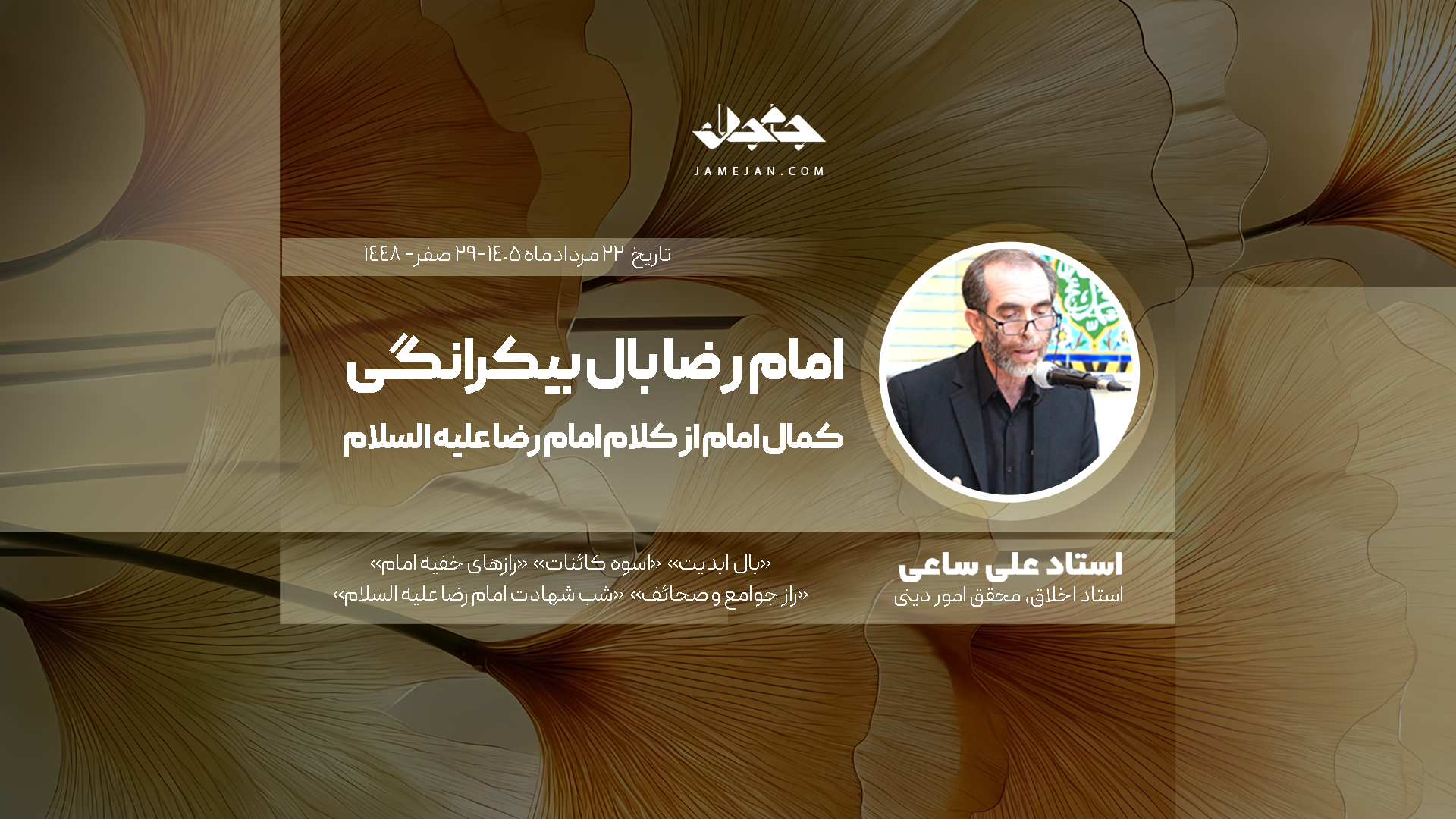
Imam Reza: Wings of Eternity
1405/05/22
114
notifications_active Weekly Meshkat-e Noor Session: Thursdays at 20:30 at Haj Reza Mosque
🌼🔆🌼The Danger of Interpreting Truths Through Wishful Thinking🌼🔆
🔹Weekly sessions on the commentary and interpretation of Supplication 20 of al-Sahifa al-Sajjadiyya
📅 Date: 1405/02/24 – 26 Dhu al-Qa‘da – Dhu al-Hijja 1447
✨ Session: Meshkat-e Noor
🎤 Speaker: Master Ali Saei
📝 Some of the topics discussed in the session:
🌹🔅☘️ بِسْمِ اللَّهِ الرَّحْمنِ الرَّحيمِ ☘️🔅🌹
🔅🌹 “The relationship between desire and the inner self”; “The danger of base desires”; “The secret of what is with God”; “Interpreting truths through wishful thinking”; “Continuing the commentary on Supplication 20, passage 13”; and more. Summary with addendum, 1405.02.24, Ali Saei (Abdullah Meshkat), 110.141 (903) 🌹🔅
✳️✅ ❇️ 🔆✨💫🔆 🌸☘️🌷🌹🌻 🌼 🕋 🌙 🤲 🌙 🕌 📖 🍃🪴
🌷🔆اللَّهُمَّ اجْعَلْ مَا يُلْقِي الشَّيْطَانُ فِي رُوعِي🔆🌷
☘️🔆مِنَ التَّمَنِّي وَ التَّظَنِّي وَ الْحَسَدِ🔆☘️
🤲 🔆ذِكْراً لِعَظَمَتِكَ، وَ تَفَكُّراً فِي قُدْرَتِكَ، وَ تَدْبِيراً عَلَى عَدُوِّك🔆 🤲
❇️Analytical and mystical summary: Diagnosing the dangers of “desires” and strategies for resisting the inner self
💫1. Defining the problem: What is the “inner self,” and where is the struggle fought?
The concept of ru‘: The ru‘ is the “command centre of one’s being,” transcending both the heart (emotion) and the intellect (reasoning). It is where the self, intellect and spirit meet, and where human identity and ultimate direction take shape.
Satan’s aim: To seize the ru‘ and alter a person’s “cognitive software,” so that sin is recast from an “error” as something “right” or a “legitimate pleasure.”
💫2. Dissecting Satan’s weapons: a destructive triangle
Satan uses three psychological and existential tools to weaken the will:
Tamanni (false desire): Creating an artificial sense of lack and trapping a person in a cycle of consumerism and the gratification of needless appetites.
Tazanni (destructive suspicions): Undermining trust in others and in God, and plunging a person into isolation and mistrust.
Envy: Destroying gratitude and turning other people’s success into a threat to one’s own peace of mind.
How they are linked: Desires sow the seeds of suspicion, and both give rise to envy.
💫3. Tracing the concepts: from “mani” to “amaniyyat”
Etymology: The word mani originally means “determining” and “desiring that something come to pass” (as in semen, which is emitted in response to desire).
Amaniyyat (blameworthy desires): When hopes and wishes are shaped by the lower self, without regard for external reality, they become amaniyyat.
The danger of interpreting through amaniyyat: When religious and social realities are judged through the filter of the lower self, the result is worship of one’s own desires. This is the worst kind of “interpretation based on personal opinion,” leading to the distortion of religion and the choice of unworthy leaders.
💫4. Defensive measures: a threefold strategy
To resist the seizure of the ru‘, Imam al-Sajjad (AS) offers the following practical model:
Reflection (understanding): Knowing oneself, understanding the workings of the lower self, and contemplating God’s power and wisdom.
Remembrance (a shield of spiritual strength): Shifting one’s focus from creation to the Creator. Remembering God’s greatness renders desires powerless before His self-sufficiency, suspicions before His knowledge, and envy before contentment with His decree.
Prudent action (practical response—redirecting impulses toward higher ends): Turning negative energy into good deeds:
Turning greed into generosity.
Turning suspicion into a warm and loving conversation.
Turning envy into prayer for others.
💫5. An essential distinction: worldly desires versus longing to meet God
Worldly desires lead to self-abasement, evasion of responsibility and the silencing of the conscience (the reproachful self).
Divine longing (meeting God): This is the summit of spiritual elevation. The sincerity of faith is measured by one’s “longing for death” in order to reach God, as indicated in verses 94 and 95 of Surah al-Baqara. Those who hold this longing see death as the gateway to meeting the Beloved, not the end of pleasure.
💫6. Final conclusion: remapping one’s inner world
The person who succeeds in this struggle is a “wise gardener,” not a passive soldier. By combining understanding (reflection), love and commitment (remembrance), and practical skill (prudent action), this gardener not only clears the garden of their own being of the diseases of the lower self and Satan, but also purifies their community and surroundings of envy, mistrust and consumerism, guiding them toward felicity and spiritual growth.
Central message: The supplication “اللَّهُمَّ اجْعَلْ مَا يُلْقِي الشَّيْطَانُ فِي رُوعِي…” is not a request for a miracle, but a request for the insight needed to turn Satanic threats—desires and suspicions—into materials for building the edifice of servitude to God.
A researcher specializing in religious studies and divine unity, with a particular focus on the Qur’an and Hadith (the Two Weighty Things). His research has centered primarily on the Qur’an and Hadith; in recent years, he has also explored divine unity and critiques of philosophical viewpoints.
If any part of this response is unclear, please submit your question so it may be addressed by the teacher after review.
No inquiries have been recorded regarding this response yet. Your perspective or question will be the first.
Research and Thematic Guidance within the Intellectual Framework and Inquiries of the Meshkat-e Noor School
Follow the latest Meshkat-e Noor sessions