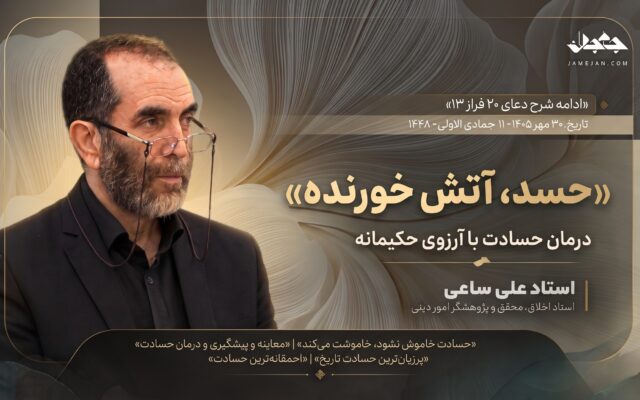
Written transcript of the lecture
The Meshkat-e Noor teachings series🌼🔆🌼“Managing the Greatest World: The Soul” “Humility Is the Soul’s Elevator”🌼🔆🌼
🌹🔅☘️ بِسْمِ اللَّهِ الرَّحْمنِ الرَّحيمِ ☘️🔅🌹
🔅🌹 “Humility Is the Soul’s Fertile Ground” “Human Beings Cannot Be Contained in the Frame of This World” “Intellectual Humility” “Knowledge Without a Head” “Commentary on Supplication 20 of al-Sahifa al-Sajjadiyya, Session 212,” and so on 1402.11.26 Ali Saei (Abdullah Meshkat) 110.141(903) 🌹🔅
🔅🌼 Managing Humility in the Greatest World 🌼🔅
🌷🔆وَ لَا تَرْفَعْنِي فِي النَّاسِ دَرَجَةً إِلَّا حَطَطْتَنِي عِنْدَ نَفْسِي مِثْلَهَا,
O God, do not raise my rank among people unless You lower me by the same measure in the sight of my soul.
🌹The inner governance of the soul is the governance of the greatest world of existence.
🌹Excellence in managing one’s individual conduct and social conduct is the foundation of success in the trials of both individual and communal life. We must understand that we are being tested in the life of society. Among the most sensitive of these trials is preserving social humility while safeguarding one’s dignity.
🌹Neither how we regard the people around us nor how they regard us should distract us from governing our soul, self, thoughts, intentions, and actions.
🌹See yourself and all human beings as creatures of God and signs of God. All possess worth and dignity as signs of Allah, جلّ ثناؤه.
🌹No regard other than God’s should occupy our attention. Even the regard of the inhabitants of the unseen realm should not distract us: before the noble recording angels stands God. Let us feel shame before Him, and place our hope in Him alone.
🌹Let us remember that we stand before God. His gaze is enough for us.
🌹We must not be slaves to other people’s attention.
🌻🔆al-‘Alaq: 14 أَ لَمْ يَعْلَمْ بِأَنَّ اللَّهَ يَرى
🔆Does he not know that God sees all his deeds?!
🌻🔆al-Infitar: 10 وَ إِنَّ عَلَيْكُمْ لَحافِظينَ
🔆Surely, guardians have been appointed over you…
🌻🔆al-Infitar: 11 كِراماً كاتِبينَ
🔆noble scribes,
🌻🔆al-Infitar: 12 يَعْلَمُونَ ما تَفْعَلُونَ
🔆who know what you do!
🔅🌼 Humility Is the Most Fertile Soil for Servitude 🌼🔅
🌹Sink your roots into the soil of humility and servitude; plant yourself in humility. The most fertile ground in which to cultivate the soul is humility.
🌹Humility is honour, greatness, splendour, and nobility.
🌹Strengthen the roots of servitude and cherish humility. Humility is a quiet benefit, costing nothing at all.
🌹Humility raises a person up, while pride breaks them down;
🌹The deeper a person’s roots sink into the soil of humility, the taller and more steadfast their stature in servitude becomes.
🌹The greater we think ourselves, the smaller we become. Humility joined with self-respect is not diminishment; it is elevation.
🔅🌼 The Human Being Cannot Be Contained in the Frame of This World 🌼🔅
🌹If a person looks at themselves in the mirror of this world, they will be diminished. We must not confine ourselves to this world, look only to our worldly selves, or seek honour and dignity within it; otherwise, we will lose ourselves in the world and fail to find true honour.
🌻🔆Ibrahim: 24 أَ لَمْ تَرَ كَيْفَ ضَرَبَ اللَّهُ مَثَلاً كَلِمَةً طَيِّبَةً كَشَجَرَةٍ طَيِّبَةٍ أَصْلُها ثابِتٌ وَ فَرْعُها فِي السَّماءِ
🔆Do you not see how God compares a “good word” to a good tree, whose roots are firm and whose branches reach into the sky?!
🌻🔆Ibrāhīm: 25 تُؤْتي أُكُلَها كُلَّ حينٍ بِإِذْنِ رَبِّها وَ يَضْرِبُ اللَّهُ الْأَمْثالَ لِلنَّاسِ لَعَلَّهُمْ يَتَذَكَّرُونَ
🔆It yields its fruit at every season by the permission of its Lord. God sets forth parables for people, so that they may take heed.
🌻🔆Ibrāhīm: 26 وَ مَثَلُ كَلِمَةٍ خَبيثَةٍ كَشَجَرَةٍ خَبيثَةٍ اجْتُثَّتْ مِنْ فَوْقِ الْأَرْضِ ما لَها مِنْ قَرارٍ
🔆And the “evil word” is like a foul tree, uprooted from the earth, with no stability or firm footing.
🌹The humble person is like a good tree, while the arrogant person is like a foul tree.
🔅🌼 Sakīna, the sweet fruit of humility 🌼🔅
🌹Those who are humble possess sakīna. Sakīna is a distinctive and tremendous force of faith, more refreshing and delightful than the fragrance of Paradise. It has a noble human form and gives rise to steadfastness and the serenity of servitude. It is a special power that destroys polytheism, doubt, the polytheist, and the unbeliever.
🌸🔆وَ أَشْعَرَ قُلُوبَهُمْ تَوَاضُعَ إِخْبَاتِ السَّكِينَةِ وَ فَتَحَ لَهُمْ أَبْوَاباً ذُلُلًا إِلَى تَمَاجِيدِه[1]
🔆Humility brought “the submissive sakīna” into their hearts and opened before them the gates of gentleness, leading them to His praise.
🔆He joined their hearts with humility, reverence, and serenity, and opened before them the easy gates of His praise.
🔆He made humility—which entails modesty, dignity, and composure—the hallmark of their hearts, and opened for them the easy gates of gratitude and glory.
🌹The Exalted Lord cherishes the hearts of His angels with “the humility of submissive sakīna.”
🌹At the highest stages, the humble attain a humility akin to the humility of sakīna, and become immersed in God’s love, glory, and majesty.
🌹“The humility of submissive sakīna” means humility at the height of power.
🌹Power and strength well up from within “the humility of submissive sakīna.”
🌹The humble have no need to show themselves; their very being is a display of power, steadfastness, and greatness.
🌻🔆Al-Fatḥ: 4 هُوَ الَّذي أَنْزَلَ السَّكينَةَ في قُلُوبِ الْمُؤْمِنينَ لِيَزْدادُوا إيماناً مَعَ إيمانِهِمْ وَ لِلَّهِ جُنُودُ السَّماواتِ وَ الْأَرْضِ وَ كانَ اللَّهُ عَليماً حَكيماً
🔆It is He who sent down sakīna into the hearts of the believers, so that they might grow in faith; the armies of the heavens and the earth belong to God, and God is All-Knowing, All-Wise.
🌷🔆عَنْ أَبِي جَعْفَرٍ ع قَالَ: سَأَلْتُهُ عَنْ قَوْلِ اللَّهِ عَزَّ وَ جَلَّ- أَنْزَلَ السَّكِينَةَ فِي قُلُوبِ الْمُؤْمِنِينَ قَالَ هُوَ الْإِيمَانُ قَالَ وَ سَأَلْتُهُ عَنْ قَوْلِ اللَّهِ عَزَّ وَ جَلَّ- وَ أَيَّدَهُمْ بِرُوحٍ مِنْهُ قَالَ هُوَ الْإِيمَانُ.[2]
🔆Imam al-Bāqir (peace be upon him)—ʿAlī ibn Abī Ḥamza relates: I asked Imam al-Bāqir (peace be upon him) about: أَنزَل السَّکِینَةَ فِی قُلوبِ المُؤْمِنِینَ He replied, “What is meant by it is faith.
🌷🔆 عَنِ ابْنِ فَضَّالٍ قَالَ: قَالَ أَبُو الْحَسَنِ ع يَعْنِي الرِّضَا لِلْحَسَنِ بْنِ الْجَهْمِ أَيُّ شَيْءٍ السَّكِينَةُ عِنْدَكُمْ فَقَالَ لَا أَدْرِي جُعِلْتُ فِدَاكَ وَ أَيُّ شَيْءٍ هِيَ قَالَ رِيحٌ تَخْرُجُ مِنَ الْجَنَّةِ طَيِّبَةٌ لَهَا صُورَةٌ كَصُورَةِ وَجْهِ الْإِنْسَانِ فَتَكُونُ مَعَ الْأَنْبِيَاءِ وَ هِيَ الَّتِي نَزَلَتْ عَلَى إِبْرَاهِيمَ ع حَيْثُ بَنَى الْكَعْبَةَ فَجَعَلَتْ تَأْخُذُ كَذَا وَ كَذَا فَبَنَى الْأَسَاسَ عَلَيْهَا.[3]
🔆Ḥasan ibn ʿAlī ibn Faḍḍāl relates from Imam al-Riḍā (peace be upon him) that he said: “Sakīna is a fragrant breeze that blows out from Paradise. It has a form like that of a human being, and accompanies the prophets (peace be upon them).
🌷🔆عَلِيُّ بْنُ أَسْبَاطٍ وَ سَأَلْتُهُ فَقُلْتُ جُعِلْتُ فِدَاكَ مَا السَّكِينَةُ قَالَ رِيحٌ مِنَ الْجَنَّةِ لَهَا وَجْهٌ كَوَجْهِ الْإِنْسَانِ أَطْيَبُ رَائِحَةً مِنَ الْمِسْكِ وَ هِيَ الَّتِي أَنْزَلَهَا اللَّهُ عَلَى رَسُولِ اللَّهِ ص بِحُنَيْنٍ فَهَزَمَ الْمُشْرِكِينَ.[4]
🔆Imam al-Rida (peace be upon him)—Ali ibn Asbat relates: I said to Imam al-Rida (peace be upon him), “May I be your ransom! What is sakīna?” The Imam (peace be upon him) replied: “A breeze from Paradise, with a face like a human face and a fragrance sweeter than musk. It was this that descended upon the Prophet (peace and blessings be upon him and his family) at Hunayn, whereupon the polytheists were defeated and scattered.”
🔅🌼 Self-admiration and intellectual arrogance are the most dangerous corruptions 🌼🔅
🌹True knowledge is joined with forbearance. Forbearance may, in a sense, be called intellectual humility.
🌹The highest station a person can attain comes through knowledge. But if knowledge is not joined with forbearance, it turns into ignorance. Forbearance may, in a sense, be called intellectual humility and the humility that comes with power: the wisest form of humility, particular to people of learning.
🌹Knowledge without forbearance is like a seed outside the soil. Knowledge flourishes in the soil of forbearance; it is grounded in the soil of modesty and humility. A tree outside the soil is doomed to fall. It withers.
🌹The secret to the strength and stability of society, politics, governance and the economy is a system founded on justice. Justice can be achieved only through knowledge joined with wisdom, forbearance and fiqh. Fiqh is the practical application of knowledge through reason, noble qualities and discernment; it may be described as penetrating understanding.
🌹The same is true of the human soul: justice must be firmly established within it, keeping a person from trembling, stumbling and falling.
🌸🔆وَ الْعَدْلُ مِنْهُ عَلَى أَرْبَعِ شُعَبٍ عَلَى غَوَامِضِ الْفَهْمِ وَ غَمْرِ الْعِلْمِ وَ زَهْرَةِ الْحُكْمِ وَ رَوْضَةِ الْحِلْمِ فَمَنْ فَهِمَ فَسَّرَ جُمَلَ الْعِلْمِ وَ مَنْ عَلِمَ عَرَضَهُ شَرَائِعُ الْحِكْمَةِ وَ مَنْ حَلُمَ لَمْ يُفَرِّطْ فِي أَمْرِهِ وَ عَاشَ بِهِ فِي النَّاسِ حَمِيدا[5]
🔆Imam Ali, peace be upon him: … Justice has four branches: the flashes and radiance of understanding; the mantle and abundance of knowledge; the blossoms of wisdom; and the garden of forbearance.
Whoever understands can interpret the statements of knowledge; whoever has knowledge is shown the laws of wisdom; and whoever is forbearing does not go to excess in his affairs, and through this lives praised among the people.
🔅🌼 Forbearance is the resting place and nursery of knowledge 🌼🔅
🌷🔆 وَ إِيمَاناً فِي يَقِينٍ وَ حِرْصاً عَلَى عِلْمٍ وَ فَهْماً فِي فِقْهٍ وَ عِلْماً فِي حِلْم[6]
🔆Certainty of faith means faith embraced by every limb and faculty, bearing ripe fruits. Faith rooted in certainty is a radiant lamp within the human soul.
🌹To be eager for knowledge—to have an intellectual thirst—is to love knowledge. When a person’s eagerness takes the reins, knowledge gathers speed.
🌹Fiqh-based understanding is understanding that springs from living, wakeful senses, equipped with the faculties of the Two Weighty Ones.
🌹Knowledge guided by forbearance is knowledge governed by reason, justice and noble qualities. Understanding makes a tumult in the soul of fiqh.
🌷🔆يَمْزُجُ الْحِلْمَ بِالْعِلْمِ وَ الْعِلْمَ بِالْعَقْل[7]
🔆The God-fearing join forbearance with knowledge, and knowledge with reason.
🌷🔆وَ لِكُلِّ شَيْءٍ مَطِيَّةً وَ مَطِيَّةُ الْعَقْلِ التَّوَاضُع[8]
🔆Everything has a mount, and the mount of reason is humility.
🌹Humility is a means of transport, a way to journey, travel, roam and explore. It is the means by which reason takes flight and swims, and sails the vast oceans of knowledge and wisdom.
🔅🌼 Without humility, knowledge is headless 🌼🔅
🌷🔆عَنْ أَبِي بَصِيرٍ قَالَ سَمِعْتُ أَبَا عَبْدِ اللَّهِ ع يَقُولُ كَانَ أَمِيرُ الْمُؤْمِنِينَ ع يَقُولُ يَا طَالِبَ الْعِلْمِ إِنَّ الْعِلْمَ ذُو فَضَائِلَ كَثِيرَةٍ فَرَأْسُهُ التَّوَاضُعُ وَ عَيْنُهُ الْبَرَاءَةُ مِنَ الْحَسَدِ وَ أُذُنُهُ الْفَهْمُ وَ لِسَانُهُ الصِّدْقُ وَ حِفْظُهُ الْفَحْصُ وَ قَلْبُهُ حُسْنُ النِّيَّةِ وَ عَقْلُهُ مَعْرِفَةُ الْأَشْيَاءِ وَ الْأُمُورِ وَ يَدُهُ الرَّحْمَةُ وَ رِجْلُهُ زِيَارَةُ الْعُلَمَاءِ وَ هِمَّتُهُ السَّلَامَةُ وَ حِكْمَتُهُ الْوَرَعُ وَ مُسْتَقَرُّهُ النَّجَاةُ وَ قَائِدُهُ الْعَافِيَةُ وَ مَرْكَبُهُ الْوَفَاءُ وَ سِلَاحُهُ لِينُ الْكَلِمَةِ وَ سَيْفُهُ الرِّضَا وَ قَوْسُهُ الْمُدَارَاةُ وَ جَيْشُهُ مُحَاوَرَةُ الْعُلَمَاءِ وَ مَالُهُ الْأَدَبُ وَ ذَخِيرَتُهُ اجْتِنَابُ الذُّنُوبِ وَ زَادُهُ الْمَعْرُوفُ وَ مَاؤُهُ الْمُوَادَعَةُ وَ دَلِيلُهُ الْهُدَى- وَ رَفِيقُهُ مَحَبَّةُ الْأَخْيَارِ.[9]
🔆O seeker of knowledge! Knowledge has many virtues: its head is humility, its eye is freedom from envy, its ear is understanding, its tongue is truthfulness, its memory is inquiry, its heart is good intention, its intellect is recognition of things and affairs, its hand is compassion, its feet are visiting scholars, its aspiration is well-being, its wisdom is God-wariness, its resting place is salvation, its guide is sound health, its mount is fidelity, its weapon is gentle speech, its sword is contentment, its bow is harmony, its army is discussion with scholars, its possessions are good manners, its reserves are avoidance of sins, its provisions are goodness, its gathering place is conversation and deliberation, its guide is right guidance, and its friend is love of the virtuous.
🌹Knowledge without humility is headless; a scholar with knowledge but no humility is headless, witless, mindless, blind, deaf, mute, and insensible.
🌹Knowledge without a head is bereft of every sense!
🌷🔆وَ قَالَ ع رُبَ عَالِمٍ قَدْ قَتَلَهُ جَهْلُهُ وَ عِلْمُهُ مَعَهُ [لَمْ يَنْفَعْهُ] لَا يَنْفَعُه[10]
🔆How often a scholar has been slain by his own ignorance, while his knowledge was with him and brought him no benefit.
🔅🌼 Scholarly humility is dignity and nobility. 🌼🔅
🌷🔆وَ مَلْبَسُهُمُ الِاقْتِصَادُ وَ مَشْيُهُمُ التَّوَاضُع[11]
🔆 (The God-wary) are modest in their dress and humble in their conduct.
🌹The way the God-wary walk and conduct themselves is adorned with humility and modesty.
🌷🔆وَ لَا حَسَبَ كَالتَّوَاضُعِ وَ لَا شَرَفَ كَالْعِلْمِ وَ لَا عِزَّ كَالْحِلْمِ[12]
🌷No lineage compares with humility, no distinction with knowledge, and no honor with forbearance.
🌼Ali Saei (Abdullah Meshkat), 110.141 (903)🌼
[1] Nahj al-Balāgha (ed. Ṣubḥī Ṣāliḥ), p. 129 al-Sharīf al-Raḍī, Muḥammad ibn Ḥusayn, Hijrat, Qom, first edition, 1414 AH.
[2] al-Kāfī (Islamic edition), vol. 2, p. 15 al-Kulaynī, Muḥammad ibn Yaʿqūb ibn Isḥāq, Dār al-Kutub al-Islāmiyya, Tehran, fourth edition, 1407 AH.
[3] al-Kāfī (Islamic edition), vol. 4, p. 206 al-Kulaynī, Muḥammad ibn Yaʿqūb ibn Isḥāq, Dār al-Kutub al-Islāmiyya, Tehran, fourth edition, 1407 AH.
[4] Tafsīr Nūr al-Thaqalayn, vol. 2, p. 201 al-ʿArūsī al-Ḥuwayzī, ʿAbd ʿAlī ibn Jumʿa, Ismāʿīliyān, Qom, fourth edition, 1415 AH.
[5] Kitāb Sulaym ibn Qays al-Hilālī, vol. 2, p. 615 al-Hilālī, Sulaym ibn Qays, al-Hādī, Iran, Qom, first edition, 1405 AH.
[6] Kitāb Sulaym ibn Qays al-Hilālī, vol. 2, p. 851 al-Hilālī, Sulaym ibn Qays, al-Hādī, Iran, Qom, first edition, 1405 AH.
[7] Kitāb Sulaym ibn Qays al-Hilālī, vol. 2, p. 851 al-Hilālī, Sulaym ibn Qays, al-Hādī, Iran, Qom, first edition, 1405 AH.
[8] Al-Kāfī (Islamic edition), vol. 1, p. 16 al-Kulaynī, Muḥammad ibn Yaʿqūb ibn Isḥāq, Dār al-Kutub al-Islāmiyya, Tehran, 4th ed., 1407 AH.
[9] Al-Kāfī (Islamic edition), vol. 1, p. 48 al-Kulaynī, Muḥammad ibn Yaʿqūb ibn Isḥāq, Dār al-Kutub al-Islāmiyya, Tehran, 4th ed., 1407 AH.
[10] Nahj al-Balāgha (Ṣubḥī Ṣāliḥ edition), p. 487 al-Sharīf al-Raḍī, Muḥammad ibn Ḥusayn, Hijrat, Qom, 1st ed., 1414 AH.
[11] Nahj al-Balāgha (Ṣubḥī Ṣāliḥ edition), p. 303 al-Sharīf al-Raḍī, Muḥammad ibn Ḥusayn, Hijrat, Qom, 1st ed., 1414 AH.
[12] Nahj al-Balāgha (Ṣubḥī Ṣāliḥ edition), p.488 al-Sharīf al-Raḍī, Muḥammad ibn Ḥusayn, Hijrat, Qom, 1st ed., 1414 AH.