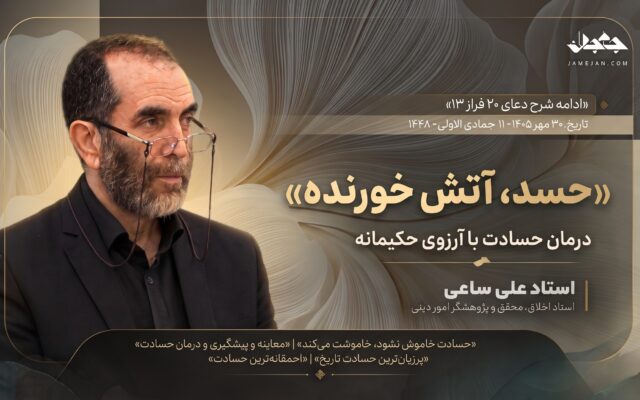
Written transcript of the lecture
The Meshkat-e Noor teachings series🌻🔆🔆🌻
🌼🔆🌼Zaynab, the Radiant Pearl of the Quran🌼🔆🌼
🌹🔅☘️ بِسْمِ اللَّهِ الرَّحْمنِ الرَّحيمِ ☘️🔅🌹
🔅🌹 “Zaynab, the Supreme Emblem of Fatimid Spirituality” “Secrets of Zaynab’s Gnosis” “Zaynab’s Brilliance within the Heart of the Quran” “The Zenith of Zaynab’s Servitude and Charisms” “The Birth Night of Zaynab al-Kubra (SA)” and others — A condensed version with addenda. 1405.07.23 Ali Sa’i (Abdullah Meshkat) 110.141(903) 🌹🔅
🌼O Ornament of the Heavens and the Earth, by the right of Zaynab🌼
✨🌟”The precious pearl of Prophethood and Wilayah shone forth and became the adornment and beauty of the House of Revelation”🌟✨
🌹”The birth of the likeness of Zahra, the beating heart of chastity and modesty, is blessed until the end of time”🌹
🌿 Prologue
“بِسْمِ اللَّهِ الرَّحْمنِ الرَّحيمِ”
To speak of Zaynab al-Kubra (SA) is to speak of a mirror in which Prophethood and Wilayah can be witnessed. Zaynab is the radiant pearl of the Quran—a gem that emerged from the shell of two vast seas—the sea of Prophethood and the sea of Wilayah—and became the adornment and beauty of the House of Revelation. She is the fruit of the union of Ali and Fatima, nurtured in the lap of divine revelation, and a disciple in the school of the five members of the Cloak (Ashab al-Kisa).
This treatise endeavors to place the gnosis of Zaynab within the horizon of Prophethood and Wilayah. It begins from the horizons of Zaynab’s gnosis, reaches her nurturing embrace in Prophethood and Wilayah, passes through her suckling upon the knowledge of Batul and the union of Ali and Fatima, and discovers the Zaynabic beauty within the stations of the Quran, specifically in Verse 35 of Surah al-Ahzab. It then contemplates the emblem of Fatimid spirituality, the purified human being, the one whose character is the Quran, and the secret of the explanation of all things within the mirror of her being.
Zaynab is a sign (ayah)—a sign of signs; a token that leads one to the Owner of the token. And this treatise is an endeavor in the semiotics of her existence.
🌼 O Ornament of the Heavens and the Earth, by the right of Zaynab 🌼
🌿 Preface
“The precious pearl of Prophethood and Wilayah shone forth and became the adornment and beauty of the House of Revelation.”
Why is it difficult to speak of Zaynab (SA)? Because she is “she who possesses knowledge without being taught” (*alimah ghayr mu’allamah*) and “she who possesses understanding without being instructed” (*fahimah ghayr mufahhamah*). Her knowledge is divinely bestowed (*ladunni*), and her understanding is a divine gift. She is an “unknown mystery” whose virtues have yet to be fully unlocked; for had they been unlocked, the divine trial would have lost its meaning, and all people would have rushed eagerly toward becoming Zaynabic.
This treatise neither claims to fully comprehend Zaynab nor pretends to encompass the boundless ocean of her being. Rather, it is a drop from the ocean of her virtues and a ray from the sun of her beauty. Our methodology in this treatise is systematic:
1. Enrichment Addendum: Adding supplementary explanations to enrich the content.
2. Deficiency-Compensation Point: Adding complementary points to address any shortcomings.
3. Ambiguity-Resolution Supplement: Adding illuminating explanations to clear up ambiguities.
4. Cohesion-Building: Creating bridges of connection between chapters.
5. Preservation of the Original Text: All quotes, traditions, poems, and verses have been preserved without alteration.
The central question of this treatise is: How did Zaynab (SA) become a sign of Prophethood and Wilayah? And the answer lies in the five members of the Cloak, in the milk of revelation from the bosom of Zahra, in the sustenance of charisms from the hand of Ali, and in her collective upbringing.
🌹 “The birth of the likeness of Zahra, the beating heart of chastity and modesty, is blessed until the end of time.” 🌹
🌿 Introduction
“Zaynab, the supreme emblem of Fatimid spirituality; secrets of Zaynab’s gnosis.”
Zaynab al-Kubra (SA) cannot be understood apart from the constellation of Prophethood and Wilayah. She is the connecting link between two immense seas: the sea of Prophethood (the Muhammadan mission) and the sea of Wilayah (the Alid Imamate). Consequently, any discussion concerning Zaynab inevitably requires an understanding of Prophet Muhammad (PBUH), Ali (AS), Fatima (SA), and the Hasanain (AS).
This treatise is organized into nineteen chapters:
Part One: The Sources (Chapters 1 to 4)
Chapter One: The Horizons of Zaynab’s Gnosis — As described by Allamah Sharaf al-Din.
Chapter Two: Prophethood and Wilayah, the Nurturing Embrace of Zaynab — As described by Allamah Naqdi.
Chapter Three: Zaynab, the Nursling of Batul’s Knowledge — The secret behind the naming by Fatima (SA).
Chapter Four: Ali and Fatima, the Milk and Elixir of Zaynab’s Soul — An exegesis of the verse “maraj al-bahrayn” (the two seas meeting).
Part Two: The Manifestations (Chapters 5 to 10)
Chapter Five: The Horizon of Zaynabic Beauty.
Chapter Six: Zaynabic Power — Subjugating the cosmos for the sake of servitude.
Chapter Seven: Listening through the Vital Organs of the Universe.
Chapter Eight: Ka’bat al-Mawahib (The Kaaba of Divine Gifts) — Duty commensurate with capacity.
Chapter Nine: The Breadth of the Zaynabic Tempest.
Chapter Ten: Modesty (*Hijab*), Enduring Worship.
Part Three: The Stations (Chapters 11 to 15)
Chapter Eleven: The Abode of Trials and the Tested World.
Chapter Twelve: Within the Stations of the Quran.
Chapter Thirteen: Zaynabic Beauty in the Heart of the Quran — Verse 35 of Surah al-Ahzab.
Chapter Fourteen: The Emblem of Fatimid Spirituality.
Chapter Fifteen: The Pure Human Being, Untouchable by Others.
Part Four: Perfection (Chapters 16 to 19)
Chapter Sixteen: Her Character is the Quran (*Khuluquha al-Quran*).
Chapter Seventeen: The Quranic Quotient of Every Individual.
Chapter Eighteen: The Quran or a Ray of the Quran.
Chapter Nineteen: The Secret of the Explanation of All Things (*Tibyan kulli shay’*).
The connecting bridge between the parts: We move from the sources to the manifestations, from the manifestations to the stations, and from the stations to perfection. Throughout all of this, we pursue a single truth: Zaynab (SA) is the radiant pearl of the Quran.
Our methodology: Each chapter begins with a connecting bridge, is enriched by an enrichment addendum, is refined by a deficiency-compensation point, and is clarified by an ambiguity-resolution supplement. In the end, a wise synthesis—comprising concise and condensed sentences—presents the essence of each chapter.
The central question of the treatise: How did Zaynab (SA) become a sign (*āyat*) of prophethood and guardianship (*wilāyah*)? The answer lies in her collective upbringing by the Five of the Cloak (Panj Tan), her nursing on the milk of revelation, her spiritual nourishment from the banquet of divine nobility (*karāmāt*), and her sincere, devoted servitude.
🌿 Concluding Word
Zaynab is a sign (*āyat*); and a sign is a token; and a token is a guide.
We began from the horizons of Zaynabian gnosis and saw that Zaynab (SA) is a sign of the Sign—a token that leads directly to the Possessor of the Sign. She was nurtured in the lap of prophethood and guardianship, drank the milk of revelation from the bosom of Zahra (SA), and partook of the food of nobility from the hands of Ali (AS). The Five of the Cloak were her educators, and she became the fruit of the confluence of the Two Oceans.
In the horizon of Zaynabian beauty, we witnessed that her true reality transcends ordinary comprehension, and understanding her requires a clarity of intellect akin to the purity of prophethood. In the spiritual capacity (*quwwah*) of Zaynab, we saw that conquering the universe is an act of stewardship over a trust, not ownership, and that Zaynab (SA) is the consummate exemplar of servitude. In the sanctuary of divine bounties (*Ka’bat al-Mawāhib*), we learned that divine obligation is commensurate with capacity, and since Zaynab possessed an immense capacity, she was entrusted with a supreme obligation. Across the tempest of the Zaynabian storm, we saw that her surging wave shakes the entire cosmos. And in the veil of steadfast worship, we observed that Zaynab’s modesty and chastity safeguard the modesty and purity of the entire universe.
In the Abode of Trial (*Dār al-Imtihān*), we saw that Zaynab (SA) volunteered for a unique and arduous test. Within the stations of the Quran, we observed that she was an embodiment of the living Quran. In her Zaynabian beauty at the heart of the Quran, we saw that Verse 35 of Surah al-Ahzab serves as her Quranic identity card—she was truly a submitting woman (*muslimah*), a believing woman (*mu’minah*), an obedient woman (*qānitah*), a truthful woman (*sādiqah*), a patient woman (*sābirah*), a humbly submissive woman (*khāshi’ah*), a charitable woman (*mutaṣaddiqah*), a fasting woman (*ṣā’imah*), a woman guarding her chastity (*hāfiẓat al-farj*), and a woman remembering God abundantly (*dhākirah Allāh*). In the mirror of her Fatimid heritage, we found that she is the full reflection of Fatima (SA). In the pure human being, we saw that she became attuned to the touch of the Quran—like refined gold—because she was pure. In her being the living embodiment of the Quran (*khuluquhā al-Qur’ān*), we saw that she was the practical commentary of the Quran. In the Quranic measure, we saw that she was one hundred percent Quranic. In the Quran or a Ray of the Quran, we saw that she is the living translation of the Quran. And in the mystery of her manifesting all things (*Tibyān kulli shay’*), we saw that she is the very manifestation of that clarity.
📋 Comprehensive Systematic Summary of the Treatise
“Prophethood and Guardianship” as the Supreme Horizon of Zaynabian Gnosis — Zaynab, the Luminous Pearl of the Quran
🔷 Treatise Identity Card
| Title | “Prophethood and Guardianship” as the Supreme Horizon of Zaynabian Gnosis / Zaynab, the Luminous Pearl of the Quran |
| Subject | Zaynabian gnosis in the horizon of prophethood and guardianship |
| Structure | 19 chapters in 4 sections + Prologue, Foreword, Introduction, Epilogue |
| Methodology | Enriching complements, compensatory insights, clarifying addenda, bridging connections, and wise embellishments |
🔷 Central Abstract (in one sentence)
Zaynab al-Kubra (SA) is the luminous pearl of the Quran; the fruit of the confluence of the two oceans of prophethood and guardianship, nurtured in the cradle of revelation, a pupil in the school of the Five of the Cloak, a mirror of the Muhammadian character (PBUH), and the practical translation of the Quran—and knowing her guides us toward prophethood and guardianship.
🔷 Section One: The Sources (Chapters 1–4)
Chapter 1: The Horizons of Zaynabian Gnosis
Source: The description given by Allamah Sayyid Abd al-Husayn Sharaf al-Din (may God have mercy on him).
Content: In her ethics, disposition, inner essence, and nobility—after her grandfather, father, and mother—Zaynab is peerless. She is a divine sign (*āyat*) in the acuteness of her intellect, the purity of her soul, the sensitivity of her feelings, the strength of her spirit, and the steadfastness of her heart.
Complement: Zaynab is a sign of the Sign—a token that leads to the Possessor of the Token. Her lofty station was attained through spiritual striving rather than being exclusively innate; thus, she serves as a universal exemplar for all human beings.
Essence: Zaynab is a sign; and a sign is a token; and a token is a guide.
Chapter 2: Prophethood and Guardianship, the Cradle of Zaynab’s Upbringing
Source: The description by Allamah Shaykh Ja’far Naqdi.
Content: Zaynab grew and flourished in the lap of prophethood and the household of the divine message. She drank the milk of revelation from the bosom of Zahra (SA) and partook of the food of nobility from the hands of Ali (AS). The Five of the Cloak were her educators.
Complement: Fatima (SA) herself was the vessel of revelation; hence, Zaynab was nurtured by revelation itself. The collective upbringing by the Five of the Cloak rendered Zaynab’s personality multidimensional.
Essence: Prophethood was her cradle; guardianship, her path; the Quran, her home.
Chapter 3: Zaynab, the Nursling of Batul’s Knowledge
Source: The narration from Imam al-Baqir (AS) regarding the naming of Fatima (SA).
Content: God named Fatima (SA) through revelation, stating, “I have distinguished you with knowledge and purified you from uncleanness.” These two attributes were decreed in the primordial realm of the covenant (*mīthāq*).
Complement: “Fatima” means one who is severed from ignorance and impurity—her very name is her existential blueprint. Zaynab inherits this lofty station as an inheritor, not as a partner.
Essence: Through knowing Fatima, one may attain an understanding of Zaynab’s personality.
Chapter 4: Ali and Fatima, the Milk and Nectar of Zaynab’s Spirit
Source: The narration of Ibn Abbas + the poetry of Bashnavi and Sarakhsi.
Content: The verse “He has let loose the two seas” is applied to Ali (AS) as the ocean of knowledge and Fatima (SA) as the ocean of prophethood. Hasan (AS) and Husayn (AS) are the pearl and coral of these two oceans, respectively, while the Prophet (PBUH) is the isthmus (*barzakh*) between them.
Complement: Zaynab (SA) is the hidden jewel of these two oceans. This application is a matter of esoteric hermeneutics (*ta’wīl*), not an exclusive literal exegesis (*tafsīr*).
Essence: Zaynab is the fruit of the confluence of the two oceans, and their hidden jewel.
🔷 Section Two: The Manifestations (Chapters 5–10)
Chapter 5: The Horizon of Zaynabian Beauty
Content: To perceive the beauty of a believer, male or female, requires a power as vast as eternity. Zaynab is “the one who understands without being taught”; to comprehend her requires an understanding as crystalline as prophecy.
Essence: The Zaynabian majesty flows from the very horizons of existence.
Chapter 6: The Zaynabian Power
Source: Surah Luqman, Verse 20.
Content: God made the world subservient to man so that it might be employed in Divine servitude. Zaynab (SA) is the perfect archetype of this servitude—she worshipped with the entirety of existence, not merely with her physical form.
Essence: Servitude is not the subjugation of the world; it is the employment of the world in the service of God.
Chapter 7: Listening with the Vital Organs of the Universe
Content: Zaynab’s silence is speech, her veil is a discourse, and the stillness of her outward form is a cry. This is the language of being, not the language of words. To hear it, one must be pure.
Essence: Her silence was speech, her veil a message, and her uprising an interpretation.
Chapter 8: The Kaaba of Endowments
Source: Surah Al-Baqarah, Verse 286.
Content: Responsibility is commensurate with capacity. Zaynab (SA) possessed a vast capacity, and thus was entrusted with a monumental responsibility. She is the Lady of Courage, not the Lady of Affliction; calamities were her trial, not her identity.
Essence: Affliction is not Zaynab’s identity; it is her trial.
Chapter 9: The Breadth of the Zaynabian Storm
Content: “A person is with whom they love”—Zaynab kept silent in the name of God and rose in the name of God. The Zaynabian storm is as wide as the entire universe; her physical body is but a part of this storm.
Essence: Whoever is with God, their storm is as vast as existence itself.
Chapter 10: Hijab, the Perpetual Worship
Content: The Zaynabian hijab is the insurance for the modesty and shame of the universe. Hijab is perpetual worship—not a mere habit. Zaynabian chastity is a fortified stronghold, not a confinement.
Essence: Hijab is perpetual worship; chastity is the insurance of existence.
🔷 Part Three: The Stations (Chapters 11–15)
Chapter 11: The Abode of Trial and the Tested World
Content: Woman is a unique world with a unique trial. A woman’s affections and emotions are the combustible materials of her test. Every individual’s examination table is as vast as the universe. Zaynab (SA) volunteered for a singular trial.
Essence: The trial is according to capacity; Zaynab’s was according to the capacity of love.
Chapter 12: In the Stations of the Quran
Source: Surah Al-Mutaffifin, Verse 26.
Content: Both men and women must transform themselves into a Quranic verse. The Quran is the mantle of the soul and the spirit of the pure. We must become a Quranic limb and be adorned with Divine beauty. Zaynab (SA) was a complete limb of the Quran.
Essence: Zaynab shines in the heart of the Quran; the Quran beats in the heart of Zaynab.
Chapter 13: Zaynabian Beauty in the Heart of the Quran
Source: Surah Al-Ahzab, Verse 35.
Content: This verse mentions ten attributes for men and women. Zaynab (SA) is the gathering point of all these attributes: Muslim, believer, obedient, truthful, patient, humble, charitable, fasting, guarding her chastity, and constantly remembering God. Verse 35 of Al-Ahzab is Zaynab’s Quranic identity card.
Essence: Every human is a portion of the Quran; Zaynab is the complete portion.
Chapter 14: The Fatimid Sign
Content: Zaynab (SA) is the manifestation of all Fatimid attributes. She is the perfect mirror of Fatima (SA). This is a chain of light: Prophecy ← Fatima ← Zaynab. No era is ever devoid of the Muhammadan Reality.
Essence: Zaynab is the greatest sign of Fatima; her fragrance, her translation, and her objective interpretation.
Chapter 15: The Pure Human, Untouchable by Strangers
Source: Surah Al-Waqi’ah, Verses 77–80.
Content: The Quran is not touched except by the pure. Likewise, the pure human is not touched except by the pure. Zaynab (SA) was pure, so she touched the Quran. She became a Sign of the Quran.
Essence: The pure touch the Quran; the impure merely turn the pages.
🔷 Part Four: Perfection (Chapters 16–19)
Chapter 16: Her Character was the Quran
Source: Surah Al-Ahzab, Verse 21 + the narration «خُلُقُهُ الْقُرْآنَ».
Content: The character of the Prophet (PBUH) was the Quran; all his actions and words were derived from and consistent with the Quran. Zaynab (SA) also had the Quran as her character. She is the practical interpretation of the Quran.
Essence: The Muhammadan character is the Quran personified; Zaynab is its translation.
Chapter 17: The Quranic Percentage of Each Individual
Content: Every human has a share of the Quran. This share indicates their existential measure. Zaynab (SA) was one hundred percent Quranic.
Essence: Let us look into the Quran and find ourselves.
Chapter 18: The Quran or a Ray of the Quran
Content: Zaynab (SA) is the practical translation of the Quran. Just as a translation conveys the meaning of the original text, Zaynab (SA) conveyed the meaning of the Quran. She was the living language of the Quran.
Essence: Zaynab is a Zaynabian translation of the Quran.
Chapter 19: The Secret of “An Exposition of All Things”
Content: The “enumeration of all things” in the Manifest Imam and the “exposition of all things” means the knowledge of every thing and the reality-revealer of every thing. Zaynab (SA) is the mirror of this station—a manifestation of the exposition, not a partner to it.
Essence: Zaynab is the manifestation of the exposition, not the exposition itself.
🔷 Conclusion: The Final Essence
| Pivot | Essence |
| Zaynab’s Identity | The radiant pearl of the Quran; the Sign of Signs |
| Source | Prophecy and Wilayah; the Five Infallibles of the Cloak |
| The Path | Sincere servitude; attainable, not exclusive |
| Manifestation | Beauty, inner strength, tempest, veil, chastity |
| Abode | The Quran; Verse 35 of Surah al-Ahzab; the Symbol of Fatimiyyah |
| Perfection | “His character was the Quran”; one hundred percent Quranic; the practical translation of the Quran |
| Mystery | “An explanation of all things”; the manifest Imam (Imam Mubin); the embodiment of explanation |
| Message | To know Zaynab is to know God; to know God is to serve Him; and true servitude is Zaynab |
🔷 The Final Wise Synthesis (Short Sentences)
Zaynab is the sign of all signs; a token that leads one to the One who sent it.
Prophecy was her cradle; Guardianship (Wilayah) was her path; the Quran was her home.
Her silence was speech, her veil was a message, her uprising was exegesis.
Whoever is with God possesses a tempest as vast as existence itself.
Servitude is not about conquering the world; it is about enlisting the world in the service of God.
Calamity is not Zaynab’s identity; it is her trial.
Courage turns affliction into a divine grace.
The Muhammadan character is the Quran incarnate; Zaynab is its living translation.
The pure touch the Quran; the impure merely turn its pages.
Every human being has a share of the Quran; Zaynab possesses its complete share.
Modesty is enduring worship; chastity is the insurance of existence.
Trials are commensurate with capacity; Zaynab was tested to the measure of love.
Fire became a garden of peace for Zaynab; love is eternal through her.
Zaynab glows in the heart of the Quran; the Quran pulsates in the heart of Zaynab.
Peace be upon her; for God’s own peace is upon her.
“Zaynab is Zaynab,” and that alone is “enough.”
✳️Original Text
❇️The Horizons of Zaynabian Gnosis
☘️ (1) The words of the mujahid Allamah Sayyid Abd al-Husayn Sharaf al-Din (may God have mercy on him):
فَلَمْ يُرَ أَكْرَمَ مِنْهَا أَخْلَاقًا، وَلَا أَنْبَلَ فِطْرَةً، وَلَا أَطْيَبَ عُنْصُرًا، وَلَا أَخْلَصَ جَوْهَرًا، إِلَّا أَنْ يَكُونَ جَدُّهَا وَاللَّذَانِ أَوْلَدَاهَا.
وَكَانَتْ مِمَّنْ لَا يَسْتَفِزُّهَا نَزَقٌ، وَلَا يَسْتَخِفُّهَا غَضَبٌ، وَلَا يُرَوِّعُ حِلْمَهَا رَائِعٌ؛
آيَةً مِنْ آيَاتِ اللَّهِ فِي ذَكَاءِ الْفَهْمِ، وَصَفَاءِ النَّفْسِ، وَلَطَافَةِ الْحِسِّ، وَقُوَّةِ الْجَنَانِ، وَثَبَاتِ الْفُؤَادِ، فِي أَرْوَعِ صُورَةٍ مِنْ صُوَرِ الشَّجَاعَةِ وَالْإِبَاءِ وَالتَّرَفُّعِ. [1]
🔶”Thus, [regarding Zaynab,] no one was ever seen more noble in character, more noble in innate disposition, more pure in lineage, or more sincere in inner essence—except her grandfather and the two [her parents] who brought her into the world.
She was among those whom neither foolish recklessness could provoke, nor anger could make light-headed, nor could any terrifying event shake her forbearance;
She was a sign among the signs of God in keenness of understanding, purity of soul, subtlety of perception, strength of spirit, and steadfastness of heart—displayed in the most magnificent picture of courage, noble pride, and exalted dignity.”
❇️Prophethood and Guardianship as the Cradle of Zaynab’s Upbringing
☘️ (2) The words of Allamah Shaykh Jafar Naqdi:
وَلَقَدْ كَانَتْ نَشْأَةُ هَذِهِ الطَّاهِرَةِ الْكَرِيمَةِ وَتَرْبِيَةُ تِلْكَ الدُّرَّةِ الثَّمِينَةِ زَيْنَبَ عَلَيْهَا السَّلَامُ فِي حِضْنِ النُّبُوَّةِ، وَدَرَجَتْ فِي بَيْتِ الرِّسَالَةِ، رَضَعَتْ لِبَانَ الْوَحْيِ مِنْ ثَدْيِ الزَّهْرَاءِ الْبَتُولِ، وَغُذِّيَتْ بِغِذَاءِ الْكَرَامَةِ مِنْ كَفِّ ابْنِ عَمِّ الرَّسُولِ، فَنَشَأَتْ نَشْأَةً قُدْسِيَّةً، وَرُبِّيَتْ تَرْبِيَةً رُوحَانِيَّةً، مُتَجَلْبِبَةً جَلَابِيبَ الْجَلَالِ وَالْعَظَمَةِ، مُرْتَدِيَةً رِدَاءَ الْعَفَافِ وَالْحِشْمَةِ، فَالْخَمْسَةُ أَصْحَابُ الْعَبَاءِ عَلَيْهِمُ السَّلَامُ هُمُ الَّذِينَ قَامُوا بِتَرْبِيَتِهَا وَتَثْقِيفِهَا وَتَهْذِيبِهَا، وَكَفَاكَ بِهِمْ مُؤَدِّبِينَ مُعَلِّمِينَ. [2]
🔶”Verily, the emergence of this pure and noble lady, and the upbringing of that precious pearl—Zaynab (AS)—took place in the lap of prophethood, and she grew up in the household of messengership. She drank the milk of divine revelation from the breast of al-Zahra al-Batul (SA), and was nourished with the sustenance of nobility from the hand of the cousin of the Messenger (AS).
Thus, she grew in a sacred manner and was reared with a spiritual upbringing, draping herself in the garments of majesty and grandeur, and donning the mantle of chastity and modesty. Indeed, the Five People of the Cloak (AS) were the ones who undertook her upbringing, cultivation, and refinement—and they are more than sufficient as educators and teachers.”
❇️Zaynab, the Nursling of Batul’s Science
By knowing Fatimah, one can attain a deeper understanding of Zaynab’s personality!
Zaynab al-Kubra (SA) who is the very likeness of Fatimah al-Zahra (SA)!
💫🔆عَنْ أَبِي جَعْفَرٍ ع قَالَ: لَمَّا وُلِدَتْ فَاطِمَةُ ع أَوْحَى اللَّهُ إِلَى مَلَكٍ فَأَنْطَقَ بِهِ لِسَانَ مُحَمَّدٍ ص فَسَمَّاهَا فَاطِمَةَ ثُمَّ قَالَ إِنِّي فَطَمْتُكِ بِالْعِلْمِ وَ فَطَمْتُكِ مِنَ الطَّمْثِ ثُمَّ قَالَ أَبُو جَعْفَرٍ ع وَ اللَّهِ لَقَدْ فَطَمَهَا اللَّهُ بِالْعِلْمِ وَ عَنِ الطَّمْثِ فِي الْمِيثَاقِ.[3]
💫 Translation of the Hadith:
It is narrated from Imam al-Baqir (AS) that he said:
«چون فاطمه (س) متولد شد، خداوند به فرشتهای وحی کرد و به وسیله او، زبانِ محمد (ص) را به سخن آورد؛ پس او را “فاطمه” نامید. سپس فرمود: “من تو را با دانش، از [وابستگی به] غیر، جدا کردم و از حیض، پاک و جدا ساختم.”»
سپس امام باقر (ع) فرمود:
«به خدا سوگند، خداوند در [عالم] میثاق، او را با دانش و از حیض، جدا ساخته بود.»
Illumination:
🔹 1. The Naming of Fatimah (SA) by Divine Revelation
God revealed to an angel and made the tongue of the Prophet (PBUH) speak.
The Prophet (PBUH), by God’s command, named her “Fatimah.”
This indicates the exceptional and divine station of Lady Fatimah (SA).
🔹 2. The Meaning of “Fatimah”
“Faṭama” means to detach, separate, and sever.
“Faṭamtuki bi’l-‘ilm” – I have detached you with knowledge – meaning the essence of knowledge is her separation from ignorance and lack of awareness.
“Faṭamtuki mina’ṭ-ṭamth” – I have detached you from *ṭamth* – meaning purified and absolved you from the blood of *ṭamth*.
🔹 3. Two Unique Characteristics
| Characteristic | Meaning |
| Separation from knowledge | Endowed with complete knowledge and purity from ignorance. |
| Separation from ṭamth | Purity in every respect – a special sign for Lady Fatimah (SA). |
🔹 4. “In the Realm of the Covenant”
Imam al-Baqir (AS) emphasizes that these two characteristics were ordained for Fatimah (SA) even in the realm of the Covenant (the world of *Dharr*).
This means her purity and knowledge were destined for her from pre-eternity.
🔹 5. The Message of the Narration
Lady Fatimah’s name was chosen by God through revelation.
She is endowed with complete knowledge and is pure from ignorance.
She is absolved and sanctified from every impurity.
These attributes were decreed for her from the realm of the Covenant.
This narration emphasizes the supreme magnitude of Lady Fatimah’s (SA) station and her unique, divine status.
❇️ Ali and Fatimah are the Milk and Elixir of Zaynab’s Soul
Knowing the Master, the Commander of the Faithful (AS), reveals other horizons of the station of Zaynab al-Kubra (SA)!
💫🔆 أَبُو مُعَاوِيَةَ الضَّرِيرُ عَنِ الْأَعْمَشِ عَنْ أَبِي صَالِحٍ عَنِ ابْنِ عَبَّاسٍ … فَقَالَ النَّبِيُّ ص اقْنَعِي يَا فَاطِمَةُ بِزَوْجِكِ فَوَ اللَّهِ إِنَّهُ سَيِّدٌ فِي الدُّنْيَا سَيِّدٌ فِي الْآخِرَةِ وَ أَصْلَحَ بَيْنَهُمَا فَأَنْزَلَ اللَّهُ مَرَجَ الْبَحْرَيْنِ يَلْتَقِيانِ يَقُولُ أَنَا اللَّهُ أَرْسَلْتُ الْبَحْرَيْنِ عَلِيَّ بْنَ أَبِي طَالِبٍ بَحْرَ الْعِلْمِ وَ فَاطِمَةَ بَحْرَ النُّبُوَّةِ يَلْتَقِيَانِ يَتَّصِلَانِ … فَبِأَيِّ آلاءِ رَبِّكُما يا مَعْشَرَ الْجِنِّ وَ الْإِنْسِ تُكَذِّبانِ بِوَلَايَةِ أَمِيرِ الْمُؤْمِنِينَ وَ حُبِّ فَاطِمَةَ الزَّهْرَاءِ فَاللُّؤْلُؤُ الْحَسَنُ وَ الْمَرْجَانُ الْحُسَيْنُ لِأَنَّ اللُّؤْلُؤَ الْكِبَارَ وَ الْمَرْجَانَ الصِّغَارَ وَ لَا غَرْوَ أَنْ يَكُونَا بَحْرَيْنِ لِسَعَةِ فَضْلِهِمَا وَ كَثْرَةِ خَيْرِهِمَا فَإِنَّ الْبَحْرَ سُمِّيَ بَحْراً لِسَعَتِهِ …
Al-Bashnawi
| ما عبد شمس و لا تيم و ناصبها | من جندها الغيث و الطير الأبابيل | |
| في البرزخ الشأن لما أنزلت مرج | البحرين إذ يخرج المرجان و اللؤلؤ | |
Muhammad ibn Mansur al-Sarkhasi
| و أراد رب العرش أن يلقى بها | شجر كريم العرق و الأغصان | |
| فقضى فزوجها عليا إنه | كان الكفي لها بلا نقصان | |
| و قضى الإله من أن تولد منهما | ولدان كالقمرين يلتقيان | |
| سبطا محمد الرسول و فلذتا | كبد البتول كذاك يعتلقان | |
| فبنى الإمامة و الخلافة و الهدى | بعد الرسالة ذانك الولدان[4] | |
💫 Abu Mu’awiyah al-Darir narrates from al-A’mash, from Abu Salih, from Ibn ‘Abbas that:
“… Then the Prophet (PBUH) said: ‘O Fatimah! Be content with your husband; by God, indeed he is a master in this world and a master in the Hereafter.'”
And he brought reconciliation between the two. Thereupon God revealed [this verse]:
«مَرَجَ الْبَحْرَيْنِ یَلْتَقِیانِ» (Ar-Rahman: 19) – “He released the two seas, meeting [side by side].”
God says:
«I am God, who sent forth the two seas: ‘Ali ibn Abi Talib, the sea of knowledge; and Fatima, the sea of prophethood. The two meet and join one another. I am God, who established the bond between them.» …
«فَبِأَیِّ آلاءِ رَبِّکُما تُکَذِّبانِ» (الرحمن: ۲۱) – «Then which of your Lord’s bounties will you both deny?» – through the *Wilayah* of the Commander of the Faithful and the love of Fatima al-Zahra (SA).
«یَخْرُجُ مِنْهُمَا اللُّؤْلُؤُ وَ الْمَرْجَانُ» (الرحمن: ۲۲) – «Out of them come pearls and coral» – The pearl is Hasan (AS), and the coral is Husayn (AS); for the pearl is large and the coral is small.
And it is no wonder that the two are seas – by virtue of the vastness of their excellence and the abundance of their grace; for a sea is called a sea because of its vastness. ….”»
💫 Poetry:
🔸 Al-Bishnawi:
«ما عبدِ شمس و تیم و ناصبها * من جندها الغیث و الطیر الأبابیل»
«في البرزخ الشأن لما أنزلت مرج * البحرین إذ یخرج المرجان و اللؤلؤ»
Translation:
«[We] are not worshippers of Shams, Taym, and their enemies * from whose host are the rain and the *Ababil* birds.»
«In the *Barzakh*, the status is exalted when the verse “Maraj al-Bahrayn” was revealed * when the coral and the pearl emerge.»
🔸 Muhammad ibn Mansur al-Sarakhsi:
«و أراد رب العرش أن يلقى بها * شجر كريم العرق و الأغصان»
«فقضى فزوجها عليا إنه * كان الكفي لها بلا نقصان»
«و قضى الإله من أن تولد منهما * ولدان كالقمرين يلتقيان»
«سبطا محمد الرسول و فلذتا * كبد البتول كذاك يعتلقان»
«فبنى الإمامة و الخلافة و الهدى * بعد الرسالة ذانك الولدان»
Translation:
«And the Lord of the Throne willed to unite with her * a tree noble in root and branches.»
«Thus He decreed, and wedded her to Ali, for indeed * he was her peer and match without any flaw.»
«And God decreed that from the two should be born * two sons like two converging moons.»
«The two grandsons of Muhammad the Messenger (PBUH) and the two pieces of the liver * of the Batul (SA) – thus they cling to one another.»
«Then those two sons established the edifice of Imamate, caliphate, and guidance * after the messengership.»
Illumination:
🔹 1. Application of the verse “Maraj al-Bahrayn” to Ali (AS) and Fatima (SA)
| Verse | Application |
| «مَرَجَ الْبَحْرَیْنِ یَلْتَقِیانِ» | Ali (AS) = The sea of knowledge; Fatima (SA) = The sea of prophethood. |
| «بَیْنَهُما بَرْزَخٌ» | The Messenger of God (PBUH) = The barrier between them. |
| «یَخْرُجُ مِنْهُمَا اللُّؤْلُؤُ وَ الْمَرْجَانُ» | Hasan (AS) = The pearl; Husayn (AS) = The coral. |
The verse “Maraj al-Bahrayn” has been applied to Ali (AS), Fatima (SA), and their two children, Hasan and Husayn (AS).
Ali (AS), the sea of knowledge; Fatima (SA), the sea of prophethood.
The Prophet (PBUH), the *barzakh* and barrier between the two.
Hasan (AS) and Husayn (AS), the pearl and coral of those two seas.
This narration emphasizes the exalted status of the Ahl al-Bayt (AS) and their inseparable bond with the Quran.
And it shows that the verses of the Quran find their *ta’wil* and application in them.
One can now only imagine the station of Zaynab al-Kubra, peace be upon her!
❇️The Horizon of Zaynabian Beauty
Capturing the beauty of a single moment belonging to a faithful man or woman demands a power as vast as eternity!
To understand a lady whose understanding requires no explanation demands an intellect as limpid as prophetic light!
To sense the state of true believers demands a sensory expanse as infinite as boundlessness!
To behold the beauty of the faithful man and woman demands a vision reaching the infinite horizon!
The majesty of the Zaynabian path flows from the very shores of existence!
None but the pure of heart can touch the gold of faith!
❇️The Zaynabian Strength
✨🔅 Luqman: 20 أَ لَمْ تَرَوْا أَنَّ اللَّهَ سَخَّرَ لَكُمْ ما فِي السَّماواتِ وَ ما فِي الْأَرْضِ وَ أَسْبَغَ عَلَيْكُمْ نِعَمَهُ ظاهِرَةً وَ باطِنَةً وَ مِنَ النَّاسِ مَنْ يُجادِلُ فِي اللَّهِ بِغَيْرِ عِلْمٍ وَ لا هُدىً وَ لا كِتابٍ مُنيرٍ
🔅 Do you not see that God has made subservient to you whatever is in the heavens and whatever is in the earth and has lavished upon you His blessings, both outward and inward? Yet among mankind are those who dispute concerning God without knowledge, without guidance, and without an illuminating book.
The God of the worlds made the universe subservient to us so that we might employ creation in divine servitude! Anything short of this reduces man to the level of beasts!
Every individual must perform servitude alongside the entirety of existence!
Zaynab performed servitude in precisely this manner!
❇️Let Us Listen with the Vital Organs of the Universe!
Though a pure woman may appear silent, none but the pure can hear her immaculate melody or comprehend her majesty!
The sensation of worship must be experienced through Zaynab! Knowing Zaynab is the transcendent experience of servitude!
❇️The Ka’bah of Divine Blessings
To Zaynab, the fire is a rose garden!
Zaynab is the Lady of Divine Blessings and the Lady of Courage, not the lady of calamity and affliction!
✨🔆 البقرة : 286 لا يُكَلِّفُ اللَّهُ نَفْساً إِلاَّ وُسْعَها لَها ما كَسَبَتْ وَ عَلَيْها مَا اكْتَسَبَتْ …
God does not burden any soul beyond its capacity. It shall reap the good it has earned, and it shall bear the evil it has wrought. …
Due to the sublime capacity of Zaynab (peace be upon her), the Exalted God entrusted her with a heavy duty, and she fulfilled her divine mission in the most excellent manner!
❇️The Vastness of the Zaynabid Tempest
الْمَرْءُ مَعَ مَنْ أَحَب
Whoever is with God is under God’s command, in God’s captivity, and moved by God’s will! Her silence is speech and articulation, her sitting and standing are by His command!
Through her silence! Through her hijab! Through her outward stillness, she acts far beyond mere speech and expression! She acts beyond any outward display or uproar!
Zaynab remained silent for the sake of God, and she rose up for the sake of God!
The Zaynabid tempest spans the entire expanse of creation!
The core of one’s being touches the very fabric of the entire universe; this earthy body is merely a fragment of it!
❇️Hijab, Enduring Worship
The hijab of Zaynab! The chastity of Zaynab! It is the divine insurance for the chastity and modesty of the entire universe!
❇️The Abode of Trial and the Examined World
Woman finds herself situated in the arena of feminine trial! “Woman” is a unique world tested within a distinct sphere!
A woman is like a world that has volunteered for a special examination!
A woman’s affections and emotions are the combustible elements of her test!
The examination desk for each individual is as vast as the universe, and even beyond it!
Whoever is with God, with His remembrance firmly rooted in their heart and soul, all their affairs and actions will be guided by God, and their will shall become the will of God!
Such a person is with God, never separated from Him! They are continually immersed in the remembrance of the Creator of the universe!
They are engaged in divine service, remembrance, and love!
❇️In the Abodes of the Quran
The noble human being shines within the heart of the Quran!
The radiant beauty of the pure soul manifests and echoes within the heart of the Quran!
Both women and men must transform themselves into living verses of the Quran!
The Quran is the outer garment (jilbab) of the spirit and soul of pure human beings!
The countenance of pure women and men is beyond description!
The sanctuary and arena of enchantment for pure women and men lies within the heart of the Quran, so all must become Quranic!
The Quran is the divine exhibition! It is the showcase of all truths, and the reality of pure women and men is likewise displayed within the Quran!
Therefore, let us become members of the Quran! Let us enter the network of the Quran! Let us adorn ourselves with divine beauty!
Indeed, “المسلمات، المومنات و …” is the exposition of every Muslim and believing woman; they have gathered within themselves every beauty and splendor, reaching the very pinnacle of perfection and beauty, piercing the heart of the cosmos. They are the ones who penetrate, well up, and surge with the true spirit of the righteous!
Emulation must take place through the cipher of purity and the verses of the Quran. This means that pure women and men must become the living, practical interpretation of the Quran, breathed upon by the spirit of the Quran!
✨🔆 المطففين : 26 خِتامُهُ مِسْكٌ وَ في ذلِكَ فَلْيَتَنافَسِ الْمُتَنافِسُونَ
🔆 Its seal is musk. And for this let the competitors compete!
❇️The Beauty of Zaynab Shines in the Heart of the Quran!
✨🔆 الأحزاب : 35 إِنَّ الْمُسْلِمينَ وَ الْمُسْلِماتِ وَ الْمُؤْمِنينَ وَ الْمُؤْمِناتِ وَ الْقانِتينَ وَ الْقانِتاتِ وَ الصَّادِقينَ وَ الصَّادِقاتِ وَ الصَّابِرينَ وَ الصَّابِراتِ وَ الْخاشِعينَ وَ الْخاشِعاتِ وَ الْمُتَصَدِّقينَ وَ الْمُتَصَدِّقاتِ وَ الصَّائِمينَ وَ الصَّائِماتِ وَ الْحافِظينَ فُرُوجَهُمْ وَ الْحافِظاتِ وَ الذَّاكِرينَ اللَّهَ كَثيراً وَ الذَّاكِراتِ أَعَدَّ اللَّهُ لَهُمْ مَغْفِرَةً وَ أَجْراً عَظيماً
❇️The Emblem of Fatimiyyah
Al-Sayyidah Zaynab al-Kubra (peace be upon her) is the complete manifestation of all Fatimid attributes—from embodying the signs of God (ayatullah) to being a sign of prophethood and imamate!
No era is ever devoid of the Muhammadan reality!
The Imam of Our Time (peace be upon him) has a sign among creation!
Al-Sayyidah Zaynab al-Kubra is truly the Greatest Sign of Fatima (peace be upon her), her fragrance, her living translation and interpretation!
❇️The Pure Human Being, Untouchable by the Impurities of Others
The pure human being is beyond comprehension, beyond sight, beyond hearing…
الواقعة : 77 إِنَّهُ لَقُرْآنٌ كَريمٌ
الواقعة : 78 في كِتابٍ مَكْنُونٍ
الواقعة : 79 لا يَمَسُّهُ إِلاَّ الْمُطَهَّرُونَ
الواقعة : 80 تَنْزيلٌ مِنْ رَبِّ الْعالَمينَ
May the pure human being truly become a sign of God (ayatullah)! May they become a living verse of the Quran!
❇️His Character is the Quran
Those women whose very character is the Quran!
May the Quran become their spirit, soul, disposition, and conduct!
Most surely, the sign of that which is purer than pure is purity itself! None but the pure have access to the Quran.
Zaynab resides in the heart of the Quran.
Zaynab shines in verse after verse of the Quran.
Verily, the Quran is the homeland and the strolling ground of Zaynab.
The Quran is the Earth of God, the radiant pearl of the Quran—how could one possibly fail to behold Zaynab within the heart of the Quran?
The Muhammadan character is the secret to becoming Quranic! And Zaynab is the locus of manifestation for the Muhammadan character, and the Muhammadan character is the Quranic character! Whoever takes the Prophet Muhammad (peace be upon him and his progeny) as their exemplar will also have a Quranic character!
✨🔆الأحزاب : 21 لَقَدْ كانَ لَكُمْ في رَسُولِ اللَّهِ أُسْوَةٌ حَسَنَةٌ لِمَنْ كانَ يَرْجُوا اللَّهَ وَ الْيَوْمَ الْآخِرَ وَ ذَكَرَ اللَّهَ كَثيراً
🔆مسلّماً براى شما در زندگى رسول خدا سرمشق نيكويى بود، براى آنها كه اميد به رحمت خدا و روز رستاخيز دارند و خدا را بسيار ياد مىكنند.
💫🔆قَالَ كَانَ رَسُولُ اللَّهِ (ص) خُلُقُهُ الْقُرْآنَ قَوْلُهُ عَزَّ وَ جَلَ خُذِ الْعَفْوَ وَ أْمُرْ بِالْعُرْفِ وَ أَعْرِضْ عَنِ الْجاهِلِينَ ثُمَّ قَالَ رَسُولُ اللَّهِ (ص) هُوَ أَنْ تَصِلَ مَنْ قَطَعَكَ وَ تُعْطِيَ مَنْ حَرَمَكَ وَ تَعْفُوَ عَمَّنْ ظَلَمَك[5]
💫 It has been said that the character of the Messenger of God (PBUH) was the Quran.
The words of God, Almighty and Majestic:
«خُذِ الْعَفْوَ وَ أْمُرْ بِالْعُرْفِ وَ أَعْرِضْ عَنِ الْجاهِلِینَ» (Al-A’raf: 199)
– “Adopt forgiveness, enjoin what is right, and turn away from the ignorant.”
Then the Messenger of God (PBUH) said:
“[Its meaning] is that you maintain ties with the one who has severed ties with you, give to the one who has deprived you, and forgive the one who has wronged you.”
Illumination:
🔹 1. “خُلُقُهُ الْقُرْآنَ”
The character of the Prophet (PBUH) was the Quran.
This means that all of his conduct and speech were derived from the Quran and accorded with it.
🔹 ۲. تفسیرِ آیه «خُذِ الْعَفْوَ…»
| عبارت | معنا | تفسیرِ پیامبر (ص) |
| «خُذِ الْعَفْوَ» | Make forgiveness and forbearance your way of life. | Reach out to the one who has cut ties with you. |
| «وَ أْمُرْ بِالْعُرْفِ» | Enjoin what is good. | Give to the one who has withheld from you. |
| «وَ أَعْرِضْ عَنِ الْجاهِلِینَ» | Turn away from the ignorant. | Forgive the one who has wronged you. |
🔹 3. The Message of the Narration
Islam is a religion of forgiveness, forbearance, and kindness.
The Prophet (PBUH) sets out three fundamental principles of good character:
Maintain ties with those who cut you off.
Give to those who withhold from you.
Forgive those who wrong you.
This is the highest expression of Islamic and Quranic ethics.
It shows that the Prophet’s (PBUH) character was the Quran brought to life.
The verse «خُذِ الْعَفْوَ…» points to three fundamental ethical principles:
Forgiveness and forbearance.
Kindness and generosity.
Turning away from the ignorant.
And the Prophet (PBUH) interpreted these three principles as follows:
Maintaining ties with those who cut you off.
Giving to those who withhold from you.
Forgiving those who wrong you.
This narration emphasizes the importance of following the Prophet’s (PBUH) example and putting the Quran into practice.
❇️Each Person’s Quranic Percentage
Traces of every human being are present in the Quran; every person has a share of the Quran, and our benefit from the Quran is the measure of our portion of it!
Therefore, let us look into the Quran and find ourselves!
In accordance with the measure of self-recognition and the expansion of the soul, and consequently, recognition expands!
❇️The Quran, or a Ray of the Quran
The blessed existence of Zaynab (SA) is a Zaynabian translation of the Quran!
❇️The Secret of Tabyan Kull Shay’
“Enumeration of everything” in the “Imam Mubin” and “the explanation of everything” means the knowledge of every thing and the truth-revealing nature of every thing.
Lyrical Addendum: “Zaynab, the Luminous Pearl of the Quran”
🔷 The Bond Between Prophethood and Guardianship in the Mirror of Zaynab
The personality of Zaynab al-Kubra (SA) cannot be understood separately from the constellation of prophethood and guardianship (wilayah). She is among the links connecting two immense seas: the sea of prophethood (the Muhammadan mission) and the sea of guardianship (the Alid Imamah). Hence, any discussion concerning Zaynab inevitably requires the recognition of the Prophet Muhammad (PBUH), Ali (AS), Fatimah (SA), and the Hasanayn (AS).
❇️ Chapter One: Horizons of Zaynabian Gnosis
🔹 Lyrical Supplement: Zainab is the precious essence of the garden of Prophethood and Wilayah, and the sweet fruit of the Five People of the Cloak (Ahl al-Kisa). She is a sign of beauty, purity, chastity, and modesty; she is, in truth, a Sign of God—a sign that leads the seeker to the One who placed it. Zainab is the Sign of Fatimah (SA) , and Fatimah is the Sign of Prophethood and Wilayah. Thus, Zainab is the Sign of the Sign.
🔹 She attained this station through sincere servitude. This point reinforces her role as a paragon for all human beings.
❇️ Chapter Two: Prophethood and Wilayah, the Cradle of Zainab’s Upbringing
🔹 The expression «رَضَعَتْ لِبَانَ الْوَحْيِ مِنْ ثَدْيِ الزَّهْرَاءِ» (She drank the milk of revelation from the breast of Zahra) refers to the reality that Fatimah (SA) was herself the vessel of revelation. It speaks to Fatimah’s status as a *Muhaddathah* (one spoken to by angels) and as the “Ocean of Prophethood,” from which Zainab was nourished. Thus, Zainab is the foster-child of revelation.
🔹 Why the “Five Companions of the Cloak”? Because Zainab’s upbringing was a shared endeavor: the Prophet (PBUH) as her grandfather, Ali (AS) as her father, Fatimah (SA) as her mother, and Hasan (AS) and Husayn (AS) as her brothers. This collective nurturing rendered Zainab’s personality multi-dimensional.
❇️ Chapter Three: Zainab, Nourished by the Knowledge of the Virgin (Batul)
By knowing Fatimah (SA) , one can better grasp the character of Zainab! Zainab al-Kubra (SA) is the very likeness of Fatimah al-Zahra (SA) !
🔹 Among the unique characteristics of Fatima (SA) are two distinct attributes: being “weaned” with knowledge (the separation from ignorance through wisdom) and being “weaned” from impurity (purity from all defilement).
🔹 Why was the naming of Fatimah (SA) determined by divine revelation? Because her name outlines the blueprint of her existential reality. “Fatimah” means “the severed one”—severed from ignorance, severed from impurity. This name holds the secret of her character.
🔹 Bridge: Now that we have recognized the secret of Fatimah (SA), we turn to the relationship between Ali (AS) and Fatimah (SA)—two seas converging, with Zaynab as the sweet fruit of that union.
❇️ Chapter Four: Ali and Fatimah, the Milk and Honey of Zaynab’s Soul
Knowing the Commander of the Faithful (AS) unveils yet other horizons of the supreme status of Zaynab al-Kubra (SA)!
🔹 Lyrical Epilogue: The verse of “Marj al-Bahrayn” is interpreted as referring to Ali (AS), Fatimah (SA), and their two sons, Hasan and Husayn (AS). This narration emphasizes the immense status of the Ahl al-Bayt (AS) and their inseparable bond with the Quran. Now one can fathom the lofty station of Zaynab al-Kubra (SA)! Zaynab is the fruit of these two seas and the nurture of this union. If Hasan and Husayn (AS) are the pearl and coral of these two seas, Zaynab (SA) is the hidden jewel within them.
❇️ Chapter Five: The Horizon of Zaynab’s Beauty
🔹 Lyrical Epilogue: Zaynab (SA) transcends ordinary comprehension. Her reality cannot be grasped through conventional understanding. To comprehend her requires a clarity of perception akin to the purity of prophecy.
🔹 From the beauty of Zaynab, we arrive at the strength and potency of the Zaynabiyyah—a servitude that has subjugated the entire cosmos to its command.
❇️ Chapter Six: The Potency of Zaynabiyyah
🔹 Lyrical Epilogue: The subjugation of the universe for humankind is a sacred trust, not absolute ownership. Man must fulfill his servitude through this trust. Zaynab (SA) is the consummate exemplar of this servitude. She served God with the entirety of existence—not merely with her physical form.
🔹 Bridge: Now that we have recognized the potency of Zaynabiyyah, we turn to listening with the vital limbs of the universe.
❇️ Chapter Seven: Let Us Listen with the Vital Limbs of the Cosmos!
Bridge: Even if a pure woman appears silent, none save the pure shall hear the melody of her purity or comprehend her supreme greatness!
The very sense of worship must be experienced through Zaynab! Knowing Zaynab is the transcendent experience of servitude!
🔹 Lyrical Epilogue: Zaynab’s (SA) silence is eloquent speech. Her veiling is discourse. Her outward quietude is a cry. This is the language of inner state, not mere words. To hear this language, one must be pure. Her utterance is the calming of the world’s tempests and the wisdom of the ages!
🔹 Bridge: From the silence of the pure, we arrive at the Ka’bah of Divine Bounties—where fire becomes a verdant meadow for Zaynab.
❇️ Chapter Eight: Ka’bat al-Mawahib
Fire becomes a verdant meadow for Zaynab!
Zaynab is the lady of bounties and the lady of courage, not the lady of tragedy and affliction!
✨🔆 Al-Baqarah: 286
لا يُكَلِّفُ اللَّهُ نَفْساً إِلاَّ وُسْعَها لَها ما كَسَبَتْ وَ عَلَيْها مَا اكْتَسَبَتْ …
🔆 Translation: “Allah does not burden any soul beyond its capacity. It shall have what it has earned, and against it shall be what it has brought upon itself…”
🔹 Lyrical Epilogue: The phrase “Ka’bat al-Mawahib” points to the truth that Zaynab (SA) is the focal point of divine gifts. She is the lady of courage, not the lady of calamity. Afflictions were her trial, not her identity. With immense courage, she transformed trials into divine blessings.
🔹 It must be noted that divine obligation is proportionate to capacity. Zaynab (SA) possessed a vast capacity, and thus she was entrusted with a supreme trial. This is the very essence of divine justice.
🔹 Bridge: From the Ka’bah of Divine Bounties, we arrive at the vast expanse of Zaynab’s tempest.
❇️ Chapter Nine: The Vast Expanse of Zaynab’s Tempest
الْمَرْءُ مَعَ مَنْ أَحَبَّ
🔹 Lyrical Epilogue: The expression “Zaynab’s tempest” points to the truth that Zaynab (SA) is a wave within the ocean of existence. This wave stirs the entire cosmos. Her physical body is merely a part of this tempest; the essence of her being transcends the corporeal form.
🔹 Bridge: From the tempest of Zaynab, we arrive at the veil as enduring worship.
❇️ Chapter Ten: The Veil, Enduring Worship
Zaynab’s veil! Zaynab’s chastity! The banner unfurled for the divine law!
🔹 Lyrical Epilogue: The veil is the love letter of the veiled one! It is an act of worship that never ceases!
❇️ Chapter Eleven: The Abode of Trial and the Examined World
The reality and attributes of existence within the valley of unification are of that very reality; the feminine constitution is the very station where her trial unfolds!
🔹 It should be noted that extraordinary trials are chosen voluntarily. Zaynab (SA) willed it and stepped into the arena of a sublime test. She volunteered for a singular trial. This is her supreme honor.
❇️ Chapter Twelve: Within the Stations of the Quran
🔹 Lyrical Epilogue: The expression “let us become a Quranic limb” points to the truth that we must become an integral part of the Quran. The Quran functions as the operating system of existence, and we are its limbs. Just as the bodily limbs are obedient to the head, we too must be obedient to the Quran. Zaynab (SA) was the complete and consummate limb of the Quran.
❇️ Chapter Thirteen: Zaynab’s Beauty Shines from Within the Heart of the Quran!
✨🔆 Al-Ahzab: 35
إِنَّ الْمُسْلِمينَ وَ الْمُسْلِماتِ وَ الْمُؤْمِنينَ وَ الْمُؤْمِناتِ وَ الْقانِتينَ وَ الْقانِتاتِ وَ الصَّادِقينَ وَ الصَّادِقاتِ وَ الصَّابِرينَ وَ الصَّابِراتِ وَ الْخاشِعينَ وَ الْخاشِعاتِ وَ الْمُتَصَدِّقينَ وَ الْمُتَصَدِّقاتِ وَ الصَّائِمينَ وَ الصَّائِماتِ وَ الْحافِظينَ فُرُوجَهُمْ وَ الْحافِظاتِ وَ الذَّاكِرينَ اللَّهَ كَثيراً وَ الذَّاكِراتِ أَعَدَّ اللَّهُ لَهُمْ مَغْفِرَةً وَ أَجْراً عَظيماً
🔆 Translation: “Indeed, the Muslim men and Muslim women, the believing men and believing women, the obedient men and obedient women, the truthful men and truthful women, the patient men and patient women, the humble men and humble women, the charitable men and charitable women, the fasting men and fasting women, the men who guard their chastity and the women who guard it, and the men who remember God much and the women who remember it—for them God has prepared forgiveness and a great reward.”
🔹 Poetic Complement: This verse mentions ten attributes for men and women. Zeinab (SA) is the gathering place of all these attributes. She was Muslim, believing, devoutly obedient, truthful, patient, humble, charitable, fasting, guardian of her chastity, and one who remembers God abundantly. Verse 35 of Surah Al-Ahzab is Zeinab’s Quranic identity card.
🔹 Connecting Bridge: From Zeinab’s beauty in the Quran, we arrive at the Fatimid emblem.
❇️ Chapter Fourteen: The Fatimid Emblem
Connecting Bridge: Zeinab al-Kobra (SA) is the full manifestation of all Fatimid attributes! From being a divine sign (Ayat) to the sign of Prophethood and Imamate!
🔹 Poetic Complement: The expression “the supreme Fatimid emblem” points to the truth that Zeinab (SA) is the flawless mirror of Fatemeh (SA). Just as Fatemeh (SA) was the mirror of Prophethood, Zeinab is the mirror of Fatemeh. This is the chain of light: Prophethood ← Fatemeh ← Zeinab.
🔹 Connecting Bridge: From the Fatimid emblem, we arrive at the pure human being, untouchable by the profane.
❇️ Chapter Fifteen: The Pure Human Being Untouchable by the Profane
Connecting Bridge: The pure human being is beyond comprehension, beyond sight, beyond hearing…
Al-Waqi’ah: 77-80
إِنَّهُ لَقُرْآنٌ كَريمٌ
في كِتابٍ مَكْنُونٍ
لا يَمَسُّهُ إِلاَّ الْمُطَهَّرُونَ
تَنْزيلٌ مِنْ رَبِّ الْعالَمينَ
🔆 Translation: “Indeed, it is a noble Quran * In a protected Book * None touch it except the purified * A revelation from the Lord of the worlds.”
🔹 Poetic Complement: The verse “None touch it except the purified” points to the reality that the Quran is not touched save by the pure. Likewise, the pure human being is not touched save by the pure. Zeinab (SA) was pure; thus, she became the touch of the Quran. She became the embodiment of the Quran.
🔹 Connecting Bridge: From the pure human being, we arrive at “His nature was the Quran.”
❇️ Chapter Sixteen: His Nature Was the Quran
Connecting Bridge: Women whose very character is the Quran!
May the Quran become their soul, their life, their disposition, and their creation!
🔹 Poetic Complement: The character of the Prophet (PBUH) was the Quran. This means all his conduct and speech were drawn from the Quran and accorded with it. Zeinab’s character, too, was the Quran. She was the practical exegesis of the Quran. Zeinab is a living interpretation of the Quran.
❇️ Chapter Seventeen: Every Person’s Quranic Percentage
🔹 Poetic Complement: The phrase “Quranic percentage” points to the truth that every human being has a share of the Quran. This share indicates their existential stature. Zeinab (SA) was one hundred percent Quranic. She was entirely the profound impact of the Quran.
❇️ Chapter Eighteen: The Quran or a Ray of the Quran
🔹 Poetic Complement: Zeinab (SA) is the practical translation of the Quran. Just as a translation conveys the meaning of the original text, Zeinab (SA) conveyed the meaning of the Quran. She was the very tongue and state of the Quran.
❇️ Chapter Nineteen: The Secret of the Exposition of All Things
“The encompassing of all things” in the “Imam Mubin” and the “exposition of all things” means the knowledge of every thing and the manifestation of the truth of every thing.
🔹 Note on Amending Shortcomings: It must be noted that being the exposition of all things is the station of the Quran. Zeinab (SA) is the mirror of this station; she is the manifestation of this exposition.
🌹🔅 Conclusion: Zeinab, the Shining Pearl of the Quran
Final Connecting Bridge: From the beginning to the end of this treatise, we have pursued a single truth: Zeinab (SA) is the shining pearl of the Quran. She is the fruit of the union of Prophethood and Wilayah, nurtured in the lap of revelation, a disciple of the school of Fatemeh (SA), the mirror of Muhammadan character (PBUH), and the practical translation of the Quran.
🔹 Final Poetic Complement: Zeinab (SA) is a sign (Ayat). A sign is an indicator. An indicator is a guide. Zeinab (SA) is our guide toward Prophethood and Wilayah. She is the supreme horizon of Zeinabi gnosis. Peace be upon her, on the night of her birth, and in all nights and days.
🌼 O Adornment of the Heavens and the Earth, by the right of Zeinab 🌼
✅Zeinabi Subtlety:
Zeinab is the sign of signs; a token that leads to the Owner of the token.
Prophethood was her embrace; Wilayah, her path; the Quran, her home.
Her silence was speech, her veiling a message, her uprising an exegesis.
whoever is with God, her tempest spans the breadth of existence.
Servitude is not the conquest of the world; it is harnessing the world in service to God.
Tragedy is not Zeinab’s identity; it is her trial.
Courage transforms calamity into grace.
The Muhammadan character is the embodied Quran; Zeinab is its translation.
The pure touch the Quran; the impure merely turn its pages.
Every human being has a share of the Quran; Zeinab is the complete share.
Hijab is enduring worship; chastity is the insurance of existence.
Trials are according to one’s capacity; Zeinab’s trial was according to the capacity of love.
Fire becomes a rose garden with Zeinab; love is eternal through her.
Zeinab shines in the heart of the Quran; the Quran throbs in the heart of Zeinab.
Peace be upon her; for God’s peace is upon her.
🌼 O Adornment of the Heavens and the Earth, by the right of Zeinab 🌼
✅Zeinabi Adornment
(In continuation of “Prophethood and Wilayah, the Supreme Horizon of Zeinabi Gnosis”)
🔹 On the topic of “the female sage untaught by human masters”
Zaynab is a scholar whose teacher is Allah; thus, her knowledge knows no bounds.
The one whose teacher is God has the entire universe as their student.
“A scholar untaught by mortals” means knowledge that wells up from an infinite heart, not from a notebook.
Zaynab is one who attained understanding without anyone teaching her; her insight is a gift from the Omniscient, Wise, and All-Powerful.
Zaynab’s knowledge is divine (*ladunni*); she drinks from the spring of Prophethood (*nubuwwah*) and Guardianship (*wilayah*).
The one whose teacher is Allah has the entire cosmos as their pupil.
Zaynab is a book whose pen was God; thus, reading her requires interpretation, not translation.
🔹 Regarding the “Treasure of Fatimah and Store of Murtada”
Zaynab is the casket of Fatimah’s secrets; whoever opened it reached the treasure of Zahra.
The secrets of the Most Truthful Lady are concealed within the heart of the Younger Truthful Lady; Zaynab is the guardian of the trusts of Prophethood.
Zaynab is a treasury whose key is in the hand of God.
The store of Murtada, in the days of estrangement, had but a single name: Zaynab.
Zaynab is a pearl nurtured within the shells of Ali and Fatimah; thus, from two seas remained a single peerless pearl, and she was Zaynab.
Whoever recognized Zaynab recognized Fatimah; and whoever recognized Fatimah found the path to Prophethood.
🔹 Regarding the “Assembly of Quranic Interpretation”
Zaynab held an assembly wherein the Quran was interpreted—not merely through recitation, but through character and action.
Zaynab’s interpretation of the Quran was manifested in Karbala; verse by verse, she “lived” the Quran.
Zaynab did not merely read the Quran; she became it—she was its living exegesis.
The gathering where Zaynab delivered her commentary was the celestial Throne itself, and its attendees, the angels.
Whoever sat at the feet of Zaynab’s exegesis was quenched by the waters of «ما رایت الا جمیلا».
🔹 Regarding “Zaynab’s Sermon in the Court of Ibn Ziyad”
In the court of Ibn Ziyad, Zaynab interpreted the «آیه تطهیر» and proved that she truly is the «مطهره».
«وَ طَهَّرَنَا مِنَ الرِّجْسِ تَطْهِيراً» — This utterance of Zaynab is the proclamation of the fruit of «عصمت», the declaration of absolute «purity».
With a single sentence, Zaynab upended the entire system of Yazidism: «إِنَّمَا يَفْتَضِحُ الْفَاسِقُ».
Zaynab’s sermon relied neither on vocal resonance nor on rhymed prose; it was rooted in the «truth of speech and way of life».
Ibn Ziyad said: «This woman speaks in rhyme»; Zaynab replied: «What have I to do with rhymed prose? It was my heart that surged and overflowed.»
In the heart of the enemy’s court, Zaynab taught the lesson of «ولایت»; and the enemy became her unwilling pupil.
«مَا رَأَيْتُ إِلَّا جَمِيلًا» — In a single breath, this sentence encapsulates the «philosophy of history».
Zaynab beheld «beauty» in the very heart of the «inferno»; this is the «Zaynabic vision».
Zaynab’s sermon was the manifestation of the «speaking Quran» confronting the «silent Quran»; she gave voice to the verses.
In the court of Ibn Ziyad, Zaynab staged the drama of the «Resurrection» before the Day of Resurrection had even arrived.
🔹 Regarding “The Mark of Women in the Verse of Mubahila”
Zaynab is the verse of *ibhtihal* regarding women; she is the “woman” of *Mubahilah*.
In the verse of «نِسَاءَنَا», Zaynab is one of the instances; thus, she is a “verse.”
Husayn’s *ibhtihal* was completed with Zaynab; she was the “Amen” to Husayn’s supplication.
Zaynab turned a “curse” into a “revolution”; she turned *ibhtihal* into an “uprising.”
The verse of *ibhtihal* placed “woman” beside “self” and “son”; Zaynab is the “women” of that verse.
Zaynab is the “emblem of *nisa*”; meaning that “woman” at her peak becomes a “verse.”
🔹 On the Theme of “Zaynab, the Idol-Breaker”
Zaynab was the “Abraham” of her time; she shattered the idol of Yazidism.
Zaynab’s idol-breaking was not with an axe, but with “speech, authority, and sanctity.”
Zaynab smashed the “idol” of Ibn Ziyad; the idol of “self-superiority.”
Whoever recognized Zaynab broke the “idol of the ego.”
Zaynab proclaimed «لا اله» against the Yazidi “deities.”
Zaynab’s idol-breaking brought “monotheism” back to life in history.
🔹 On the Theme of “Zaynab’s Life”
Zaynab planted a “pure life” in the heart of “death.”
Zaynab’s life is not merely “living”; it is a “heavenly vitality.”
The world “breathes” through Zaynab; had it not been for her, the world would have “suffocated.”
Zaynab is the “oxygen” of souls; whoever drifted away from her suffered from “shortness of breath.”
Zaynab’s life is a “current,” not a “stagnation.”
Zaynab is an “ocean”; whoever dove into it attained “truth.”
The Zaynabian life is the Fatimid life in a Zaynabian mold.
🔹 Regarding Zaynab, the Sovereign Lady of Karbala
Zaynab is a sovereign lady; not by a crown, but by governance.
With Zaynab, war became an epic.
Zaynab is the commander of Karbala; not with a sword, but with patience and strategy.
The Sovereign Lady of Karbala is a queen; the queen of patience and contentment.
Zaynab made Karbala into a Zaynabian Karbala; meaning she turned the epic into worship.
Whoever came to know Zaynab came to know Karbala; and whoever came to know Karbala came to know Ashura.
🔹 Regarding Zaynab, the Ornament
Zaynab is the ornament of Ali; and Ali is the ornament of the worlds.
Zaynab is the ornament of knowledge; the salt of wisdom.
Zaynab is the ornament of worship; the spirit of servitude.
Zaynab is the ornament of Karbala; the beauty of Ashura.
Zaynab is the ornament of captivity; the crown of the captives.
Zaynab is the ornament of women; the paragon of the pure.
Zaynab is the ornament of the Quran; the radiant pearl.
Whoever made Zaynab their ornament became the ornament of the soul and the universe.
Zaynab is Zaynab; there is no description higher than this.
🔹 Regarding the Pure Divine Tablet
Zaynab is the pure tablet of God; the pen of God wrote upon her.
The pure woman is a tablet; what fills it are the divine mysteries.
The pure tablet is a mirror; whoever gazed into it saw God.
🔹 Regarding the Management of Death
Zaynab managed “death”; she transformed being “slain” into “martyrdom”.
Death is God’s “law”; Zaynab, God’s law-abiding soul.
“Managing death” means “contentment”; Zaynab was “content”.
Zaynab “accepted” the divine “decree” and “kissed” the “destiny of God”.
Whoever “managed” “death”, managed “eternal life”.
Zaynab “embraced” “suffering” and bestowed “life”.
🔹 On the “Unified Heart”
Zaynab is the “heart” of Ali, and Ali is the “heart” of the world.
The “possessor of the heart” is Ali; Zaynab, the “mirror” to that heart.
There is only one “heart”; Zaynab is the “path” to that heart.
Whoever found the “heart” found “unity”.
Zaynab “purified” the “heart”, and the “pure” joined the “pure”.
The “unified heart” means “Divine Oneness”; Zaynab is a “monotheist”.
Zaynab “systematized” the “heart”.
🔹 On “Woman, the Great Sign”
Woman is the “sign” of God; Zaynab, the “interpreter” of that sign.
A “sign” means an “indicator”; woman is the “indicator” of God’s beauty.
Zaynab is the “greatest sign”, the supreme divine “indicator”.
Every woman is a “sign”; Zaynab is the “pearl of signs”.
A sign must be interpreted; Zainab is the interpretation of woman as the supreme sign.
Zainab made the “sign” into a “verse”; that is, she turned the “marker” into the Quran.
Whoever saw “woman” as a “sign” attained the presence of “God”.
🔹 Regarding “Purity and Chastity”
Purity is “power”; chastity is a “fortress”, not a “confinement”.
The hijab is “worship”, not “habit”.
Zainab was the “impregnable fortress” of chastity, not its “prisoner”.
Purity is “light”, and light possesses “dominion”.
A “pure woman” purifies the “world”.
Zainab “safeguarded” “chastity”, and “chastity” safeguarded the “world”.
🔹 Concluding Subtlety
Zainab is a “sign”, and a “sign” is the “greatest token”.
A “sign” must have a “bearer”; Zainab is the “bearer” of God.
Whoever saw the “bearer” saw the “Master of the Sign”.
Zainab “manifested” the “sign”; meaning she “pointed” to “God”.
Thus, “knowing Zainab” is “knowing God”.
And “knowing God” is “servitude”.
And “servitude” is “Zainab”.
“Zainab is Zainab”; and that is “sufficient”.
🌼 یا زین السماوات و الارض بحق زینب 🌼
And now, a concluding word:
Zaynab (SA) is a *sign*—an *āyah*. A sign is a guide. Zaynab (SA) is our guide toward Prophethood (*nubuwwah*) and Guardianship (*wilāyah*). She is the supreme horizon of Zaynabī gnosis.
The study of Zaynab is the recognition of God. The recognition of God is servitude. And servitude is Zaynab.
“Zaynab is Zaynab”; and this alone is “sufficient.”
Peace be upon her, on the night of her birth, and in all nights and days.
🌟وَ السَّلامُ عَلى مَنِ اتَّبَعَ الْهُدى
✨سُبْحانَ رَبِّكَ رَبِّ الْعِزَّةِ عَمَّا يَصِفُونَ
✨وَ سَلامٌ عَلَى الْمُرْسَلينَ
✨وَ الْحَمْدُ لِلَّهِ رَبِّ الْعالَمينَ
🌼Ali Sa’i (Abdullah Meshkat) 110.141(903)🌼
[1] عوالم العلوم و المعارف والأحوال من الآيات و الأخبار و الأقوال (مستدرك سيدة النساء إلى الإمام الجواد ؛ ج11-قسم-2-فاطمةس ؛ ص949 Bahrani Isfahani, Abdullah ibn Nur Allah, Mu’assasat al-Imam al-Mahdi ‘ajjal Allahu ta’ala farajahu al-sharif – Iran; Qom, 1st printing, 1413 AH.
[2] ʿAwālim al-ʿUlūm wa al-Maʿārif wa al-Aḥwāl min al-Āyāt wa al-Akhbār wa al-Aqwāl (Mustadrak Sayyidat al-Nisāʾ ilā al-Imām al-Jawād; vol. 11, part 2, Fāṭimah; p. 949) Baḥrānī Iṣfahānī, ʿAbd Allāh ibn Nūr Allāh, Muassasat al-Imām al-Mahdī (may God hasten his noble reappearance) – Iran; Qom, 1st printing, 1413 AH.
[3] Al-Kāfī (Islamic Printing); vol. 1; p. 460 Kulaynī, Muḥammad ibn Yaʿqūb ibn Isḥāq, Dār al-Kutub al-Islāmiyyah – Tehran, 4th printing, 1407 AH.
[4] Manāqib Āl Abī Ṭālib ʿalayhim al-salām (by Ibn Shahrāshūb); vol. 3; p. 319 Ibn Shahr Āshūb Māzandarānī, Allāmah – Qom, 1st printing, 1379 AH.
[5] Majmūʿah Varrām; vol. 1; p. 89 Varrām ibn Abī Firās, Masʿūd ibn ʿĪsā, Maktabah Faqīh – Qom, 1st printing, 1410 AH.