Ahl al-Bayt and Islamic History
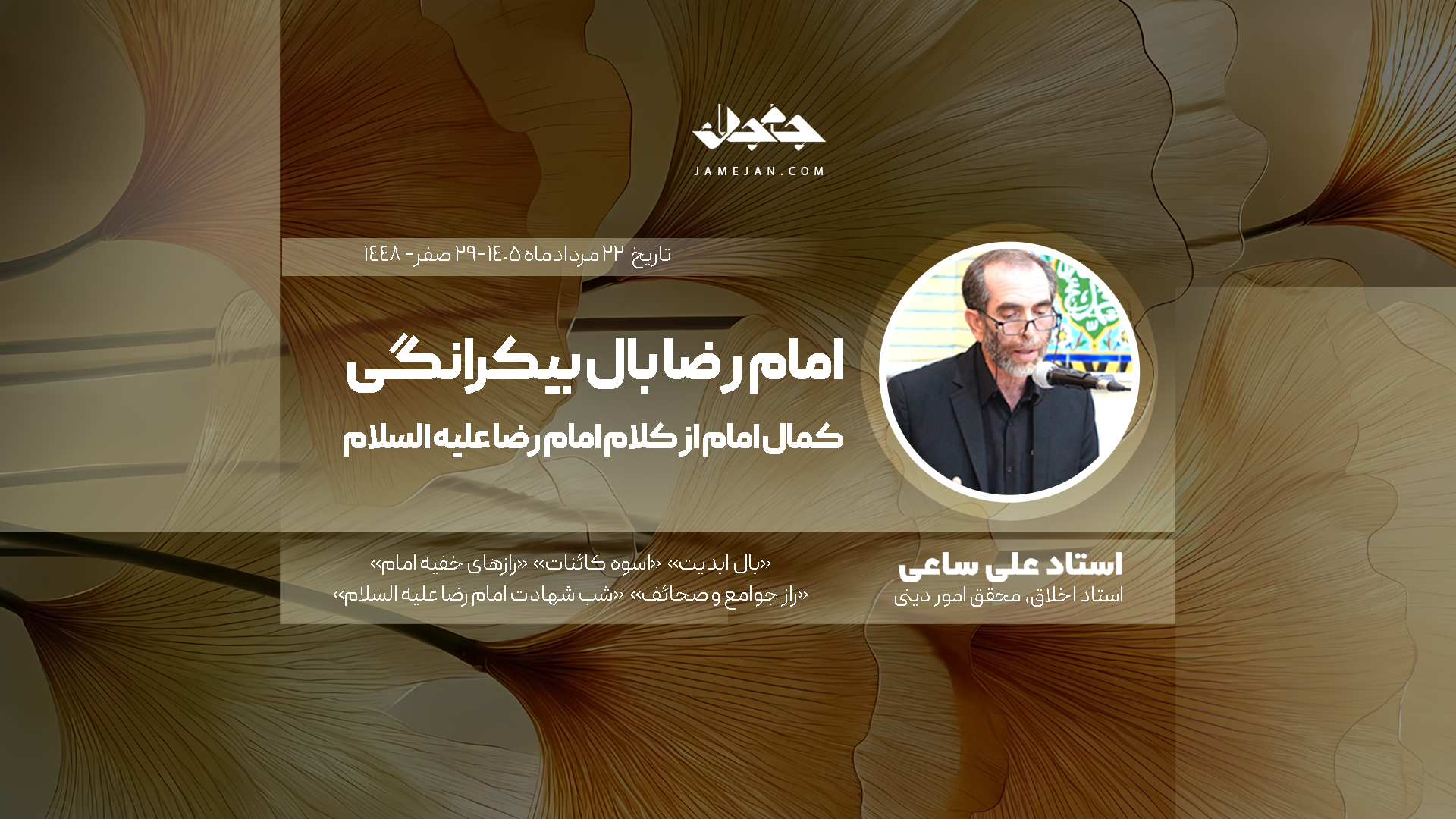
Imam Reza: Wings of Eternity
1405/05/22
114
notifications_active Weekly Meshkat-e Noor Session: Thursdays at 20:30 at Haj Reza Mosque
📆 Date: 1403/02/27 — 7 Dhu al-Qaʿdah 1445
📌 Meshkat-e Noor session
👤 Lecture by Master Ali Saei
🗒 Some points raised during the session:
🌸 The Malāmatiyya deliberately invite blame so that they may escape the humiliation of self-admiration. In trying to rid themselves of self-admiration, however, they have chosen an even worse path. The ultimate consequence of declaring sin permissible is to consider everything in this world permissible.
🌸 We should always keep several principles in mind.
🌼 There is no healing in what God has forbidden. Whoever seeks a cure through what is forbidden will be afflicted with an even worse ailment.
🌼 No sin or act of disobedience can cure another sin or act of disobedience; no sin can extinguish the fire of another sin.
🌸 If I try to put out the fire of self-admiration through sin, it will only blaze more fiercely.
📌 (A critique of a hadith with a very weak chain of transmission) “If you did not sin, I would fear something worse for you: self-admiration.”
This is interpreted to mean that one must fall into sin in order to escape self-admiration.
📃 First, this hadith has a very weak chain of transmission, and its wording contains ambiguities. Most importantly, it conflicts with the Quran.
🌸 (Hadith) “The Shia are recognized by their discernment. My dear son, the ranks of the Shia are known by their understanding—that is, by discerning the narrations.”
🌸 We must examine hadith from various perspectives, including the reliability of the chain and text, whether the text has been fabricated, whether it is general or specific, qualified or unqualified, and whether it is clear or allegorical…
🌸 Discernment means having a precise and comprehensive understanding of a hadith. A person without discernment leads their audience into ignorance.
🌸 To warn against self-admiration means to caution people about it, not to drive them into something worse.
🌸 A hadith that contradicts the Quran is a spurious hadith.
🌸 We must not be taken in by the devil’s advice! This refers to the story of Adam and Eve.
🌸 Self-admiration and narcissism arise from being tainted by sin.
🌸 (Hadith) The Prophet says: “O people, whatever has reached you from me—that is, any hadith—if it agrees with the Quran, then I have said it; if it contradicts the Quran, then I have not said it.”
🌸 Permitting sin is the ugliest form of narcissism.
🌸 Whoever sins in order to rid themselves of self-admiration has raised the banner of Satan’s victory.
🌸 If we read the hadith in a positive light, why not interpret it to mean that narcissism is more contemptible than any sin?
🌸 (Hadith) The Master says: “The wrong you regard as wrong is better than the good deed that makes you narcissistic”—that is, a wrong that troubles you.
Only a sin followed by sincere repentance is better than narcissism.
🌸 A believer’s humility is a kind of striving for perfection. A believer is never content; however much they worship, they still consider themselves at fault. A believer will not be content until they reach Sidrat al-Muntahā and conquer it.
🌸 The gravest sin is one that gives rise to self-admiration; worse still is a sin that gives rise to arrogance; worse than that is a sin regarded as trivial.
🌸 No major sin is too great to be overcome by seeking forgiveness. And no minor sin remains minor when one persists in it; it becomes a major sin.
🌸 Imam Sajjad’s whispered prayer on being unworthy of forgiveness for sin
🌸 (Hadith) The Prophet says: One day, Moses was sitting with a group of people when Satan entered, wearing a colourful cap. As he approached Moses, he took off his cap, faced Moses and greeted him. Moses did not return Satan’s greeting. The Prophet asked, “Who are you?” Satan replied, “I am Iblis.”
Moses said, “May God not let you reach your home”—that is, may you not attain your wishes. Satan said, “I have come to greet you because of your exalted rank.”
Moses asked, “Tell me of a sin that, if Adam’s descendants commit it, will give you power over them and bring them down.” Satan replied, “When someone becomes self-admiring and thinks their deeds are many, and when sin seems small in their eyes, I gain power over them.”
🌸 (Hadith) God says to David: “Give sinners glad tidings, and warn the truthful. Give sinners glad tidings that I accept repentance, and warn the truthful lest they become self-admiring.”
A researcher specializing in religious studies and divine unity, with a particular focus on the Qur’an and Hadith (the Two Weighty Things). His research has centered primarily on the Qur’an and Hadith; in recent years, he has also explored divine unity and critiques of philosophical viewpoints.
If any part of this response is unclear, please submit your question so it may be addressed by the teacher after review.
No inquiries have been recorded regarding this response yet. Your perspective or question will be the first.
Research and Thematic Guidance within the Intellectual Framework and Inquiries of the Meshkat-e Noor School
Follow the latest Meshkat-e Noor sessions