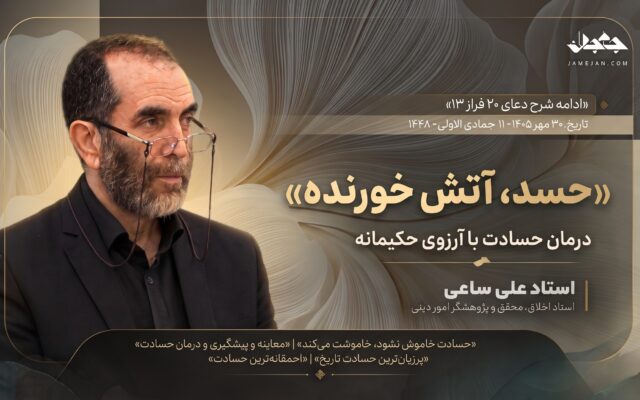
Written transcript of the lecture
The Meshkat-e Noor teachings series🌼🔆🌼Discernment in Narration🌼🔆🌼
🌹🔅☘️ بِسْمِ اللَّهِ الرَّحْمنِ الرَّحيمِ ☘️🔅🌹
🔅🌹 “The Impossible Purification of Impurity with Impurity” “Sin upon sin becomes the master sin” “Humility: the remedy for narcissism” “A Commentary on Supplication 20 of al-Ṣaḥīfa al-Sajjādiyya” “Session 219” and … Summary with addendum 1403.02.27 Ali Saei (Abdullah Meshkat) 110.141(903) 🌹🔅
🔅🌼Narcissism can be cured only through God-consciousness🌼🔅
🌹Satan may present sin as a cure for the affliction of narcissism.
🌹No hadith licenses any sin; Satan is the narrator of fabricated hadiths.
🌹The “Malāmatiyya sect” resorted to permissiveness in sin by making a show of committing it. To flaunt sin is itself a manifest form of sin, and treating it as permissible is the worst form of sin.
🌹There is no cure in what God has forbidden; it only makes matters worse. Nor can disobedience to God cure another act of disobedience. No sin extinguishes the fire of another; it only makes it blaze more fiercely.
🌹Sin is not cleansed by sin; rather, it becomes the master sin.
🌹Narcissism is among the gravest of sins, and it can be cured only through God-consciousness.
🌹No authoritative source of the Two Weighty Things grants permission to commit sin. Whoever invokes fabricated hadiths to license sin is Satan’s accomplice and abettor.
🔅🌼Discernment in narration is a path to knowledge🌼🔅
🌹Without a precise and subtle understanding of a hadith, narrating it can lead its hearer to ruin.
🌹A narration without discernment is no healing remedy; it may even be deadly.
🌹Do not narrate a hadith until you have understood it with discernment.
🌹Take hadiths from narrators who possess discernment, and accept no hadith without discernment.
🌷🔆قَالَ أَبُو جَعْفَرٍ عَلَيْهِ السَّلَامُ: يَا بُنَيَّ، اعْرِفْ مَنَازِلَ الشِّيعَةِ عَلَى قَدْرِ رِوَايَتِهِمْ وَ مَعْرِفَتِهِمْ؛ فَإِنَّ الْمَعْرِفَةَ هِيَ الدِّرَايَةُ لِلرِّوَايَةِ، وَ بِالدِّرَايَاتِ لِلرِّوَايَاتِ يَعْلُو الْمُؤْمِنُ إِلَى أَقْصَى دَرَجَاتِ الْإِيمَانِ.
إِنِّي نَظَرْتُ فِي كِتَابِ عَلِيٍّ عَلَيْهِ السَّلَامُ فَوَجَدْتُ فِي الْكِتَابِ أَنَّ قِيمَةَ كُلِّ امْرِئٍ وَ قَدْرَهُ مَعْرِفَتُهُ؛ إِنَّ اللَّهَ تَبَارَكَ وَ تَعَالَى يُحَاسِبُ النَّاسَ عَلَى قَدْرِ مَا آتَاهُمْ مِنَ الْعُقُولِ فِي دَارِ الدُّنْيَا [1]
🔆Imam al-Baqir عليه السلام said to his son, Imam al-Sadiq عليه السلام: “My son, gauge the standing of the Shi‘a by the extent of their narration and knowledge, for knowledge is discernment[2] in narration. It is through discerning the narrations that a believer attains the highest degrees of faith. I looked in the Book of Ali عليه السلام and found these words: ‘A person’s worth and value lie in their knowledge. Surely, “Allah, Blessed and Exalted,” will hold people to account in proportion to the reason He gave them in this world.’”
🌹Discernment in narration means understanding a narration precisely, judiciously and in all its dimensions. It begins with verifying its authenticity and establishing its reliability, then examining it carefully for fabrication, distortion, truncation, misreading and similar flaws, as well as considering whether it is “specific or general, qualified or unrestricted, concise or explicit, unequivocal or ambiguous, an instance of dissimulation or indirect expression,” and other such matters.
🌹Narrating a hadith without discernment is little different from distorting it.
🔅🌼Narrations that contradict the Quran are fabricated🌼🔅
🌹A narration’s agreement with the Quran is the mark of its authenticity.
🌷🔆عَنْ أَيُّوبَ بْنِ الْحُرِّ قَالَ سَمِعْتُ أَبَا عَبْدِ اللَّهِ ع يَقُولُ كُلُّ شَيْءٍ مَرْدُودٌ إِلَى الْكِتَابِ وَ السُّنَّةِ وَ كُلُّ حَدِيثٍ لَا يُوَافِقُ كِتَابَ اللَّهِ فَهُوَ زُخْرُفٌ. [3]
🌷🔆عَنْ أَبِي عَبْدِ اللَّهِ ع قَالَ: مَا لَمْ يُوَافِقْ مِنَ الْحَدِيثِ الْقُرْآنَ فَهُوَ زُخْرُفٌ. [4]
🔆Ayyub ibn Rashid relates from Imam al-Sadiq عليه السلام that he said: Any hadith that does not accord with the Qur’an is *zukhraf*—ornate falsehood.
🌷🔆عَنْ أَبِي عَبْدِ اللَّهِ ع قَالَ: خَطَبَ النَّبِيُّ ص بِمِنًى فَقَالَ أَيُّهَا النَّاسُ مَا جَاءَكُمْ عَنِّي يُوَافِقُ كِتَابَ اللَّهِ فَأَنَا قُلْتُهُ وَ مَا جَاءَكُمْ يُخَالِفُ كِتَابَ اللَّهِ فَلَمْ أَقُلْهُ.[5]
🔆Hisham ibn al-Hakam relates from Imam al-Sadiq عليه السلام that he said: The Prophet صلي الله عليه و آله و سلم would say in a sermon at Mina: “O people, whatever is related to you from me in accordance with the Qur’an, I have said; whatever is related to you in contradiction to it, I have not said.”
🔅🌼 Self-admiration: the greatest sin 🌼🔅
🌹The following hadith is among those whose chain of transmission is extremely weak. Its wording, too, is obscure and vague, and it conflicts, contradicts and is at odds with the clear statements of the Qur’an and sound narrations.
🌹Some interpret it as though certain sins were a remedy for self-admiration, when that is in no way the case!
رُوِيَ عَنِ النَّبِيِّ ص أَنَّهُ قَالَ: لَوْ لَمْ تُذْنِبُوا لَخَشِيتُ عَلَيْكُمْ مَا هُوَ أَكْبَرُ مِنْ ذَلِكَ الْعُجْبَ.[6]
🔅🌼 Impurity cannot be cleansed by impurity 🌼🔅
لو لم تذنبوا لخشيت عليكم بأشدّ من ذلك العُجب العُجب[7]
🌹This hadith should not be interpreted as follows: “If you did not sin, I would fear for you something worse than that: self-admiration, self-admiration.”
Why not interpret it this way instead: “Even if you do not sin, I fear for you something worse than sin: self-admiration”?
🌹The hadith in question is weak in its chain of transmission, and its wording is seriously ambiguous.
🌹If we accept the hadith, it is undoubtedly among the allegorical reports. Its ambiguity must either be resolved in light of the Qur’an’s clear verses and sound narrations, or the hadith must be rejected on account of its extreme weakness.
🌹An undeniable principle is that impurity cannot be cleansed by impurity: one sin does not erase another.
🌹Self-admiration is a scourge that ruins noble qualities. It is itself a form of sin. Sin and self-admiration are not two separate things; rather, self-admiration is among the greatest sins. It is a grave sin, and this must not be forgotten.
🔅🌼 Misinterpretation and mistranslation amount to distorting the hadith 🌼🔅
🌹A slight shift in perspective can distort the meaning of the hadith and turn it on its head.
🌹It is not the case that people must sin, and that if they do not, they will fall into something worse than sin. That interpretation in effect invites people to sin. God forbid that they should have to sin lest they become self-admiring. Impurity is not cleansed by impurity!
The hadith, in any case, is extremely weak in its chain of transmission!
🌱☘️لو لم تذنبوا لخشيت عليكم بأشدّ من ذلك العجب العجب
🌱“Even if you did not sin, I would fear for you something worse than that: self-admiration, self-admiration.”
🔆Its meaning, however, is this: Beware of becoming heedless of self-admiration, for even if you are free of sin, self-admiration is worse than any sin.
🔆‼️We should note that regarding sin as permissible in comparison with self-admiration is itself a profound form of self-admiration: it is among the worst forms of conceit.
🔅🌼 When Satan plays physician, he prescribes sin as a cure 🌼🔅
🌹Even if you are free of every sin except self-admiration, remember that self-admiration is more dangerous than all sins. If someone sins out of self-admiration, they have raised Satan’s banner.
🌹One of Satan’s traps for ensnaring people is to frighten them about one sin so that they fall into another. He whispers that they should commit a lesser sin to escape a greater one. Yet to regard any sin as insignificant, however small, is itself a grave sin. No sin becomes permissible in comparison with another. Numbing the conscience so that one no longer feels the ugliness of sin only makes that sin all the more ugly. We must not let people’s resistance to wrongdoing be destroyed, or the world will be dragged into corruption.
🌹Vanity is a vile sin, but Satan exploits it to smooth the way to other sins. He frightens people with vanity in order to plunge them into the mire of sin. Let us not be heedless: this is a bargain in which every sin is set against vanity.
🌹Whoever commits a sin in order to escape self-conceit has fallen into sin to escape sin. This is the ugliest form of self-conceit: treating sin as permissible.
🔅🌼Humility is the healing remedy for self-conceit 🌼🔅
🌹Only devils urge people to sin as a way to escape vanity. Vanity is cured only by the power of humility, which springs from piety—not by anything else.
🌹Let us not pave the way to sin; let us not make sin seem less repugnant; let us not make committing sin easier; let us not reduce the friction along the path to sin; let us not restrain the conscience; let us not soap the path to sin and make it slippery.
🔅🌼Counter self-conceit and every sin only through remembrance of God 🌼🔅
الأعراف : 201 إِنَّ الَّذينَ اتَّقَوْا إِذا مَسَّهُمْ طائِفٌ مِنَ الشَّيْطانِ تَذَكَّرُوا فَإِذا هُمْ مُبْصِرُونَ
When the God-fearing are touched by a whisper from Satan, they remember (God, and His reward and punishment), and suddenly they see clearly (the path of truth, in the light of that remembrance).
🌹Through the Ṣaḥīfa Sajjādiyya, Imam Sajjad (peace be upon him) established a school for learning how to flee from sin.
🌹Escape from vanity comes only through drawing near to God, not to Satan. Sin is an insult to God; it is turning one’s back on Him.
Let us not become Satan’s accomplices, completing and reinforcing his work. Let us not heed Satan’s counsel: his invitation to sin is a vile gift.
🌻🔆الأعراف : 20 فَوَسْوَسَ لَهُمَا الشَّيْطانُ لِيُبْدِيَ لَهُما ما وُورِيَ عَنْهُما مِنْ سَوْآتِهِما وَ قالَ ما نَهاكُما رَبُّكُما عَنْ هذِهِ الشَّجَرَةِ إِلاَّ أَنْ تَكُونا مَلَكَيْنِ أَوْ تَكُونا مِنَ الْخالِدينَ
🔆Then Satan whispered to them, to expose to them what had been hidden of their nakedness. He said, “Your Lord has forbidden you this tree only lest you become angels or live forever (in Paradise)!”
🌻🔆الأعراف : 21 وَ قاسَمَهُما إِنِّي لَكُما لَمِنَ النَّاصِحينَ
🔆And he swore to them, “I am truly one of your sincere advisers.”
🔅🌼One fire feeds another 🌼🔅
🌹Vanity sets deeds ablaze; of this there is no doubt. But every sin is itself a fire, and to commit sin is to feed on fire. Minor sins pave the way to vanity and pride, and strengthen them.
🔅🌼Sincere repentance is better than self-conceit 🌼🔅
🌷🔆 عَنْ أَمِيرِ الْمُؤْمِنِينَ (ع):” سَيِّئَةٌ تَسُؤُكَ خَيْرٌ [عِنْدَ اللَّهِ] مِنْ حَسَنَةٍ تُعْجِبُك[8]
🔆A wrong that grieves you is better than a good deed that makes you self-conceited.
🌹Even a sin that leads to sincere repentance is better than self-conceit. Repentance is better than self-conceit—not sin.
🔅🌼Making light of sin melts sin away 🌼🔅
🌷🔆وَ قَالَ ع أَشَدُّ الذُّنُوبِ مَا اسْتَهَانَ بِهِ [صَاحِبُهَا] صَاحِبُه[9]
🔆The gravest sins are those that their perpetrators regard as small.
🔅🌼No wise person ever considers any sin trivial🌼🔅
🌷🔆 وَ قَالَ لَا تُحَقِّرُوا شَيْئاً مِنَ الشَّرِّ وَ إِنْ صَغُرَ فِي أَعْيُنِكُمْ وَ لَا تَسْتَكْثِرُوا الْخَيْرَ وَ إِنْ كَثُرَ فِي أَعْيُنِكُمْ فَإِنَّهُ لَا كَبِيرَ مَعَ الِاسْتِغْفَارِ وَ لَا صَغِيرَ مَعَ الْإِصْرَار[10]
🔆Do not regard any evil deed as insignificant, even if it seems small to you; and do not think highly of any good deed, even if it seems great and abundant. For no grave sin remains when accompanied by seeking forgiveness, and no minor sin is forgiven when one persists in it.”
🔅🌼Humility is striving for excellence🌼🔅
من رأى أنه مسيء فهو محسن و من رأى أنه محسن فهو مسيء[11]
Whoever sees himself as a wrongdoer is a doer of good; whoever sees himself as a doer of good is a wrongdoer.
🌹 This does not mean that a person should think little of himself; rather, it means being watchful and humble, fleeing self-admiration and never ceasing to strive in servitude to God.
🌹 The humble person does not think little of himself; rather, he strives for excellence and seeks ever more. Whatever level he has reached, he seeks a higher one, always poised to take flight.
🔅🌼O God, I seek refuge in You from treating any sin as trivial🌼🔅
🌷🔆 اللَّهُمَّ إِنيِّ أَعُوذُ بِكَ مِنْ هَيَجَانِ الْحِرْصِ، وَ سَوْرَةِ الْغَضَبِ، وَ غَلَبَةِ الْحَسَدِ، وَ ضَعْفِ الصَّبْرِ، وَ قِلَّةِ الْقَنَاعَةِ، وَ شَكَاسَةِ الْخُلُقِ، وَ إِلْحَاحِ الشَّهْوَةِ، وَ مَلَكَةِ الْحَمِيَّةِ وَ مُتَابَعَةِ الْهَوَى، وَ مُخَالَفَةِ الْهُدَى، وَ سِنَةِ الْغَفْلَةِ، وَ تَعَاطِي الْكُلْفَةِ، وَ إِيثَارِ الْبَاطِلِ عَلَى الْحَقِّ، وَ الْإِصْرَارِ عَلَى الْمَأْثَمِ، وَ اسْتِصْغَارِ الْمَعْصِيَةِ، وَ اسْتِكْبَارِ الطَّاعَةِ.[12]
🔆O God, I seek refuge in You from the storm of greed, the sharpness and violence of anger, the ascendancy of envy, the weakness of patience, the lack of contentment, ill temper, the stubborn insistence of desire and habit, and fanatical partisanship.
And from following caprice, discord, straying from guidance, heedless slumber, affectation, preferring falsehood to truth, persisting in sin, making disobedience and sin seem insignificant, and finding obedience burdensome.
🔅🌼What is the cost of a small sin?🌼🔅
🌷🔆 يَا إِلَهِي لَوْ بَكَيْتُ إِلَيْكَ حَتَّى تَسْقُطَ أَشْفَارُ عَيْنَيَّ، وَ انْتَحَبْتُ حَتَّى يَنْقَطِعَ صَوْتِي، وَ قُمْتُ لَكَ حَتَّى تَتَنَشَّرَ قَدَمَايَ، وَ رَكَعْتُ لَكَ حَتَّى يَنْخَلِعَ صُلْبِي، وَ سَجَدْتُ لَكَ حَتَّى تَتَفَقَّأَ حَدَقَتَايَ، وَ أَكَلْتُ تُرَابَ الْأَرْضِ طُولَ عُمُرِي، وَ شَرِبْتُ مَاءَ الرَّمَادِ آخِرَ دَهْرِي، وَ ذَكَرْتُكَ فِي خِلَالِ ذَلِكَ حَتَّى يَكِلَّ لِسَانِي، ثُمَّ لَمْ أَرْفَعْ طَرْفِي إِلَى آفَاقِ السَّمَاءِ اسْتِحْيَاءً مِنْكَ مَا اسْتَوْجَبْتُ بِذَلِكَ مَحْوَ سَيِّئَةٍ وَاحِدَةٍ مِنْ سَيِّئَاتِي.[13]
🔆My God, even if I wept before You until my eyelids fell away, cried aloud until my voice gave out, stood before You until my feet swelled, bowed before You until my backbone was dislocated, and prostrated myself to You until my eye sockets sank in; even if, all my life, I ate the earth’s dust and, to the end of time, drank water mixed with ashes, and amid all this kept remembering You until my tongue grew heavy—and then, out of shame, dared not raise my eyes toward the sky—by all this I would never merit the erasure of even one of my sins.
🔅🌼Beware lest Satan deceive your heart🌼🔅
🌷🔆 قَالَ رَسُولُ اللَّهِ ص بَيْنَمَا مُوسَى ع جَالِساً إِذْ أَقْبَلَ إِبْلِيسُ وَ عَلَيْهِ بُرْنُسٌ ذُو أَلْوَانٍ فَلَمَّا دَنَا مِنْ مُوسَى ع خَلَعَ الْبُرْنُسَ وَ قَامَ إِلَى مُوسَى فَسَلَّمَ عَلَيْهِ فَقَالَ لَهُ مُوسَى مَنْ أَنْتَ فَقَالَ أَنَا إِبْلِيسُ قَالَ أَنْتَ فَلَا قَرَّبَ اللَّهُ دَارَكَ قَالَ إِنِّي إِنَّمَا جِئْتُ لِأُسَلِّمَ عَلَيْكَ لِمَكَانِكَ مِنَ اللَّهِ قَالَ فَقَالَ لَهُ مُوسَى ع فَمَا هَذَا الْبُرْنُسُ قَالَ بِهِ أَخْتَطِفُ قُلُوبَ بَنِي آدَمَ فَقَالَ مُوسَى فَأَخْبِرْنِي بِالذَّنْبِ الَّذِي إِذَا أَذْنَبَهُ ابْنُ آدَمَ اسْتَحْوَذْتَ عَلَيْهِ قَالَ إِذَا أَعْجَبَتْهُ نَفْسُهُ وَ اسْتَكْثَرَ عَمَلَهُ وَ صَغُرَ فِي عَيْنِهِ ذَنْبُهُ وَ قَالَ قَالَ اللَّهُ عَزَّ وَ جَلَّ- لِدَاوُدَ ع يَا دَاوُدُ بَشِّرِ الْمُذْنِبِينَ وَ أَنْذِرِ الصِّدِّيقِينَ قَالَ كَيْفَ أُبَشِّرُ الْمُذْنِبِينَ وَ أُنْذِرُ الصِّدِّيقِينَ قَالَ يَا دَاوُدُ بَشِّرِ الْمُذْنِبِينَ أَنِّي أَقْبَلُ التَّوْبَةَ وَ أَعْفُو عَنِ الذَّنْبِ وَ أَنْذِرِ الصِّدِّيقِينَ أَلَّا يُعْجَبُوا بِأَعْمَالِهِمْ فَإِنَّهُ لَيْسَ عَبْدٌ أَنْصِبُهُ لِلْحِسَابِ إِلَّا هَلَكَ.[14]
🔆 Imam al-Sadiq (peace be upon him), reporting from the Messenger of God (peace and blessings be upon him and his family), said:
One day, Moses son of Imran (peace be upon him) was sitting somewhere when Satan came to him wearing a brightly colored cap. As he drew near Moses, he took off the cap, approached him, and greeted him. Moses asked, “Who are you?” He replied, “Satan.” Moses said, “So it is you. May God never bring you near your home”—that is, may you never attain your aim. Satan said, “I have come to greet you because of the esteemed rank you hold before God.” Moses asked, “What is that cap?” He replied, “With it, I win people’s hearts.” Moses said, “Tell me: what sin, if a person commits it, gives you power over him?” Satan replied, “When he becomes self-conceited, thinks highly of his deeds, and regards his sins as insignificant.”
Almighty God said to David (peace be upon him): “David, give sinners glad tidings, and warn the sincerely devout.” He asked, “How can I give sinners glad tidings and warn the sincerely devout?” God said, “David, give sinners glad tidings that I accept repentance and forgive sins. And warn the sincerely devout not to become complacent about their deeds, for no servant will be brought to account by God without being doomed!”
🔅🌼 Never dismiss even the smallest spark of fire 🌼🔅
🌹 If even a tiny spark of sin catches hold of you, it will set your greater world ablaze.
🌷🔆 فِي الْإِرْشَادِ قَالَ: قَالَ ع إِيَّاكُمْ وَ مُحَقَّرَاتِ الذُّنُوبِ فَإِنَّ لَهَا مِنَ اللَّهِ طَالِباً وَ إِنَّهَا لَتَجْتَمِعُ عَلَى الْمَرْءِ حَتَّى تُهْلِكَهُ.[15]
🔆 Beware of minor sins, for they will be called to account by God, and they pile up until they destroy a person.
🌷🔆 قَالَ أَبُو عَبْدِ اللَّهِ ع اتَّقُوا الْمُحَقَّرَاتِ مِنَ الذُّنُوبِ فَإِنَّهَا لَا تُغْفَرُ قُلْتُ وَ مَا الْمُحَقَّرَاتُ قَالَ الرَّجُلُ يُذْنِبُ الذَّنْبَ فَيَقُولُ طُوبَى لِي إِنْ لَمْ يَكُنْ لِي غَيْرُ ذَلِكَ. [16]
🔆 Beware of sins regarded as trivial, for they are not forgiven. I asked, “What are sins regarded as trivial?” He replied, “When a man commits a sin and says, ‘How fortunate I am if this is the only sin I have!’”
🌼Ali Saei (Abdullah Meshkat) 110.141 (903)🌼
[1] al-Uṣūl al-sittata ʿashar (Dar al-Hadith edition), p. 36 A group of scholars, Dar al-Hadith Cultural Institute, Iran; Qom, first edition, 1423 AH / 1381 SH.
[2]Discernment is precisely sound, rational understanding.
[3] al-Kāfī (Islamic edition), vol. 1, p. 69 al-Kulayni, Muhammad ibn Ya‘qub ibn Ishaq, Dar al-Kutub al-Islamiyya, Tehran, fourth edition, 1407 AH.
[4] al-Kāfī (Islamic edition), vol. 1, p. 69 al-Kulayni, Muhammad ibn Ya‘qub ibn Ishaq, Dar al-Kutub al-Islamiyya, Tehran, fourth edition, 1407 AH.
[5] Al-Kāfī (Islamic edition), vol. 1, p. 69 Kulaynī, Muḥammad ibn Yaʿqūb ibn Isḥāq, Islamic Books Publishing House, Tehran, 4th ed., 1407 AH.
[6] Biḥār al-Anwār (Beirut edition), vol. 69, p. 329 Majlisī, Muḥammad Bāqir ibn Muḥammad Taqī, Arab Heritage Revival Institute, Beirut, 2nd ed., 1403 AH.
[7] Nahj al-Faṣāḥah (A Collection of the Prophet’s Concise Sayings, peace and blessings be upon him and his family), p. 651 Pāyandeh, Abū al-Qāsim, Donyā-ye Dānesh, Tehran, 4th ed., 1382 SH.
[8] Majmaʿ al-Baḥrayn, vol. 2, p. 116 Ṭurayḥī, Murtaḍawī, Tehran, 3rd ed., 1375 SH.
[9] Nahj al-Balāghah (Ṣubḥī Ṣāliḥ edition), p. 535 Sharīf al-Raḍī, Muḥammad ibn Ḥusayn, Hijrat, Qom, 1st ed., 1414 AH.
[10] Al-Amālī (by al-Ṣadūq), text, p. 433 Ibn Bābawayh, Muḥammad ibn ʿAlī, Ketābchī, Tehran, 6th ed., 1376 SH.
[11] Commentary on Nahj al-Balāghah by Ibn Abī al-Ḥadīd, vol. 20, p. 317 Ibn Abī al-Ḥadīd, Library of Āyatullāh Marʿashī Najafī, Qom, 1st ed., 1404 AH.
[12] Al-Ṣaḥīfa al-Sajjādiyya, excerpt from Supplication 8
[13] Al-Ṣaḥīfa al-Sajjādiyya, excerpt from Supplication 16
[14] Al-Kāfī (Islamic edition), vol. 2, p. 314 Kulaynī, Islamic Books Publishing House, Tehran, 4th ed., 1407 AH.
[15] Wasāʾil al-Shīʿa, vol. 15, p. 313 Shaykh Ḥurr al-ʿĀmilī, Muḥammad ibn Ḥasan, Āl al-Bayt Institute, Qom, 1st ed., 1409 AH.
[16] Wasāʾil al-Shīʿa, vol. 15, p. 310 Shaykh Ḥurr al-ʿĀmilī, Muḥammad ibn Ḥasan, Āl al-Bayt Institute, Qom, 1st ed., 1409 AH.