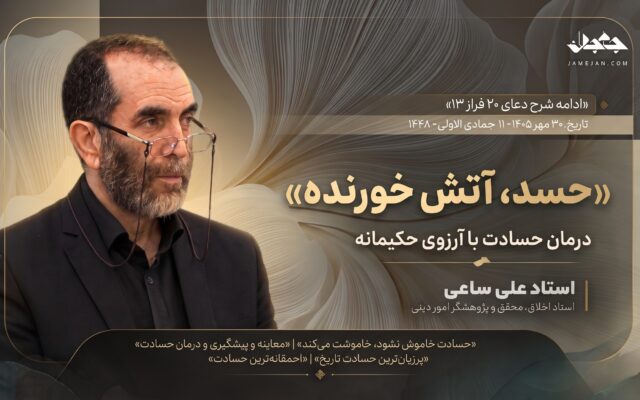
Written transcript of the lecture
The Meshkat-e Noor teachings series🌼🔆🌼The Measure of Worth🌼🔆🌼
🌹🔅☘️ بِسْمِ اللَّهِ الرَّحْمنِ الرَّحيمِ ☘️🔅🌹
🔅🌹 “Means of Drawing Near to God,” “Excusing a Wrong Is Worse Than the Wrong Itself,” “Fame Casts a Spell,” “Supplication 20 of al-Ṣaḥīfa al-Sajjādiyya,” “Session 222,” and more: Summary with an addendum
1403.03.31
Ali Saei (Abdullah Meshkat) 110.141(903)
🌹🔅
🔅🌼Overview of the Discussions 🌼🔅
🌼 Even if we attain the highest degree of faith and the finest certainty, we must remain concerned for our faith and certainty. Even if we have attained the guidance of the righteous, we must still stay vigilant and watchful.
🌼 We must keep watch over our thoughts, since Satan may turn us into his pasture in an instant.
🌼 We must be careful about what we say, lest we lead others astray. We should not present our beliefs in a way that makes people accept our words blindly.
🌼 We have a duty to verify hadith against the Quran; how much more, then, must we scrutinize the words of ordinary people with redoubled care?
🌸 A critique of a poem attributed to Shaykh Baha’i: “By God, no one can do more good than to open a closed door for one who has lost hope.”
🌼 No one is more compassionate than God.
🌼 We must never, under any circumstances, excuse the mistakes of the great.
🌼 Excusing a wrong is worse than the wrong itself.
🌼 God, the Beneficent, has Himself charged us with worship; He has not made worship consist solely in serving people.
🌼 Those who pray and fast are also people of goodness.
🌼 This poem attributed to Shaykh Baha’i is, in a way, enjoining what is right by forbidding another good deed.
🌸 A critique of the poem, “Drink wine, burn the pulpit, but do not torment people.” This poem enjoins what is right by inviting people to do wrong.
🌼 We must hold fast to our reason, so that the winds of other people’s beliefs and convictions do not carry it away—for poetry is a kind of sorcery.
🌼 Sometimes the elegance of our words can keep us from looking beneath the surface.
🌼 Famous and prominent people must be especially vigilant, because their followers will accept their words blindly.
🌼 The Quran’s miraculous nature breaks the spell cast by eloquence.
🌼 Those who are easily spellbound and overcome by envy, the evil eye, and negative forces should understand that this is a sign of weakness. Anyone who is easily swept up in the moment must be on guard, because they are susceptible to the spell of eloquence. Outward embellishments work the same way.
🌼 Modern sorcery has begun in virtual spaces, where it easily casts a spell over people’s minds.
🌼 Virtual spaces set our minds in motion and make things seem alluring.
🌼 No good deed surpasses prayer. No matter how much good we do for others, it will be of no benefit until our prayer is accepted.
🌼 If we are not fully present in prayer, we have broken it into a thousand pieces and wronged it. Yet God completes that wounded prayer through supererogatory prayers.
🌼 The first thing a person is called to account for is prayer. If it is accepted, their other deeds, too, will be accepted by God.
🌼 Now compare this hadith with the poem under discussion!
🌼 When we pray, we bring new life into existence. Prayer takes flight from our soul. When prayer is performed at the beginning of its appointed time, it rises from our soul and ascends, then returns to its owner—with eagerness it ascends, and with even greater eagerness it returns—white and radiant, as though a person had fashioned a sun. The prayer says to the person, “You protected me; may God protect you.”
🌼 It is as though prayer were a divine trust placed in our soul, released from the cage of the heart when we pray and taking flight upward.
🌼 Of course, presence of heart is an essential condition of prayer.
🌼 But when a prayer is offered outside its proper time, it returns to the person dark and shadowy, saying, “You neglected me; may God neglect you.”
🌼 Kindness must be guided wisely. This trust must be given where it truly belongs; we must take care not to bestow this divine gift on someone unworthy of it.
🌼 Showing kindness to someone who is ungrateful for blessings is among the gravest wrongs and sins.
🌼 Whoever places an act of kindness where it does not belong has wronged that act of virtue.
🌼 Kindness should not lead others to commit further sins.
🌼 So if a believer shows kindness to someone who persists in wrongdoing, that believer has wronged kindness itself.
🌼 Guidance through kindness is a particular kind of goodness. If our kindness can bring someone to repentance, we should make use of it.
🌼 A truly kind person extends kindness to everyone, like the sun. But when someone turns kindness into wrongdoing, showing kindness to that person is an injustice to kindness. When kindness becomes a means of sin, kindness has been wronged.
🌼 When an evildoer shows kindness, we should keep our distance from such a person; there is no healing in what is forbidden.
🌼 But when a believer treats us badly, we should respond by showing that person even greater kindness and correcting them through goodness. Even when we think our kindness may guide someone who is sinning, we should be kind to them.
🌼 We should show kindness even to animals.
🌼 Our greatest kindness should be reserved for believers. If we give our wealth to a non-believer, we should be ready to give our lives for a believer.
🌼 Whoever shows kindness to God’s creation for God’s sake will have their time and place blessed by God.
🌼 Islam is founded on five pillars: prayer, zakat, fasting, pilgrimage, and wilayah.
🌼 Worship is not confined to prayer and fasting, just as it is not confined to serving others. We must pass through all these gates to God’s good pleasure.
🌼 Supporting a believer is supporting the lights of faith.
🌼 The wicked and those who do wrong, like the good and those who do good, have ranks and degrees. Kindness must be administered with discernment: depending on the circumstances, we must decide whether to give or withhold it, and determine its measure for each person according to their character and standing.
🌼 The supplication «اللهم عرّفنی نفسک… عرّفنی نبیک… عرّفنی حجتک …» is a prayer for attaining absolute knowledge, and the secret to acquiring the spiritual insight of faith.
ا
🔅🌼Prayer has no equal🌼🔅
🌷🔆عَنْ أَبِي بَصِيرٍ قَالَ سَمِعْتُ أَبَا جَعْفَرٍ ع يَقُولُ كُلُ سَهْوٍ فِي الصَّلَاةِ يُطْرَحُ مِنْهَا غَيْرَ أَنَّ اللَّهَ تَعَالَى يُتِمُّ بِالنَّوَافِلِ إِنَّ أَوَّلَ مَا يُحَاسَبُ بِهِ الْعَبْدُ الصَّلَاةُ فَإِنْ قُبِلَتْ قُبِلَ مَا سِوَاهَا إِنَّ الصَّلَاةَ إِذَا ارْتَفَعَتْ فِي أَوَّلِ وَقْتِهَا رَجَعَتْ إِلَى صَاحِبِهَا وَ هِيَ بَيْضَاءُ مُشْرِقَةٌ تَقُولُ حَفِظْتَنِي حَفِظَكَ اللَّهُ وَ إِذَا ارْتَفَعَتْ فِي غَيْرِ وَقْتِهَا بِغَيْرِ حُدُودِهَا رَجَعَتْ إِلَى صَاحِبِهَا وَ هِيَ سَوْدَاءُ مُظْلِمَةٌ تَقُولُ ضَيَّعْتَنِي ضَيَّعَكَ اللَّهُ.[1]
🔆Every lapse in prayer diminishes it, except that God completes it through supererogatory prayers. The first thing for which a person will be called to account on the Day of Resurrection is their prayer. If it is accepted, their other deeds will also be accepted. When prayer is offered at the beginning of its proper time, it returns to its owner white and radiant, saying to the worshipper, “May God preserve you, for you preserved me.” But when it is offered outside its proper time, it returns to its owner dark and shadowy, saying, “May God forsake you, for you neglected me.”
🌷🔆وَ قَالَ الصَّادِقُ ع أَوَّلُ مَا يُحَاسَبُ بِهِ الْعَبْدُ عَلَى الصَّلَاةِ فَإِذَا قُبِلَتْ قُبِلَ مِنْهُ سَائِرُ عَمَلِهِ وَ إِذَا رُدَّتْ عَلَيْهِ رُدَّ عَلَيْهِ سَائِرُ عَمَلِهِ.[2]
🔆Imam al-Sadiq (peace be upon him): The first thing for which a servant is called to account is prayer. If it is accepted, the rest of their deeds will also be accepted; if it is rejected, their other deeds will likewise be rejected.
🔅🌼The Measure of Worth🌼🔅
🌹Whatever serves as a basis and measure of worth reflects its own greatness. Prayer, fasting, pilgrimage, and the like, when used as the standard by which other deeds are evaluated, show their stature and importance as the measure of those deeds.
🔅🌼Excusing a Wrong Is Worse Than the Wrong Itself🌼🔅
🌹Let us not excuse anyone’s wrongdoing. Let us care for the truth, not for individuals: praise what is good and disavow what is wrong. A person’s standing must not become a veil over their faults. Let us not make excuses for others’ wrongdoing, for that amounts to promoting and legitimising what is reprehensible.
🌹A verse by Shaykh Baha’i reads: “By God, no deed bears fruit so greatly as opening a closed door to someone in despair.” In reality, this is “enjoining what is right by forbidding other right acts.”
🌹The verse “Drink wine, burn the pulpit, but do not hurt people” is, in reality, “enjoining what is right by inviting people to other wrongs.”
🌹Why should we make God’s precious acts of worship seem worthless? Why do we try to make one deed seem important by making other deeds seem insignificant?
🌹Let us not forget that God is the Beneficent, the Provider, the Generous, the Loving, and the Merciful.
🔅🌼Means of Drawing Near to God🌼🔅
🌹The purpose of prayer, fasting, and God’s ordinances is to draw near to God.
🌹The means of drawing near to God should be strengthened and reinforced; all the divine laws should be revived and upheld.
🔅🌼Faith Is the Spirit of Benevolence🌼🔅
🌷🔆 عَنْ أَبِي حَمْزَةَ عَنْ أَبِي جَعْفَرٍ ع قَالَ: بُنِيَ الْإِسْلَامُ عَلَى خَمْسٍ عَلَى الصَّلَاةِ وَ الزَّكَاةِ وَ الصَّوْمِ وَ الْحَجِّ وَ الْوَلَايَةِ وَ لَمْ يُنَادَ بِشَيْءٍ كَمَا نُودِيَ بِالْوَلَايَةِ.[3]
🔆Imam al-Baqir (peace be upon him): Islam rests on five pillars: prayer, almsgiving, fasting, pilgrimage, and wilayah; nothing has been stressed as much as wilayah.
🌹Prayer, fasting, almsgiving, pilgrimage, and wilayah are the foundations of Islam and the pillars of faith; the believer is the stronghold of religion and religious law.
🌹Service to God’s creation must be measured and managed: people should be treated generously in keeping with their worth and circumstances. But we should be foremost in generosity toward believers.
🌹Serving a believer helps religion flourish; it strengthens prayer, fasting, and the other ordinances.
🌹The fuel and oil of religion must be supplied. A believer is like a lamp of religion, and its oil must be replenished.
🌹Believers should strengthen one another, for this strengthens the faith of the community and God’s religion. When believers care for one another, the divine lights grow stronger.
🔅🌼Excess in Benevolence🌼🔅
🌹Excessive generosity and attention toward a non-believer is wastefulness and extravagance. A non-believer should be treated with due regard for their standing.
🌹Showing kindness to anyone in order to win their heart is acceptable. But if winning their heart is not possible, one should not lavish excessive attention and favour on a non-believer. Giving a non-believer the same attention as a believer is wasteful, and may even be forbidden.
🔅🌼Do Not Wrong What Is Good🌼🔅
🌷🔆ظَلَمَ الْمَعْرُوفَ مَنْ وَضَعَهُ فِي غَيْرِ أَهْلِه[4]
🔆Imam ʿAlī (peace be upon him): Whoever shows kindness to someone undeserving wrongs that kindness.
🌷🔆اصْطِنَاعُ الْكَفُورِ مِنْ أَعْظَمِ الْجُرْمِ [5]
🌷🔆Doing good to the ungrateful is among the gravest sins.
🔅🌼Do not accept kindness from the ignoble, nor go to excess in showing kindness to them. 🌼🔅
🌷🔆الْكَرَامَةُ تُفْسِدُ مِنَ اللَّئِيمِ بِقَدْرِ [قَدْرَ] مَا تُصْلِحُ مِنَ الْكَرِيمِ . [6]
🔆Kindness that brings reform when shown by a noble person can bring corruption when shown by someone undeserving.
🌹The kindness of a vile, base and wicked person is worse than wrongdoing. Do not praise the generosity of nonbelievers, hypocrites and sinners, for it breeds corruption: it amounts to treating sin as permissible and smiling on it.
🌹The kindness of a vile person breeds corruption; it is deceitful and painful. It may even be bait to capture minds and beliefs, or a pretext for gaining influence. There is no cure in what is forbidden; kindness from a wrongdoer brings no benefit. The kindness of the ignoble is poison, bringing trouble and affliction.
🌹The food, drink, kindness, gaze and company of a believer devoted to supererogatory worship are the supreme elixir and a healing remedy.
🔅🌼Let us not wrong kindness. 🌼🔅
🌷🔆تَضْيِيعُ الْمَعْرُوفِ وَضْعُهُ فِي غَيْرِ عَرُوفٍ [7]
🔆Kindness is wasted when it is bestowed on someone who does not appreciate it.
🌷🔆ظُلْمُ الْإِحْسَانِ وَضْعُهُ فِي غَيْرِ مَوْضِعِهِ [8]
🔆Bestowing kindness where it does not truly belong is an injustice to kindness.
🌷🔆رَأْسُ الرَّذَائِلِ اصْطِنَاعُ الْأَرَاذِلِ [9]
🔆The height of baseness is to show kindness to the dregs of society.
🔅🌼If kindness serves to reform and guide, it is good to show it to anyone. 🌼🔅
🌷🔆أَحْسِنْ إِلَى مَنْ أَسَاءَ إِلَيْكَ وَ اعْفُ عَمَّنْ جَنَى عَلَيْكَ[10]
🔆Do good to someone who has wronged you, and forgive anyone who has committed an offence against you.
🌷🔆إِنَّ مُقَابَلَةَ الْإِسَاءَةِ بِالْإِحْسَانِ وَ تَغَمُّدَ الْجَرَائِمِ بِالْغُفْرَانِ لَمِنْ أَحْسَنِ الْفَضَائِلِ وَ أَفْضَلِ الْمَحَامِدِ [11]
🔆Indeed, repaying wrong with kindness and concealing faults through forgiveness are among the finest virtues and noblest qualities.
🌷🔆إِنَّ مِنْ مَكَارِمِ الْأَخْلَاقِ أَنْ تَصِلَ مَنْ قَطَعَكَ وَ تُعْطِيَ مَنْ حَرَمَكَ وَ تَعْفُوَ عَمَّنْ ظَلَمَكَ [12]
🔆Among the highest expressions of good character are visiting someone who has cut ties with you, giving to someone who has deprived you, and forgiving someone who has wronged you.
🌷🔆مَنْ أَحْسَنَ إِلَى مَنْ أَسَاءَ إِلَيْهِ فَقَدْ أَخَذَ بِجَوَامِعِ الْفَضْلِ. [13]
🔆Whoever does good to someone who has wronged them has surely attained the sum of all virtues.
🌷🔆الْمُحْسِنُ مَنْ عَمَّ النَّاسَ بِالْإِحْسَانِ[14]
🔆A benefactor is one whose kindness extends to all people.
🌹Undoubtedly, showing kindness to wrongdoers is permissible only when it softens them and helps reform them. Otherwise, it is not permissible if it makes them—or society—indifferent to wrongdoing.
🔅🌼Be generous in showing kindness to believers. 🌼🔅
🌷🔆رَأْسُ الْإِحْسَانِ الْإِحْسَانُ إِلَى الْمُؤْمِنِينَ [15]
🌷🔆The essence of goodness is to do good to the faithful.
🌷🔆ظَفِرَ بِسَنِيِّ الْمَغَانِمِ وَاضِعُ صَنَائِعِهِ فِي الْأَكَارِمِ. [16]
🔆The one who directs good deeds towards good and worthy people wins the brightest and most precious spoils.
🌹A person’s kindness to people of lofty character is a treasure stored in the highest repositories.
🌷🔆مِنْ أَفْضَلِ الْإِحْسَانِ الْإِحْسَانُ إِلَى الْأَبْرَارِ. [17]
🔆Among the most virtuous acts of kindness is doing good to those who are themselves virtuous.
🔅🌼Giving one’s life for faith🌼🔅
🌹A believer gives their life for prayer and fasting—that is, they are willing to sacrifice their life so that God’s religion may endure, not to sacrifice religion, its commandments and its sacred law for themselves or others. Neither we nor anyone else comes before it: all creation is sacrificed for God’s religion. Let us never sacrifice God’s religion in the name of serving people; rather, all creation is devoted to God’s religion.
🔅🌼Intoxicated and spellbound by poetry and eloquence🌼🔅
إِنَّ مِنَ الشِّعْرِ لَحِكْمَةً وَ إِنَّ مِنَ الْبَيَانِ لَسِحْراً.[18]
«Indeed, some poetry is wisdom, and some eloquence is sorcery.»
🌹Being dazzled by the outward polish and elegance of words betrays an intellect that is weak at its roots and borrowed rather than one’s own.
🌹The surface elegance of speech—or of anything else—must not steal our reason or enchant our hearts.
🌹The virtual world’s dominance is due to its virtual sorcery. Breaking that spell is possible with the staff of knowledge and faith.
🔅🌼Let us not surrender our minds to masters of beguiling speech🌼🔅
🌷🔆 قَالَ رَسُولُ اللَّهِ ص إِنَّ مِنَ الْبَيَانِ لَسِحْراً وَ مِنَ الْعِلْمِ جَهْلًا وَ مِنَ الشِّعْرِ حُكْماً وَ مِنَ الْقَوْلِ عَدْلًا.[19]
🔆Some eloquence is sorcery, some branches of knowledge are ignorance, some poetry is wisdom, and some words are stumbling.
🔅🌼Let us not let orators enchant our hearts🌼🔅
🌷🔆إنّ من البيان لسحرا و إنّ من الشّعر لحكما و إنّ من القول عيّا و إنّ من طلب العلم جهلا.
🔆Some eloquence is sorcery, some poetry is wisdom, some speech is stumbling, and some pursuits of knowledge are ignorance.[20]
🔅🌼Let us not be spellbound by the poem attributed to Shaykh Bahāʾī🌼🔅
By God, no deed could bear fruit so richly
as opening a closed door to one who has lost hope.
🔅🌼Do not let your faith be bewitched🌼🔅
🌹Poetry can sometimes cast a spell over a person’s faith and convictions.
🌹Fixating on meter, rhyme and the dance of letters can distract us from the hidden poison in the meanings of poetry and speech, and make us overlook the way they can poison our beliefs.
🌹Sorcery turns a goal upside down and makes it disappear; it buries and conceals the goal.
🌹Those who quickly lose the warmth of faith, and those who readily fall prey to sorcery, envy and the evil eye, show their weakness. Being swept along without good reason is like being under a spell.
🌹Those who are taken in by outward elegance and allure, unaware of what lies beneath, are afflicted by a spell cast over the mind.
🌹Those who become infatuated and lose their reason before the rhythmic movements of letters, sounds, gestures and colours are, in a sense, spellbound.
🌹We must remain steadfast and patient, not letting every stimulus set us in motion.
🌹Losing oneself to poetry reveals a fundamental weakness in the human heart.
🌹Beware the sorcerers and sorceresses lurking in every street and alley: they are hunters of hearts, chastity, family honour and dignity, and they are at their sorcery.
🌹The virtual world is one of the trials of the End Times—and the greatest centre for enchanting minds.
🌹With the staff of piety, we must overcome both real and virtual sorcery.
🌻🔆طه : 66 قالَ بَلْ أَلْقُوا فَإِذا حِبالُهُمْ وَ عِصِيُّهُمْ يُخَيَّلُ إِلَيْهِ مِنْ سِحْرِهِمْ أَنَّها تَسْعى
Moses said, “No, you throw first.” (So they threw.) And suddenly, by the effect of their sorcery, their ropes and staffs appeared to Moses to be moving swiftly.
🌹The mobile phone has become an idol and a sorcery of the End Times. Let us rise up against it with the mighty staff of the Two Weighty Things.
🔅🌼Let us not forget the purpose of doing good🌼🔅
🌹The purpose of doing good is to attain God’s pleasure. We must not let that purpose fade; we must make it shine more brightly.
🌹Any speech that diminishes people’s desire for religious values is to be condemned.
🔅🌼May our lives—and the lives of others—be sacrificed for religion and God’s law🌼🔅
🌹We should give ourselves for religion. Through the sorcery of eloquence and poetry, people are led to believe that we should instead sacrifice religion for others.
🌹We, others, everything—may all be sacrificed for the pleasure and religion of God.
🔅🌼Let us neither deceive nor be deceived🌼🔅
🌹Serving people, especially believers, does not keep us from other acts of worship; on the contrary, it increases our capacity to act.
🌹If serving God’s creatures does not stir prayer, fasting and other acts of worship in our hearts, we should question whether our service has been accepted.
🌹A reminder: Worship is not limited to prayer and fasting, just as it is not limited to serving God’s creatures. We must pass through every gateway to God’s pleasure, including prayer, fasting and service to God’s creatures, expressed through the obligations of khums and zakat and through charity.
🔅🌼The Quran is not poetry, but it is the most beautiful of speech🌼🔅
🌹The inner meaning of the Quran is more beautiful than its outward meaning. Poetry, however, is speech whose outward form may well be better than its inner meaning—or whose inner meaning may be worse than its outward form.
🌷🔆 قَالَ رَسُولُ اللَّهِ ص أَيُّهَا النَّاسُ إِنَّكُمْ فِي دَارِ هُدْنَةٍ وَ أَنْتُمْ عَلَى ظَهْرِ سَفَرٍ وَ السَّيْرُ بِكُمْ سَرِيعٌ وَ قَدْ رَأَيْتُمُ اللَّيْلَ وَ النَّهَارَ وَ الشَّمْسَ وَ الْقَمَرَ يُبْلِيَانِ كُلَّ جَدِيدٍ وَ يُقَرِّبَانِ كُلَّ بَعِيدٍ وَ يَأْتِيَانِ بِكُلِّ مَوْعُودٍ فَأَعِدُّوا الْجَهَازَ لِبُعْدِ الْمَجَازِ قَالَ فَقَامَ الْمِقْدَادُ بْنُ الْأَسْوَدِ فَقَالَ يَا رَسُولَ اللَّهِ وَ مَا دَارُ الْهُدْنَةِ قَالَ دَارُ بَلَاغٍ وَ انْقِطَاعٍ فَإِذَا الْتَبَسَتْ عَلَيْكُمُ الْفِتَنُ كَقِطَعِ اللَّيْلِ الْمُظْلِمِ فَعَلَيْكُمْ بِالْقُرْآنِ فَإِنَّهُ شَافِعٌ مُشَفَّعٌ وَ مَاحِلٌ مُصَدَّقٌ وَ مَنْ جَعَلَهُ أَمَامَهُ قَادَهُ إِلَى الْجَنَّةِ وَ مَنْ جَعَلَهُ خَلْفَهُ سَاقَهُ إِلَى النَّارِ وَ هُوَ الدَّلِيلُ يَدُلُّ عَلَى خَيْرِ سَبِيلٍ وَ هُوَ كِتَابٌ فِيهِ تَفْصِيلٌ وَ بَيَانٌ وَ تَحْصِيلٌ وَ هُوَ الْفَصْلُ لَيْسَ بِالْهَزْلِ وَ لَهُ ظَهْرٌ وَ بَطْنٌ فَظَاهِرُهُ حُكْمٌ وَ بَاطِنُهُ عِلْمٌ ظَاهِرُهُ أَنِيقٌ وَ بَاطِنُهُ عَمِيقٌ لَهُ نُجُومٌ وَ عَلَى نُجُومِهِ نُجُومٌ لَا تُحْصَى عَجَائِبُهُ وَ لَا تُبْلَى غَرَائِبُهُ فِيهِ مَصَابِيحُ الْهُدَى وَ مَنَارُ الْحِكْمَةِ وَ دَلِيلٌ عَلَى الْمَعْرِفَةِ لِمَنْ عَرَفَ الصِّفَةَ فَلْيَجْلُ جَالٍ بَصَرَهُ وَ لْيُبْلِغِ الصِّفَةَ نَظَرَهُ يَنْجُ مِنْ عَطَبٍ وَ يَتَخَلَّصْ مِنْ نَشَبٍ فَإِنَّ التَّفَكُّرَ حَيَاةُ قَلْبِ الْبَصِيرِ كَمَا يَمْشِي الْمُسْتَنِيرُ فِي الظُّلُمَاتِ بِالنُّورِ فَعَلَيْكُمْ بِحُسْنِ التَّخَلُّصِ وَ قِلَّةِ التَّرَبُّصِ .[21]
🌷🔆 Imam Ali (peace be upon him) said: The Messenger of God (PBUH) said in a sermon: “There is no good in life except for one who listens with understanding or speaks with knowledge. O people! You are in a time of calm and peace, yet you are being hurried onward. You see that night and day wear down everything new, bring every distant thing near, and bring every promise to fulfillment. So prepare yourselves for the long racecourse that lies ahead.”
Miqdad asked, “O Messenger of God, what do you mean by calm and peace?” He replied: “[This world is] a place of trial and passing away. So when matters become confused and obscure for you, like fragments of a dark night, turn to the Quran. It is an intercessor whose intercession is accepted, and an advocate whose plea is heard. Whoever places it before him, it will lead him to Paradise; whoever casts it behind him, it will drive him to Hell. The Quran guides to the best path. It distinguishes [between truth and falsehood], and it is no jest. It has an outward and an inward aspect. Its outward is command and instruction; its inward is profound knowledge. The wonders of its sea are without number, and those who know it never tire of it. The Quran is God’s firm rope; the Quran is the straight path… In the Quran are lamps of guidance and beacons of wisdom, and the Quran guides through proof and argument.”
🔅🌼 The Quran: the finest and incomparable speech 🌼🔅
🌹 The most foolish of fools is the one who considers his own words superior to the words of God.
🌹 Any speech that stands against the Quran and the Ahl al-Bayt is like sorcery set against a miracle. Whoever is beguiled by words and eloquence that oppose the Quran and the Ahl al-Bayt is bewitched.
🌷🔆 عَنْ عَبْدِ اللَّهِ بْنِ زُهَيْرٍ قَالَ: وَفَدَ الْعَلَاءُ بْنُ الْحَضْرَمِيِّ عَلَى النَّبِيِّ ص فَقَالَ يَا رَسُولَ اللَّهِ إِنَّ لِي أَهْلَ بَيْتٍ أُحْسِنُ إِلَيْهِمْ فَيُسِيئُونَ وَ أَصِلُهُمْ فَيَقْطَعُونَ فَقَالَ رَسُولُ اللَّهِ ص ادْفَعْ بِالَّتِي هِيَ أَحْسَنُ فَإِذَا الَّذِي بَيْنَكَ وَ بَيْنَهُ عَداوَةٌ كَأَنَّهُ وَلِيٌّ حَمِيمٌ. وَ ما يُلَقَّاها إِلَّا الَّذِينَ صَبَرُوا وَ ما يُلَقَّاها إِلَّا ذُو حَظٍّ عَظِيمٍ فَقَالَ الْعَلَاءُ بْنُ الْحَضْرَمِيِّ إِنِّي قَدْ قُلْتُ شِعْراً هُوَ أَحْسَنُ مِنْ هَذَا قَالَ وَ مَا قُلْتَ فَأَنْشَدَهُ-
| وَ حَيِّ ذَوِي الْأَضْغَانِ تَسْبِ قُلُوبَهُمْ | تَحِيَّتُكَ الْعُظْمَى فَقَدْ يُرْفَعُ النَّغَلُ [Qaraf al-naql] | |
| فَإِنْ أَظْهَرُوا خَيْراً فَجَازِ بِمِثْلِهِ | وَ إِنْ خَنَسُوا عَنْكَ الْحَدِيثَ فَلَا تَسَلْ | |
| فَإِنَّ الَّذِي يُؤْذِيكَ مِنْهُ سَمَاعُهُ | وَ إِنَّ الَّذِي قَالُوا وَرَاءَكَ لَمْ يَقُلْ | |
فَقَالَ النَّبِيُّ إِنَّ مِنَ الشِّعْرِ لَحُكْماً وَ إِنَّ مِنَ الْبَيَانِ لَسِحْراً وَ إِنَّ شِعْرَكَ لَحَسَنٌ وَ إِنَّ كِتَابَ اللَّهِ أَحْسَنُ.[22]
🌷🔆 Alāʾ ibn Ḥaḍramī came to the Prophet and said, “O Messenger of God, I have family whom I treat well, but they treat me badly. I maintain ties with them, but they sever them with me.” The Messenger of God (PBUH) said, “Repel them in the finest way, until the one who is your enemy becomes your friend. Only those who are patient can attain this, and only those with a great share can bear it.” Alāʾ ibn Ḥaḍramī said, “I have composed a poem better than that.” He asked, “What did you say?” He then recited these verses:
Win the heart of one darkened by spite; Offer a gracious greeting, and the rift may be mended.
If they welcome you, be gracious to all; If they turn away, do not ask what they have said.
For you may hear words that only deepen your hurt; Do not bring to light what they have said in secret.
The Prophet (PBUH) said, “There is many a poem that contains wisdom, and many an eloquent expression that is like sorcery. Your poem is good, but the Book of God is better.”[23]
🌼 Ali Saʿi (Abdullah Mishkat), 110.141 (903) 🌼
[1] Al-Kāfī (Islamic edition), vol. 3, p. 268 Al-Kulaynī, Islamic Book House, Tehran, 4th ed., 1407 AH.
[2] Man lā yaḥḍuruhu al-faqīh, vol. 1, p. 208 Ibn Bābawayh, Islamic Publications Office affiliated with the Society of Seminary Teachers of Qom, Qom, 2nd ed., 1413 AH.
[3] Al-Kāfī (Islamic edition), vol. 2, p. 18 Al-Kulaynī, Islamic Book House, Tehran, 4th ed., 1407 AH.
[4] A Compilation of Ghurar al-Ḥikam wa Durar al-Kalim, p. 387 Tamīmī Āmidī, Islamic Propagation Office, Iran, Qom, 1st ed., 1366 SH.
[5] A Compilation of Ghurar al-Ḥikam wa Durar al-Kalim, p. 387 Tamīmī Āmidī, Islamic Propagation Office, Iran, Qom, 1st ed., 1366 SH.
[6] A Compilation of Ghurar al-Ḥikam wa Durar al-Kalim, p. 387 Tamīmī Āmidī, Islamic Propagation Office, Iran, Qom, 1st ed., 1366 SH.
[7] A Compilation of Ghurar al-Ḥikam wa Durar al-Kalim, p. 388 Tamīmī Āmidī, Islamic Propagation Office, Iran, Qom, 1st ed., 1366 SH.
[8] A Compilation of Ghurar al-Ḥikam wa Durar al-Kalim, p. 388 Tamīmī Āmidī, Islamic Propagation Office, Iran, Qom, 1st ed., 1366 SH.
[9] A Compilation of Ghurar al-Ḥikam wa Durar al-Kalim, p. 388 Tamīmī Āmidī, Islamic Propagation Office, Iran, Qom, 1st ed., 1366 SH.
[10] A Compilation of Ghurar al-Ḥikam wa Durar al-Kalim, p. 388 Tamīmī Āmidī, Islamic Propagation Office, Iran, Qom, 1st ed., 1366 SH.
[11] A Compilation of Ghurar al-Ḥikam wa Durar al-Kalim, p. 388 Tamīmī Āmidī, Islamic Propagation Office, Iran, Qom, 1st ed., 1366 SH.
[12] A Compilation of Ghurar al-Ḥikam wa Durar al-Kalim, p. 388 Tamīmī Āmidī, Islamic Propagation Office, Iran, Qom, 1st ed., 1366 SH.
[13] A Compilation of Ghurar al-Ḥikam wa Durar al-Kalim, p. 388 Tamīmī Āmidī, Islamic Propagation Office, Iran, Qom, 1st ed., 1366 SH.
[14] A Compilation of Ghurar al-Ḥikam wa Durar al-Kalim, p. 388 Tamīmī Āmidī, Islamic Propagation Office, Iran, Qom, 1st ed., 1366 SH.
[15] A Compilation of Ghurar al-Ḥikam wa Durar al-Kalim, p. 389 Tamīmī Āmidī, Islamic Propagation Office, Iran, Qom, 1st ed., 1366 SH.
[16] A Compilation of Ghurar al-Ḥikam wa Durar al-Kalim, p. 389 Tamīmī Āmidī, Islamic Propagation Office, Iran, Qom, 1st ed., 1366 SH.
[17] A Compilation of Ghurar al-Ḥikam wa Durar al-Kalim, p. 389 Tamīmī Āmidī, Islamic Propagation Office, Iran, Qom, 1st ed., 1366 SH.
[18] Man lā yaḥḍuruhu al-faqīh, vol. 4, p. 379 Ibn Bābawayh, Islamic Publications Office affiliated with the Society of Seminary Teachers of Qom, Qom, 2nd ed., 1413 AH.
[19] Biḥār al-anwār (Beirut edition), vol. 1, p. 218 Majlisī, Arab Heritage Revival House, Beirut, 2nd ed., 1403 AH.
[20] Nahj al-faṣāḥa (Collection of the Prophet’s concise sayings, peace and blessings be upon him and his family), p. 339 Pāyandeh, Donyā-ye Dānesh, Tehran, 4th ed., 1382 SH.
[21] Al-Kāfī (Islamic edition), vol. 2, p. 598 al-Kulaynī, Dar al-Kutub al-Islāmiyya, Tehran, 4th ed., 1407 AH.
[22] Al-Amālī (al-Ṣadūq), text, p. 619 Ibn Bābawayh, Ketābchi, Tehran, 6th ed., 1376 Sh.
[23]Al-Amālī (al-Ṣadūq), translated by Kamare’i, text, p. 619