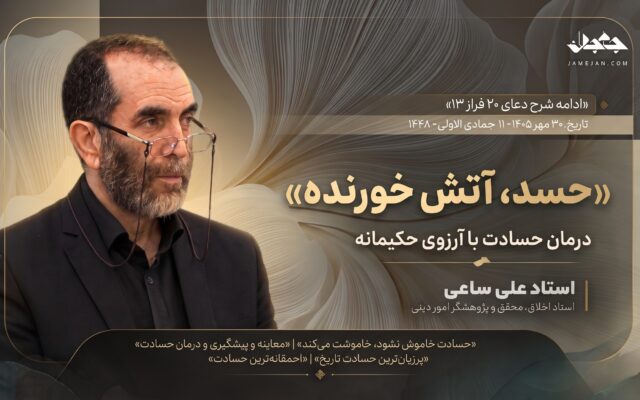
Written transcript of the lecture
The Meshkat-e Noor teachings series🌻🔆Ali: “The Pen of Love and Ecstasy”🔆🌻
🌼🔆🌼Muḥammadan Unity, ʿAlawī Manifestation🌼🔆🌼
🌹🔅☘️ بِسْمِ اللَّهِ الرَّحْمنِ الرَّحيمِ ☘️🔅🌹
🔅🌹 “The Secret of Love’s Veil” “The Secret of the Pen and Existence” “The Secret of the Transcendent Gaze” “The Ecstatic Pen” “13 Rajab” and more … Summary with addendum 1404.10.13 Ali Saei (Abdullah Meshkat) 110.141(903) 🌹🔅
✳️❇️✅✨💫🔅🔆
🌸🔆ن و القلم و ما یسطرون🔆🌸
🌷The primordial calligrapher coloured the world with the design of the pen, through the soul of the pen.
🌹May your soul be the tablet of the ʿAlawī pen, eternal and everlasting.
🌻May its blessed birth shine forever in the sanctuary of your heart.
❇️Ali and the Secret of the Pen
💫 عَنْ أَبِي الْحَسَنِ مُوسَى ع قَالَ سَأَلْتُهُ عَنْ قَوْلِ اللَّهِ عَزَّ وَ جَلَ ن وَ الْقَلَمِ وَ ما يَسْطُرُونَ فَالنُّونُ اسْمٌ لِرَسُولِ اللَّهِ وَ الْقَلَمُ اسْمٌ لِأَمِيرِ الْمُؤْمِنِينَ صَلَوَاتُ اللَّهِ عَلَيْهِمَا وَ عَلَى ذُرِّيَتِهِمَا.[1]
🔆Imam Musa ibn Jaʿfar (AS) said: I asked him about the words of God, Mighty and Exalted: «ن وَالْقَلَمِ وَمَا یَسْطُرُونَ» (Nun; by the pen and what they write).
He said: “Nun is a name for the Messenger of God, and the Pen is a name for the Commander of the Faithful (AS). May God’s blessings be upon them both and upon their descendants.”
❇️Muḥammadan Unity and ʿAlawī Manifestation
The Unity of Being is, in reality, unity in the Muḥammadan Reality and its ʿAlawī unfolding.
❇️The Inkpot of the World and the Design of the World
“ن وَ الْقَلَمِ وَ ما يَسْطُرُونَ ” is like “inkpot and pen,” and like “existence and quiddity.”
The calligrapher of existence sets the pen to existence’s inkpot and draws upon existence’s tablet.
From its beauty emerge designs of flowers and graceful lines.
“ن” is like the divine will, and the “Pen” is like God’s decree; it is like pleasure and what is pleasing.
The Pen is the secret of the Master’s saying: «انا النقطه و انا الخط».
The living Pen, the living Point, and the Line are the current of life.
If we are truly beneath the shelter of Ali’s wilāya, its effects will become manifest in our souls. The Pen writes upon the tablet of our souls; as it moves, lines, designs and pages are added to us. This is the secret of growth and expansion in the world of existence.
The Pen that inscribes divine unity is the beloved of eternal love.
The world is a book of divine art, and Ali is the pen of divine art.
❇️The Point Is the Singularity of the World of Being
The living Point: the reality of Ali’s wilāya (AS), the source of manifestation and the centre around which all the lines of guidance revolve.
The Line, the current of life: the journey of being from its origin to its return, guided and enlivened under the gaze of this Pen and Point.
The world is a book whose pen never dies, whose point never falls silent, and whose lines flow forever.
☘️The Effects of Wilāya Upon the Tablet of the Soul
When a person comes under the shelter of Ali’s wilāya (AS), the divine Pen begins inscribing divine unity and knowledge upon the tablet of their soul.
This inscription adds luminous lines to the pages of a person’s being: the line of faith. The line of love. The line of sincerity. The line of witness. Lines of wonders, and more …
This is the secret of growth: through connection to that Point (wilāya), a person enters the course set by God and soars from earth to the heavens and beyond.
☘️The Pen That Inscribes Divine Unity and the Ecstasy of Love
“God created the Pen from the Light of the Tablet and said to it: ‘Write My Oneness!’ The Pen then remained intoxicated and enraptured by the Word of God for a thousand years.”
This is not the intoxication of earthly wine, but the pure intoxication of divine Oneness “قُلْ هُوَ اللَّهُ أَحَدٌ.”
On hearing this call to divine Oneness, the Pen plunged into its boundless ocean and remained for a thousand years in ecstasy and rapture.
☘️ Sacred Delight and Sacred Beauty
Sacred delight is the mystic ecstasy that arises from union with the reality of wilayah.
Sacred beauty is divine beauty, manifest in the mirror of creation and in the Word of God.
Worldly pleasures and beauties are only faint shadows of that infinite reality.
☘️ The Word of God: Primordial, Pure Wine
The Word of God (the Quran, revelation, the Divine Names) is a pure wine that intoxicates the souls of mystic lovers.
This wine is made of light, and its intoxication brings insight, wakefulness, ardor, and longing.
☘️ How These Meanings Are Connected to the Alid Wilayah:
Ali (AS) is the very point from which the Pen’s writing of divine Oneness begins.
The path of his wilayah is the path that leads lovers to the meeting with God.
The Pen’s intoxication symbolizes Ali’s (AS) love for God, which was manifest in his prayers and intimate supplications:
“إلهی! کَفَی بِی عِزّاً أنْ أکُونَ لَکَ عَبْداً، وَ کَفَی بِی فَخْراً أنْ تَکُونَ لِی رَبّاً”
“O God! It is enough honor for me that I am Your servant, and enough glory for me that You are my Lord.”
☘️ A Lesson for Us Today:
1. If we want our lives to have meaning, we must place ourselves on the path of wilayah.
2. If we want to taste true delight and beauty, we must drink from the wine of divine Oneness (through the Quran, supplication, and worship).
3. Mystic intoxication can be attained only in the light of love for the Quran, Ali (AS), and the Ahl al-Bayt (AS).
This cup of light is the very Word of God that intoxicated the Pen, and of which Ali (AS) became the interpreter.
🌙✨ وَ مَا تَوْفِيقِی إِلَّا بِاللَّهِ، عَلَيْهِ تَوَكَّلْتُ وَ إِلَيْهِ أُنِيبُ.
❇️ Writing of Divine Oneness
💫 وَ خَلَقَ مِنْ نُورِ اللَّوْحِ الْقَلَمَ وَ قَالَ لَهُ اكْتُبْ تَوْحِيدِي فَبَقِيَ الْقَلَمُ أَلْفَ عَامٍ سَكْرَانَ مِنْ كَلَامِ اللَّهِ تَعَالَى فَلَمَّا أَفَاقَ قَالَ اكْتُبْ قَالَ يَا رَبِّ وَ مَا أَكْتُبُ قَالَ اكْتُبْ لَا إِلَهَ إِلَّا اللَّهُ مُحَمَّدٌ رَسُولُ اللَّهِ فَلَمَّا سَمِعَ الْقَلَمُ اسْمَ مُحَمَّدٍ ص خَرَّ سَاجِداً وَ قَالَ سُبْحَانَ الْوَاحِدِ الْقَهَّارِ سُبْحَانَ الْعَظِيمِ الْأَعْظَمِ ثُمَّ رَفَعَ رَأْسَهُ مِنَ السُّجُودِ وَ كَتَبَ لَا إِلَهَ إِلَّا اللَّهُ مُحَمَّدٌ رَسُولُ اللَّهِ [2]
🔆“God created the Pen from the Light of the Tablet and said to it: ‘Write My Oneness!’ The Pen then remained intoxicated (and enraptured) by the Word of God Most High for a thousand years. When it came to its senses (after that state of ecstasy), God said: ‘Write!’
The Pen said: ‘My Lord! What shall I write?’
He said: ‘Write: لا إله إلا الله محمد رسول الله.’
When the Pen heard the name of Muhammad (PBUH), it fell prostrate and said: ‘Glory be to God, the One, the All-Conquering! Glory be to the Greatest of the great!’ Then it raised its head from prostration and wrote: لا إله إلا الله محمد رسول الله.”
☘️ A Mystical and Luminous Commentary on This Tradition:
This tradition is among the most subtle and profound mystical texts on the honor of the Prophet’s (PBUH) existence and the reality of the testimony of faith. In it, heavenly beings such as the Pen bow in humility before the greatness of the Messenger of God (PBUH).
1. The Creation of the Pen from the Light of the Tablet
The Pen from the Light of the Tablet: The Pen is the manifestation of that very reality of divine knowledge.
2. The Command “Write My Oneness” and a Thousand Years of Ecstasy
God commands the Pen to write of His oneness.
Oneness is not merely a verbal expression; it is an essential, existential reality of which all existence is a sign and imprint.
The Pen’s ecstasy: Hearing the command to write of divine oneness plunged the Pen into such rapture and rhapsody that it remained in that state for a thousand years.
This ecstasy symbolizes the love and attraction that celestial beings experience when they hear the word of God.
3. The Pen Awakens and Asks
After a thousand years, the Pen comes to its senses—that is, it emerges from its ecstatic state.
God commands it again: “Write!”
The Pen’s question (“What shall I write?”) shows that divine oneness is something to be inscribed through divine instruction, not something known in advance.
4. The Command to Write “There is no god but God; Muhammad is the Messenger of God”
Here, divine oneness is defined in the form of the two testimonies of faith.
Key point: Divine oneness is not complete without affirming the prophethood of Muhammad (PBUH). This underscores the inseparable bond between divine oneness and prophethood.
The Pen’s glorification: “سُبْحَانَ الْوَاحِدِ الْقَهَّارِ سُبْحَانَ الْعَظِيمِ الْأَعْظَمِ”
☘️What this account teaches us:
1. The two testimonies of faith are not merely a phrase; they are an existential reality for which the world was created.
2. Muhammad (PBUH) is the axis of divine oneness: it remains incomplete without accepting his prophethood and the authority of the Imams (AS).
3. Spiritual states such as the Pen’s ecstasy are natural to celestial beings; human beings, too, should be transported with joy when they hear the name of God and His Prophet.
4. The Pen writes of divine oneness; the reality is the authority of the Imams. To deny the authority of Ali and his family is to deny the reality of divine oneness!
❇️The Ecstatic Pen
The Pen that writes of God’s oneness is intoxicated by God’s word; its state is a pure, sacred ecstasy embracing all existence.
Sacred delight is part of this state of being.
Every pleasure and beauty in our world is but a shadow of that mystery and the ecstatic state of existence.
The Word of God is pure, pristine wine for a sacred ecstasy stretching back to pre-eternity.
☘️A Mystical Commentary on “Muhammadan Unity and Alid Manifestation”
1. Unity in the Muhammadan Reality (PBUH)
In other words, the whole world is an expansive interpretation of that same singular reality, like a book whose every page leads back to one author.
2. The Manifestation (Appearance) of Ali (AS)
Manifestation means appearance and self-disclosure.
If the Muhammadan Reality is the inward essence and source, the Alid manifestation is its appearance and self-disclosure in the world.
The Commander of the Faithful, Ali (AS), is the fullest embodiment of the divine names and the practical expression of prophetic reality. As the well-known hadith says:
“أَنَا مَدِينَةُ الْعِلْمِ وَ عَلِيٌّ بَابُهَا”
Ali (AS) is the gate to the city of Muhammadan knowledge: whoever wishes to enter into the unity of the Muhammadan Reality must pass through the gate of Ali’s authority (AS).
3. A Sense of Muhammadan Oneness
Muhammadan unity = the principle of oneness.
Alid manifestation = its manifestations.
☘️A Symbolic Commentary on “The Inkwell of the World and the Design of the World”
1. “N”: The Inkwell of Being (the Ink of Existence)
In the narrations, it was described as a heavenly river or an angel (a Muhammadan name) that turns into ink.
This ink is the fountainhead of the light of existence, flowing from the source of God’s mercy.
2. “The Pen”: the shaper of existence
The Pen, an Alid symbol, is the primordial calligrapher that traces the forms of the world upon the tablet of existence.
Divine destiny is written with this Pen.
3. “What they write”: floral patterns and graceful lines
This phrase points to all the beautiful phenomena of the world: stars, galaxies, flowers, human beings, histories, and more.
Each is a line traced by the divine Pen upon the tablet of the universe.
The beauty of the world is a manifestation of divine beauty, drawn by the Pen of existence.
4. Pleasure and the delights of the senses: the fruit of this artistry
Pleasure is the perception of these beauties.
The delights of the senses are means by which human beings are led to gratitude to and praise of the Creator.
The perfect human being sees the line of the divine Pen in every phenomenon and takes delight in it.
☘️The connection between these two sections:
Muhammadan Unity = the inkwell (the ink of existence).
Alid manifestation = the Pen (the shaper).
The patterns of the world = manifestations of wilaya in history and nature.
☘️Final conclusion:
The world is God’s artfully crafted book:
Its ink = the Muhammadan Light.
Its Pen = Alid wilaya.
Its painter = the Most Sacred Divine Essence.
Its readers = the gnostics and lovers of the Ahl al-Bayt (AS).
“All the world is a place where the Real is manifested, and He is the true Beloved.”
And this place of manifestation has been inscribed by the Pen of wilaya.
Existence is a love poem that the Pen of Ali (AS) recites for the Beloved of eternity.
🌹✨
❇️Supplement to the discussion of “Nun, by the Pen, and …”
💫 عَنْ أَبِي الْحَسَنِ مُوسَى ع قَالَ سَأَلْتُهُ عَنْ قَوْلِ اللَّهِ عَزَّ وَ جَلَ ن وَ الْقَلَمِ وَ ما يَسْطُرُونَ فَالنُّونُ اسْمٌ لِرَسُولِ اللَّهِ وَ الْقَلَمُ اسْمٌ لِأَمِيرِ الْمُؤْمِنِينَ صَلَوَاتُ اللَّهِ عَلَيْهِمَا وَ عَلَى ذُرِّيَتِهِمَا.[3]
🔆Imam Musa ibn Ja‘far (AS) said: I asked him about the words of God, the Almighty and Glorious: “Nun وَالْقَلَمِ وَمَا یَسْطُرُونَ” (Nun; by the Pen and what they write).
He said: “Nun is a name for the Messenger of God, and the Pen is a name for the Commander of the Faithful (AS). May God’s blessings be upon them both and their descendants.”
☘️ Decoding the letter “Nun”
The letter “N” at the beginning of Surat al-Qalam is one of the disjointed letters of the Quran, whose meaning is known to God alone.
Imam al-Kazim (AS) interprets it as referring to the Messenger of God (PBUH). This interpretation has several grounds:
Nun means “whale,” and in narrations the Prophet (PBUH) is called a “whale,” the sea of knowledge and wisdom.
Nun has a rounded, closed form, symbolising the Prophet’s (PBUH) perfection and finality.
“N” has also been interpreted and expounded as meaning “sacrifice” and “inkwell”; that is, “N” is the inkwell for “the Pen.”
☘️ Interpreting “the Pen” as the Commander of the Faithful (AS)
In this verse, the Pen symbolises knowledge, governance, and the recording of truths.
Ali (AS) is interpreted as the divine Pen because:
He was the writer of the Prophet’s knowledge (PBUH) (hadith: «أَنَا مَدِينَةُ الْعِلْمِ وَ عَلِيٌّ بَابُهَا»).
All the truths of the Qur’an and the Sunnah have been inscribed on the page of the universe by the pen of his wilayah.
☘️The Connection between the Nūn and the Pen
The nūn (the Prophet) is the source of knowledge and revelation.
The pen (Ali) inscribes that knowledge and puts it into effect in the world.
God’s oath by these two points to the importance of prophethood and wilayah in the order of existence.
☘️“And what they write”
In some commentaries, “what they write” refers to the Immaculate Imams (AS), descendants of the Prophet and Ali (AS), who carry on the line of the pen of wilayah.
They are the writers of divine wisdom upon the pages of history and the hearts of the faithful.
☘️Theological and Mystical Insights:
1. The Qur’an is the Book of wilayah: even its letters point to the truths of wilayah.
2. The inseparable bond between prophethood and imamate: the nūn and the pen are two parts of a single reality; they cannot be separated.
3. Ali (AS) as a manifestation of divine knowledge: just as the pen gives expression to thought, Ali (AS) gives expression to God’s knowledge in the world.
4. The inner interpretation of the Qur’an: this hadith is an example of the profound interpretations of the Ahl al-Bayt (AS), which reveal the Qur’an’s hidden layers.
☘️A Message for Today:
We should read the Qur’an with the translations and commentaries of the Ahl al-Bayt (AS) to reach this depth.
The Qur’an’s oaths remind us of the greatness of God and His friends; we should reflect on them.
The pen of wilayah (the Imams) is still at work; we should make ourselves a blank page for what it writes.
❇️Love of Ali Is a Veil
💫وَ رَوَى جَابِرُ بْنُ عَبْدِ اللَّهِ الْأَنْصَارِيُّ عَنْ أَبِي ذَرٍّ قَالَ كُنْتُ جَالِساً عِنْدَ النَّبِيِّ ص فِي الْمَسْجِدِ إِذْ أَقْبَلَ عَلِيٌّ ع فَلَمَّا رَآهُ مُقْبِلًا قَالَ يَا بَا ذَرٍّ مَنْ هَذَا الْمُقْبِلُ فَقُلْتُ عَلِيٌّ يَا رَسُولَ اللَّهِ فَقَالَ يَا بَا ذَرٍّ أَ تُحِبُّهُ فَقُلْتُ إِي وَ اللَّهِ يَا رَسُولَ اللَّهِ إِنِّي لَأُحِبُّهُ وَ أُحِبُّ مَنْ يُحِبُّهُ فَقَالَ يَا بَا ذَرٍّ أَحِبَّ عَلِيّاً وَ أَحِبَّ مَنْ أَحَبَّهُ فَإِنَّ الْحِجَابَ الَّذِي بَيْنَ الْعَبْدِ وَ بَيْنَ اللَّهِ تَعَالَى حُبُّ عَلِيِّ بْنِ أَبِي طَالِبٍ ع يَا بَا ذَرٍّ أَحِبَّ عَلِيّاً مُخْلِصاً فَمَا مِنِ امْرِئٍ أَحَبَّ عَلِيّاً مُخْلِصاً وَ سَأَلَ اللَّهَ تَعَالَى شَيْئاً إِلَّا أَعْطَاهُ وَ لَا دَعَا اللَّهَ إِلَّا لَبَّاهُ فَقُلْتُ يَا رَسُولَ اللَّهِ إِنِّي لَأَجِدُ حُبَّ عَلِيِّ بْنِ أَبِي طَالِبٍ عَلَى كَبِدِي كَبَارِدِ الْمَاءِ أَوْ كَعَسَلِ النَّحْلِ أَوْ كَآيَةٍ مِنْ كِتَابِ اللَّهِ أَتْلُوهَا وَ هُوَ عِنْدِي أَحْلَى مِنَ الْعَسَلِ فَقَالَ رَسُولُ اللَّهِ ص نَحْنُ الشَّجَرَةُ الطَّيِّبَةُ وَ الْعُرْوَةُ الْوُثْقَى وَ مُحِبُّونَا وَرَقُهَا فَمَنْ أَرَادَ الدُّخُولَ إِلَى الْجَنَّةِ فَلْيَسْتَمْسِكْ بِغُصْنٍ مِنْ أَغْصَانِهَا[4]
🔆Jābir ibn ʿAbd Allāh al-Anṣārī relates from Abū Dharr, who said: I was sitting with the Prophet (PBUH) in the mosque when Ali (AS) entered. Seeing him approach, the Prophet said, “Abū Dharr, who is that coming?” I replied, “O Messenger of God, it is Ali.” He said, “Abū Dharr, do you love him?” I replied, “Yes, by God, O Messenger of God. I love him, and I love everyone who loves him.” He said, “Abū Dharr, love Ali, and love those who love him, for the veil between the servant and God, the Exalted, is love for Ali ibn Abī Ṭālib (AS). Abū Dharr, love Ali sincerely. No one sincerely loves Ali and asks God for anything without God granting it to him; nor does anyone pray without God answering him.”
I said, “O Messenger of God, I feel my love for Ali ibn Abī Ṭālib within me like cool water, like honey, or like a verse from the Book of God that I recite—and to me it is sweeter than honey.”
The Prophet (PBUH) said: “We are the pure tree and the firm handhold, and our lovers are the leaves of that tree. Whoever wishes to enter Paradise must cling to one of its branches.”
❇️Hijab: the sweetness before the encounter
Divine nearness tastes of ʿAli al-Murtaḍā!
Feeling love for ʿAli in your heart is a sign of nearness to God.
Hijab is no obstacle; it is the very means, gateway, sign, adornment, emblem, name, and invitation.
Hijab both veils and reveals.
Hijab is the beloved’s letter.
🌸
Gateway: Every veil is a door to a higher truth.
Sign: Hijab shows that something hidden and exalted exists.
Adornment: Hijab has beauty of its own, like the veiling of the stars in the sky.
Emblem: Every veil marks a level among the levels of existence.
Name: Every name veils the Essence, yet that same name leads us to the Essence.
Invitation: Hijab invites us to lift the veil itself; that is, it calls us to move toward the depths.
☘️In closing and in summary:
Love for ʿAli (AS) is a luminous veil that:
Keeps us far from the Fire.
Brings us close to God.
Lets us taste the sweetness of love.
Is itself a sign of nearness.
That is why we read in the supplication:
💫 اللَّهُمَّ إِنِّي أَسْأَلُكَ بِكُلِّ اسْمٍ سَمَّيْتَ بِهِ نَفْسَكَ وَ أَنْزَلْتَهُ فِي كُتُبِكَ أَوْ عَلَّمْتَهُ أَحَداً مِنْ خَلْقِكَ أَوِ اسْتَأْثَرْتَ بِهِ فِي عِلْمِ الْغَيْبِ عِنْدَكَ وَ أَسْأَلُكَ بِنُورِ وَجْهِكَ الَّذِي أَشْرَقَتْ لَهُ الظُّلُمَاتُ وَ صَلَحَ بِهِ أَمْرُ الدُّنْيَا وَ الْآخِرَة[5]
🔆O God, I ask You by every name by which You have named Yourself, or which You have sent down in Your Books, or taught to one of Your creatures, or kept uniquely for Yourself in the knowledge of the unseen. And I ask You by the light of Your Face, by whose radiance the darkness was illumined and the affairs of this world and the Hereafter were set right.
☘️Sincere love and the answering of supplications
Sincerity is the condition for receiving the blessings of love: “أَحِبَّ عَلِيّاً مُخْلِصاً”.
Sincere love for ʿAli (AS) brings about:
Supplications being answered: “لَا دَعَا اللَّهُ إِلَّا لَبَّاهُ”.
Needs being met: “سَأَلَ اللَّهُ شَيْئاً إِلَّا أَعْطَاهُ”.
Love for ʿAli (AS), together with love for God and His Messenger, purifies the heart of all stain.
Abu Dharr says that love for ʿAli (AS) in his heart was like “cool water” (a sign of purity and life), “honey” (a sign of sweetness and healing), and “a Quranic verse” (a sign of illumination and guidance).
Purification, sweetening, intensifying life, sustaining life, delight, and cultivating the heart with cool water.
Honey brings the sweetness of faith to life.
A Quranic verse makes connection to revelation possible, with all its interpretations and deeper meanings.
The pure tree: a reference to the verse “أَلَمْ تَرَ كَيْفَ ضَرَبَ اللَّهُ مَثَلًا كَلِمَةً طَيِّبَةً كَشَجَرَةٍ طَيِّبَةٍ أَصْلُهَا ثَابِتٌ وَفَرْعُهَا فِي السَّمَاءِ” (Ibrahim: 24). The root of this tree is prophethood, its branches are Imamate, and its fruits are knowledge and guidance.
The firm handhold: a reference to the verse “فَمَنْ يَكْفُرْ بِالطَّاغُوتِ وَيُؤْمِنْ بِاللَّهِ فَقَدِ اسْتَمْسَكَ بِالْعُرْوَةِ الْوُثْقَى” (al-Baqarah: 256).
The firm handhold is the wilayah of the Ahl al-Bayt (AS).
The friends of the Ahl al-Bayt (AS) are the leaves of this tree: their very presence adorns and beautifies the tree of wilayah, and they come to life through their connection to its branches (the Imams).
☘️The condition for entering Paradise
«فلیستمسک بغصن من أغصانها»: One must cling to a branch of this tree.
The branches are the Imams, the Pure Ones (AS), each of whom embodies wilayah in his own time.
To cling to a branch means to follow the Imam of one’s time in practice (in our present age, the Mahdi, may peace be upon him).
☘️Practical lessons from the hadith:
1. Love of Ali (AS), the heart of faith: This love is more than a feeling; it calls for a practical commitment to wilayah and enmity toward his enemies.
2. Love without sincerity is of no benefit: Hypocrisy in one’s friendship with the Ahl al-Bayt (AS) leads one to Hell.
3. Supplication through wilayah: For a prayer to be answered, the heart must be polished with love for the Ahl al-Bayt (AS).
4. The Ahl al-Bayt (AS) are the only path to salvation: Paradise is unattainable without holding fast to their wilayah.
❇️In Ali’s place, knowledge and wisdom are absent
All the information, knowledge and wisdom of the universe are gathered in the soul of our master, Amir al-Mu’minin, and his pure descendants. His wilayah means connecting our system to this immense supercomputer, so that we may know and gain mastery over the whole universe!
But why has humankind betrayed itself and our world?
We are imprisoned in the prison of the End Times, and we do not even know it. Health, hygiene, comfort, the economy, politics and religion are all confined and captive, hemmed in by darkness!
💫🔅يس : 12 إِنَّا نَحْنُ نُحْيِ الْمَوْتى وَ نَكْتُبُ ما قَدَّمُوا وَ آثارَهُمْ وَ كُلَّ شَيْءٍ أَحْصَيْناهُ في إِمامٍ مُبينٍ
❇️ سَلُونِي قَبْلَ أَنْ تَفْقِدُونِي
The Shia should receive transcendent answers to their questions from this mighty source. To be Shia means to be connected to the network of transcendent intelligence.
It also awakens the dormant capacities within us!
God’s signs have an outward and an inward dimension. Ali (AS) is the greatest divine sign of God, with majestic outward and inward dimensions!
Why did he not reveal more of himself? Because the test would have lost its meaning!
The Imam has disciples among the general public, private disciples, the closest of disciples, and secret disciples, across every realm—from inanimate matter to the inhabitants of the celestial kingdom.
💫أَيُّهَا النَّاسُ سَلُونِي قَبْلَ أَنْ تَفْقِدُونِي فَلَأَنَا بِطُرُقِ السَّمَاءِ أَعْلَمُ مِنِّي بِطُرُقِ الْأَرْضِ قَبْلَ أَنْ تَشْغَرَ بِرِجْلِهَا فِتْنَةٌ تَطَأُ فِي خِطَامِهَا وَ تَذْهَبُ بِأَحْلَامِ قَوْمِهَا[6]
🔆O people! Ask me before you lose me, for I know the paths of heaven better than the paths of earth. (Say this) before a manifest tribulation arises, striding forward with its reins and carrying away the people’s reason.
🌸Had they knocked at the Gate of God before the tribulation of Shighar and the loss of sound judgment, they would have escaped many of the dark afflictions that hold our age captive.
The world needed Ali, not Ali the world!
They ignored his warning!
The king of the world was among us in disguise, and we failed to recognize him!
Appearances deceive, but sealed hearts and innate dispositions kept us from understanding Ali!
Our Imam of the Age calls for hearts and innate dispositions that are open!
Amir al-Mu’minin (AS) knew not only the paths of the heavens, but also what preceded their creation and the making of the heavens. This truth is evident in the sermons of Nahj al-Balagha.
«طرق السماء»: “The paths of the heavens”—that is, unseen and heavenly matters, matters of faith, and metaphysical truths hidden from people.
❇️The secret of surveying the soul’s heaven and the highest celestial realm
☘️Had we equipped ourselves with the true authority of His Eminence the Commander of the Faithful and the divine proofs, we would have surveyed the celestial realm of the heavens.
💫 الغاشية : 18 وَ إِلَى السَّماءِ كَيْفَ رُفِعَتْ
🔆Do they not look at the sky and see how it has been raised?
☘️We must look upon the heavens with heavenly instruments, behold them with a heavenly eye. To behold the highest celestial realm, we need the Eye of God; we need the system of ʿAbd Allāh; we need ʿAlī, the Commander of the Faithful (AS).
💫 ق : 6 أَ فَلَمْ يَنْظُرُوا إِلَى السَّماءِ فَوْقَهُمْ كَيْفَ بَنَيْناها وَ زَيَّنَّاها وَ ما لَها مِنْ فُرُوجٍ
🔆Have they not looked at the sky above them, how We built it and adorned it with stars, with no cracks or flaws in it?
💫 الأعراف : 185 أَ وَ لَمْ يَنْظُرُوا في مَلَكُوتِ السَّماواتِ وَ الْأَرْضِ وَ ما خَلَقَ اللَّهُ مِنْ شَيْءٍ وَ أَنْ عَسى أَنْ يَكُونَ قَدِ اقْتَرَبَ أَجَلُهُمْ فَبِأَيِّ حَديثٍ بَعْدَهُ يُؤْمِنُونَ
🔆Have they not looked carefully at the dominion and order of the heavens and the earth, and at all that God has created? Perhaps their end is near. In what message, then, will they believe after this?
💫أَيُّهَا النَّاسُ سَلُونِي قَبْلَ أَنْ تَفْقِدُونِي فَلَأَنَا بِطُرُقِ السَّمَاءِ أَعْلَمُ مِنِّي بِطُرُقِ الْأَرْضِ قَبْلَ أَنْ تَشْغَرَ بِرِجْلِهَا فِتْنَةٌ تَطَأُ فِي خِطَامِهَا وَ تَذْهَبُ بِأَحْلَامِ قَوْمِهَا[7]
☘️«طرق الأرض»: “The paths of the earth”—that is, worldly, mineral, political, social and related matters.
This statement emphasizes that the Imam’s (AS) knowledge surpasses ordinary human knowledge, and that he is more knowledgeable about heavenly matters than earthly ones.
Only one who serves as a bridge between earth and heaven could make such a claim: the Prophet’s (PBUH) successor and heir.
☘️«قَبْلَ أَنْ تَشْغَرَ بِرِجْلِهَا فِتْنَةٌ…»:
«تشغر»: From the root «شَغْر», meaning to open, become unsealed, or be laid bare.
«فتنه»: Here, this refers to the great upheavals of the future, such as the sedition of the Khārijites, the Umayyads and other usurping rulers, as well as civil wars and doctrinal deviations.
☘️«تَطَأُ فِي خِطَامِهَا»: Sedition is like a wild horse that moves forward by its own reins—that is, it is extremely difficult to control.
«تَذْهَبُ بِأَحْلَامِ قَوْمِهَا»: Sedition steals people’s reason and judgment, plunging them into collective madness.
🌸To lose ʿAlī (AS) is to lose light, knowledge, wisdom, peace, well-being, security and the pure faith!
Why were these marvels not revealed to everyone at the very beginning? Because of the mystery of the test.
If everyone entered Paradise and experienced it, faith in Paradise would have no meaning, and the test would serve no purpose!
☘️Making the truth unmistakably clear:
1. The need to draw on the knowledge of the Ahl al-Bayt: In the presence of the Infallible (AS), one must ask him, for after him the upheavals begin.
2. A warning about future upheavals: Through his divinely granted insight, the Imam (AS) foresaw the intellectual and social storms to come and sought to prepare the people.
3. Matters of faith take precedence over politics: The emphasis on «طرق السماء» shows that salvation depends on knowing heavenly truths, not merely on worldly political skill.
4. A historic squandered opportunity: This sermon conveys the bitterness of losing precious opportunities for guidance—when people turned to others instead of seeking the Imam (AS), turning away from light upon light and becoming captive to darkness.
☘️The Creation of the World
🌸Imam Ali (AS) speaks not only of the paths of the heavens, but also of what preceded the making of the heavens and their paths!
💫أَنْشَأَ الْخَلْقَ إِنْشَاءً وَ ابْتَدَأَهُ ابْتِدَاءً بِلَا رَوِيَّةٍ أَجَالَهَا وَ لَا تَجْرِبَةٍ اسْتَفَادَهَا وَ لَا حَرَكَةٍ أَحْدَثَهَا وَ لَا هَمَامَةِ نَفْسٍ اضْطَرَبَ فِيهَا أَحَالَ الْأَشْيَاءَ لِأَوْقَاتِهَا وَ [لَاءَمَ] لَأَمَ بَيْنَ مُخْتَلِفَاتِهَا وَ غَرَّزَ غَرَائِزَهَا وَ أَلْزَمَهَا أَشْبَاحَهَا عَالِماً بِهَا قَبْلَ ابْتِدَائِهَا مُحِيطاً بِحُدُودِهَا وَ انْتِهَائِهَا عَارِفاً بِقَرَائِنِهَا وَ أَحْنَائِهَا: ثُمَّ أَنْشَأَ سُبْحَانَهُ فَتْقَ الْأَجْوَاءِ وَ شَقَّ الْأَرْجَاءِ وَ سَكَائِكَ الْهَوَاءِ فَأَجْرَى فِيهَا مَاءً مُتَلَاطِماً تَيَّارُهُ مُتَرَاكِماً زَخَّارُهُ حَمَلَهُ عَلَى مَتْنِ الرِّيحِ الْعَاصِفَةِ وَ الزَّعْزَعِ الْقَاصِفَةِ فَأَمَرَهَا بِرَدِّهِ وَ سَلَّطَهَا عَلَى شَدِّهِ وَ قَرَنَهَا إِلَى حَدِّهِ الْهَوَاءُ مِنْ تَحْتِهَا فَتِيقٌ وَ الْمَاءُ مِنْ فَوْقِهَا دَفِيقٌ ثُمَّ أَنْشَأَ سُبْحَانَهُ رِيحاً اعْتَقَمَ مَهَبَّهَا وَ أَدَامَ مُرَبَّهَا وَ أَعْصَفَ مَجْرَاهَا وَ أَبْعَدَ مَنْشَأَهَا فَأَمَرَهَا بِتَصْفِيقِ الْمَاءِ الزَّخَّارِ وَ إِثَارَةِ مَوْجِ الْبِحَارِ فَمَخَضَتْهُ مَخْضَ السِّقَاءِ وَ عَصَفَتْ بِهِ عَصْفَهَا بِالْفَضَاءِ تَرُدُّ أَوَّلَهُ [عَلَى] إِلَى آخِرِهِ وَ سَاجِيَهُ [عَلَى] إِلَى مَائِرِهِ حَتَّى عَبَّ عُبَابُهُ وَ رَمَى بِالزَّبَدِ رُكَامُهُ فَرَفَعَهُ فِي هَوَاءٍ مُنْفَتِقٍ وَ جَوٍّ مُنْفَهِقٍ فَسَوَّى مِنْهُ سَبْعَ سَمَوَاتٍ جَعَلَ سُفْلَاهُنَّ مَوْجاً مَكْفُوفاً وَ عُلْيَاهُنَّ سَقْفاً مَحْفُوظاً وَ سَمْكاً مَرْفُوعاً بِغَيْرِ عَمَدٍ يَدْعَمُهَا وَ لَا دِسَارٍ [يَنْتَظِمُهَا] يَنْظِمُهَا ثُمَّ زَيَّنَهَا بِزِينَةِ الْكَوَاكِبِ وَ ضِيَاءِ الثَّوَاقِبِ وَ أَجْرَى فِيهَا سِراجاً مُسْتَطِيراً وَ قَمَراً مُنِيراً فِي فَلَكٍ دَائِرٍ وَ سَقْفٍ سَائِرٍ وَ رَقِيمٍ مَائِرٍ.
❇️The Origin of Creation
أَنْشَأَ الْخَلْقَ إِنْشَاءً وَ ابْتَدَأَهُ ابْتِدَاءً
He brought creation into being anew and set it in motion at the outset.
بِلَا رَوِيَّةٍ أَجَالَهَا وَ لَا تَجْرِبَةٍ اسْتَفَادَهَا
There was no thought to turn over in His mind, nor any experiment from which to learn.
وَ لَا حَرَكَةٍ أَحْدَثَهَا وَ لَا هَمَامَةِ نَفْسٍ اضْطَرَبَ فِيهَا
No movement brought it forth, nor any inner agitation that might unsettle Him.
أَحَالَ الْأَشْيَاءَ لِأَوْقَاتِهَا
He assigned things their appointed times
وَ [لَاءَمَ] لَأَمَ بَيْنَ مُخْتَلِفَاتِهَا
and joined together their differences in harmony.
وَ غَرَّزَ غَرَائِزَهَا وَ أَلْزَمَهَا أَشْبَاحَهَا
He implanted their innate dispositions—their natures and inward inclinations—and made their distinct forms incumbent upon them.
عَالِماً بِهَا قَبْلَ ابْتِدَائِهَا مُحِيطاً بِحُدُودِهَا وَ انْتِهَائِهَا
Yet He knew them before their beginning and encompassed their limits and ends,
عَارِفاً بِقَرَائِنِهَا وَ أَحْنَائِهَا
aware of their connections—their companions and attendant circumstances—and their inner bends and states.
ثُمَّ أَنْشَأَ سُبْحَانَهُ فَتْقَ الْأَجْوَاءِ وَ شَقَّ الْأَرْجَاءِ وَ سَكَائِكَ الْهَوَاءِ
Then, glorified be He, He brought forth the cleaving of the expanses of air and the opening of its horizons and layers.
فَأَجْرَى فِيهَا مَاءً مُتَلَاطِماً تَيَّارُهُ مُتَرَاكِماً زَخَّارُهُ
Then He set in motion within them water whose currents surged against one another and whose roaring swelled in great masses.
حَمَلَهُ عَلَى مَتْنِ الرِّيحِ الْعَاصِفَةِ وَ الزَّعْزَعِ الْقَاصِفَةِ
He carried it upon the back of a fierce wind and a crashing tempest.
فَأَمَرَهَا بِرَدِّهِ وَ سَلَّطَهَا عَلَى شَدِّهِ وَ قَرَنَهَا إِلَى حَدِّهِ
Then He commanded the wind to return the water and made it master over its compression, binding it to its bounds.
الْهَوَاءُ مِنْ تَحْتِهَا فَتِيقٌ وَ الْمَاءُ مِنْ فَوْقِهَا دَفِيقٌ
The air beneath it was spread open, and the water flowed above it.
ثُمَّ أَنْشَأَ سُبْحَانَهُ رِيحاً اعْتَقَمَ مَهَبَّهَا وَ أَدَامَ مُرَبَّهَا وَ أَعْصَفَ مَجْرَاهَا وَ أَبْعَدَ مَنْشَأَهَا
Then, glory be to Him, He brought forth a wind whose direction of flow He made barren of offspring (or: firm and strong), whose duration He made enduring, whose course He made swift, and whose place of rising He set far away.
فَأَمَرَهَا بِتَصْفِيقِ الْمَاءِ الزَّخَّارِ وَ إِثَارَةِ مَوْجِ الْبِحَارِ
Then He commanded it to churn the surging water and stir the waves of the seas.
فَمَخَضَتْهُ مَخْضَ السِّقَاءِ وَ عَصَفَتْ بِهِ عَصْفَهَا بِالْفَضَاءِ
It churned it as one churns a waterskin, and drove it onward with a force like that with which it rushes through the boundless expanse,
تَرُدُّ أَوَّلَهُ [عَلَى] إِلَى آخِرِهِ وَ سَاجِيَهُ [عَلَى] إِلَى مَائِرِهِ
turning its beginning back toward its end, and its still water into flowing, turbulent water,
حَتَّى عَبَّ عُبَابُهُ وَ رَمَى بِالزَّبَدِ رُكَامُهُ
until the foam on its surface overflowed and its mass of waves cast up foam.
فَرَفَعَهُ فِي هَوَاءٍ مُنْفَتِقٍ وَ جَوٍّ مُنْفَهِقٍ
Then He raised it into the spread-open air and the spacious expanse.
فَسَوَّى مِنْهُ سَبْعَ سَمَوَاتٍ
Thereafter, He fashioned the seven heavens, making them level and even:
جَعَلَ سُفْلَاهُنَّ مَوْجاً مَكْفُوفاً وَ عُلْيَاهُنَّ سَقْفاً مَحْفُوظاً وَ سَمْكاً مَرْفُوعاً
their lowest a wave held back and confined, their highest a protected roof and an elevated height,
بِغَيْرِ عَمَدٍ يَدْعَمُهَا وَ لَا دِسَارٍ [يَنْتَظِمُهَا] يَنْظِمُهَا
without any pillars to support them or pegs to join them together.
ثُمَّ زَيَّنَهَا بِزِينَةِ الْكَوَاكِبِ وَ ضِيَاءِ الثَّوَاقِبِ
Then He adorned them with the ornament of stars and the radiance of shining celestial bodies,
وَ أَجْرَى فِيهَا سِراجاً مُسْتَطِيراً وَ قَمَراً مُنِيراً
and set within them a spreading lamp (the sun) and a shining moon,
فِي فَلَكٍ دَائِرٍ وَ سَقْفٍ سَائِرٍ وَ رَقِيمٍ مَائِرٍ
in a revolving orbit, a moving roof, and a surface (or course) in motion.
❇️Specialized analysis of key vocabulary:
1. أَنْشَأَ / إِنْشَاءً
Root: ن ش أ
Literal meaning: to bring something forth from nonexistence into existence; to originate or create without precedent or any specified prior material. The word denotes primordial creation without precedent, rather than merely making something from existing material. By contrast, «صَنَعَ» is used more often for making something with tools and from existing material.
Technical note: In this sermon, the expression «أَنْشَأَ الْخَلْقَ إِنْشَاءً» با «ابْتَدَأَهُ ابْتِدَاءً» places double emphasis on absolute origination and a beginning with no prior act of creation.
2. رَوِيَّةٍ
Root: ر و ی
Literal meaning: Deep reflection; thought that turns a matter over until reaching a conclusion; weighing the consequences of an action. It derives from «رأی», meaning opinion or thought.
Technical note: The denial of «رویة» in relation to God does not mean haste. Rather, it negates any gradual process of thought, trial and error, or need for consultation. His knowledge is inherent, and His act is immediate.
3. هَمَامَةِ نَفْسٍ
Root: ه م م
Literal meaning:
هَمامَة: From «هَمَّ», meaning to intend; a sudden resolve or passing thought. «هَمامَة» suggests the intensity and agitation of such an intention or thought (like an inner murmur or tumult).
نَفْس: Here, it means the essence and reality of one’s being.
Technical note: This expression refers to any wavering, change, inner agitation, or unsettled resolve in the divine essence before creation. The act of creation proceeds from a firm, unchanging will and a wise divine nature.
4. أَحَالَ الْأَشْيَاءَ لِأَوْقَاتِهَا
Root: ح و ل
Literal meaning: «أَحَالَ», in the fourth verbal form, means to cause, turn, or place something in its proper position.
Technical note: This word points to the precise governance by which every phenomenon is placed within the created order at its appointed and proper time. Creation is not merely bringing things into being; it also entails their wise ordering in time.
5. لَأَمَ / مُخْتَلِفَاتٍ
Root:
لَأَمَ: ل ء م. To join, gather, and bring scattered things into harmony.
مُخْتَلِفَات: خ ل ف. Things that differ in form, nature, or place.
Technical note: This expression conveys harmony amid multiplicity and diversity. God not only created diverse phenomena, but also established an ordered, coherent bond among them.
6. غَرَّزَ غَرَائِزَهَا / أَلْزَمَهَا أَشْبَاحَهَا
Root:
غَرَزَ: غ ر ز. To insert something and set it firmly in its place.
غَرَائِز: (singular: غریزة) An innate disposition, inner impulse, or enduring quality embedded in a being’s nature.
أَلْزَمَ: ل ز م. To bind, attach, or make inseparable.
أَشْبَاح: (singular: شبح) The body, distinctive form, and separate identity of each thing, as opposed to «أرواح».
Technical note: These two clauses complement one another: the first refers to beings’ inner nature (غرائز), and the second to their distinct outward identity (اشباح). God implanted in each being its inner disposition and also assigned it a distinct, enduring outward identity.
7. قَرَائِنِهَا / أَحْنَائِهَا
Root:
قَرَائِن: (singular: قرینة) Things attached to and accompanying something else: the circumstances, attributes, and conditions accompanying each phenomenon.
أَحْنَاء: (singular: حِنو) Curves, hidden angles, inner dimensions, and secrets concealed within things.
Technical note: These two words show that divine knowledge encompasses every aspect of phenomena: both their outward features and accompanying circumstances (قرائن), and their inner reality, secrets, and qualities (احنای).
8. فَتْقَ الْأَجْوَاءِ / شَقَّ الْأَرْجَاءِ
Root:
فَتْق: f-t-q. To split apart something joined together as a single whole (the opposite of «رَتْق», to sew together).
أَجْوَاء: plural of «جو»; spaces, atmospheres, and layers of the atmosphere.
شَقَّ: sh-q-q. To open, part, or make a passage through something.
أَرْجَاء: plural of «رَجاء»; the sides, environs, and various directions of the world.
Technical note: These two verbs describe stages in the creation of the cosmos. First, a unified mass is split apart and separated (فتق); then it is opened up and expanded in different directions and dimensions (شق).
9. سَكَائِكَ الْهَوَاءِ
Root: s-k-k
Literal meaning: «سَكَائِك» is the plural of «سَكِيكَة», meaning layers, strata, and superimposed shells. It derives from «سُكّ», meaning the veins of the earth.
Technical note: This word indicates that the air (or primordial space) was created in multiple, ordered layers, rather than as a shapeless mass.
10. مُتَلَاطِماً / زَخَّارُهُ
Root:
لَطَمَ: l-ṭ-m. To batter together; to collide violently.
زَخَّار: z-kh-r. A mighty roar; the loud, turbulent surge of water or fire. It evokes the awe-inspiring grandeur of motion.
Technical note: These descriptions portray the primordial matter (water) as turbulent, violently colliding, and surging mightily, while subject to the control of divine power (the wind).
11. اعْتَقَمَ مَهَبَّهَا
Root: ع-q-m
Literal meaning: «اعْتَقَمَ» means to render barren. «مَهَبَّ» refers to the direction from which the wind blows.
Technical note: This is a highly elevated, figurative expression. It has two principal interpretations:
First interpretation (the stronger): God created this wind so powerful and concentrated that nothing else—such as scattered or weaker winds—could arise in the direction of its blowing. In other words, it was a single, immensely powerful wind.
Second interpretation: He made its blowing continuous and unceasing, as though it were barren and could not stop to bring anything to fruition. The emphasis is on its persistence and intensity.
12. مَخَضَتْهُ مَخْضَ السِّقَاءِ
Root: m-kh-ḍ
Literal meaning: To churn a liquid vigorously (such as milk in a skin bag) in order to separate its components.
Technical note: Comparing the vast cosmic turbulence to the familiar, everyday act of churning milk offers a vivid, tangible image of divine power on a cosmic scale.
13. عَبَّ عُبَابُهُ / رَمَى بِالزَّبَدِ رُكَامُهُ
Root:
عَبَّ: ʿ-b-b. To overflow and surge forth.
عُبَاب: The foam atop violently surging water.
رَمَى: r-m-y. To cast or throw.
رُكَام: An accumulated mass.
Technical note: These verbs indicate a stage at which the initial turbulence gives rise to great quantities of foam, which separates from the primary substance (water). In cosmological interpretations, this “foam” may refer to the primordial matter from which the heavens were formed.
14. سَمْكاً مَرْفُوعاً / دِسَارٍ يَنْظِمُهَا
Root:
سَمْك: s-m-k. Height, thickness, and elevation.
دِسَار: d-s-r. Large nails (such as tent pegs), or a fastening that joins parts together.
نَظَمَ: n-ẓ-m. To string together and arrange in order.
Technical note: The denial of any «دِسَار» stresses that the structure of the heavens is independent of any physical or mechanical support. Their order and stability are intrinsic, arising from the divine laws established within them.
15. رَقِيمٍ مَائِرٍ
Root:
رَقِيم: ر ق م. Something bearing lines or writing; meaning a page, tablet, or defined path.
مَائِر: م و ر. In motion, flowing and passing through.
Specialized note: This adjective is used for the celestial sphere (the cosmic orb), indicating that the planets’ paths are fixed and defined, yet dynamic—as if written on a moving surface.
Summary of the specialized perspective:
In this passage, Imam Ali (AS), through his precise choice of Arabic words:
declares God utterly beyond any resemblance to created beings (denying vision, experience, motion, and the mind’s passing thoughts).
affirms God’s prior and all-encompassing knowledge of every aspect of creation (قرائن and احنای).
describes stages in the creation of the cosmos in language that is descriptive and scientific, not merely mythological (the opening, splitting, layers, turbulence, cosmic fermentation, separation of foam, and ordering of the heavens).
reveals order and harmony amid diversity and multiplicity (bringing unlike things together, assigning them their appointed times).
These words are so rich and layered that they can serve as the foundation for extensive philosophical, theological, and even scientific interpretations.
❇️✳️✅✨💫🔅🔆🌹
❇️A condensation of *Ali: The Pen of Love and Ecstasy*
This piece is a selection on the merits and virtues of the noble Ali. It portrays his unparalleled station as “the pen of divine art,” “the sweet veil of nearness,” and “the gate to the city of knowledge,” and, through a profound reading of the “first” sermon of Nahj al-Balagha, recounts the mysteries of creation in the words of the Commander of the God-fearing. What follows is
Chapter One: Ali (AS), the Divine Pen That Inscribes Divine Unity
The station of the Commander of the Faithful is the station of the Sovereign Pen.
This world of being is God’s book of art, and Mawla Ali (AS) is the pen of divine art.
God, the All-Knowing Creator, brought the painting of this world into being through the Muhammadan Light and the Alid guardianship.
The reality of guardianship is the inscription of Ali’s pen upon the tablet of our souls.
If we are followers of Ali, that pen must move within our hearts, making them the center of God’s wonders.
When this pen, which inscribes divine unity, received the command to write, it became intoxicated with God’s word for a thousand years; all the wondrous beauty of this world is but a shadow of that sacred ecstasy.
The world still turns in the atmosphere of that pen’s yearning for God.
Chapter Two: Love of Ali (AS), a Veil of Light
The Messenger of God (PBUH) said to Abu Dharr: “The veil between the servant and God, exalted is He, is love for Ali ibn Abi Talib.”
Love for Ali (AS) is not an obstructing veil; it is a means of arrival and a gateway to the threshold of truth.
Ali (AS) is God’s adornment, God’s greatest sign, God’s Greatest Name, and God’s supreme summons.
Whoever loves Ali sincerely and asks God for something, God will grant it to them.
Love of Ali is the sweetness of faith and heavenly honey.
The follower of Ali is always with him, just as a fish is in the sea: if it is separated from it for even a moment, it dies.
Chapter Three: The Call “Ask Me”; an Opportunity to Connect with Boundless Knowledge
Ali (AS) is God’s greatest sign. Every verse among God’s signs has seven inner layers—and what outer and inner dimensions must that greatest sign of God possess!
Ali (AS) is the Clear Imam and God’s mighty supercomputer. If our lowly souls connect to this supercomputer, they will gain access to all the information in the universe.
The call of «سَلُونِی قَبْلَ أَنْ تَفْقِدُونِ» was a golden opportunity. Had we answered and asked questions, we would have connected to transcendent intelligence and divinely bestowed knowledge.
Ali (AS) said: “Ask me before discord breaks out and minds are swept away.”
Had we held fast to his presence, the paths to heaven would have opened before us, and we would have seen the dominion of the heavens and the earth.
Today, our peace of mind, our economy, our education and our sense of beauty are all imprisoned, because we turned our backs on the Gate of God.
🌼Ali Saei (Abdullah Meshkat) 110.141(903)🌼
❇️✳️✨💫🔅🔆🌹
❇️ The character and standing of Imam Ali (AS): a complex web of mystical, theological, philosophical and social concepts
1. Semantics and semiotics
Foundational metaphors: “the pen of love and ecstasy,” “the inkwell of the world and the design of the world,” and “the veil of love” are key metaphors. The “pen” is not a mere writing instrument, but an active symbol through which divine knowledge and will are manifested. The “inkwell” (Nun/Muhammad) is the source and essence of existence, while the “pen” (Ali) gives it form and brings it into manifestation. This creates a dual sign system in which every phenomenon in the world is “written” by the Alid pen in Muhammadan ink.
Esoteric interpretation of language: Interpreting the letter “Nun” as the Prophet and the “Pen” as Ali is an example of reading the Quran’s hidden, inner layers. This approach takes language beyond its apparent meaning, turning it into a system of symbols that can be unlocked only with the key of wilayah.
2. Epistemology
The source and means of knowledge: True knowledge comes not through the senses or reason alone, but through connection to the luminous source of divine knowledge (Nun and the Pen). The “Muhammadan heart,” or “heart equipped with wilayah,” is the only faculty capable of receiving this knowledge. This is an esoteric, mystical epistemology that regards knowledge as a gift from the Muhammadan-Alid Reality.
3. Ontology
A luminous, hierarchical ontology: The world is depicted as the “book of divine artistry,” whose author is the Most Exalted Divine Essence, whose ink is the Muhammadan light (Nun), and whose pen is the Alid Reality. This ontology of entrusted creation sees the world as a hierarchy of manifestations, crowned by the Muhammadan Reality (unity), followed by the Alid manifestation (ordered multiplicity).
Unity: In the concept of “Muhammadan unity, Alid manifestation,” the world (manifestation) consists of the appearances and manifestations of that one Reality (Muhammadan unity). Ali (AS), as the “Pen,” gives form to and manifests that unity in the world.
Creation as a literary and artistic process: The account of creation in the Sermon of Hammam, with verbs such as «أنشأ», «فتق», «سوّی», «زَیّن», likens the making of the world to a creative artistic process. God is the artist who, through the Alid pen, engraves an image upon the tablet of existence.
4. Political and social philosophy
Politics as sacred duty: From this perspective, governing and managing society continue the same work of the “Pen.” The just ruler (the Imam) is one who, as God’s representative, “designs” and “shapes” the world. Earthly politics, therefore, is illegitimate and destructive unless connected to heavenly politics—wilayah. «سَلُونِي قَبْلَ أَنْ تَفْقِدُونِي» is a call to establish a political system founded on divine knowledge.
The ideal society as a network: The ideal society is one whose members are the pages and leaves of the divine book, written upon by the pen of wilayah. The “Blessed Tree,” with its branches and leaves (the Imams and their Shia), offers an organic, networked model of society, with wilayah at the heart of its life and connection.
Critique of severance from wilayah: The analysis of the end-times condition (“We are imprisoned in the prison of the end times…”) is a radical critique of human civilization severed from the “Pen of wilayah.” Every crisis—health, economy, politics and religion—is attributed to “losing Ali” and breaking connection with that network of transcendent intelligence (“the colossal supercomputer”).
5. Psychology (depth psychology and positive psychology)
Mystical sublimation: The concepts of “intoxication of the pen” and “sacred pleasure” point to the highest level of psychological sublimation. Here, instinctual and carnal energies—such as desire—are not suppressed but transformed and elevated into divine “love” and “ardor.” This is the same as “pure intoxication.”
Divine secure attachment: Love for Ali (AS), as a “veil,” functions as a form of secure attachment. It is described not as an obstacle but as a bridge of connection, a source of peace (“کبارد الماء”) and the sweetness of life (“عسل النحل”). This accords with attachment theory in psychology, except that the object of attachment is a superhuman figure.
Self-actualization through an exemplar: The ultimate goal is to attain a “Muhammadan heart” and come under the “Alid pen.” This means that human self-actualization depends on connection to a superhuman exemplar and on accepting the role of a “tablet” on which divine attributes are inscribed.
6. Sociology (sociology of religion and knowledge)
Being Shi‘i as connection to a network: Defining a “Shi‘i” as someone “connected to the network of transcendent intelligence” elevates Shi‘ism from a merely doctrinal-ethnic identity to a relational and epistemic position. Shi‘i society is a network society whose central hub and server is the Infallible Imam.
Power/knowledge: The claim that the Imam has access to the knowledge of the heavens (“طرق السماء”), and the call for people to ask him, sketches a centralized system of knowledge and power. In this system, political and social legitimacy derives directly from exclusive access to this superhuman knowledge. Those who let this opportunity (“سَلُونِي”) slip away, the text says, collectively suffered a “ذهاب احلام” (loss of wisdom).
A utopian interpretation of history: The account presented here is a theological philosophy of history: a golden age (the Imam’s presence), an age of decline (the Imam’s absence and occultation), and a promised age (his return). The world’s present problems are the inevitable consequence of that very “فاقدوني” (losing me).
7. Broad analysis: mystical political theology
Taken as a whole, this text presents a coherent mystical political theology in which:
God: the primordial artist.
The Prophet (PBUH): the ink/substance of existence (Nun).
The Imam (AS): the active pen that inscribes existence.
The world: a book of art.
The human being: the tablet and page of this book.
The ideal: to connect the human page to the pen of wilayah, so that a divine design may be inscribed upon one’s being and, in turn, an individual and social paradise may be fashioned.
The principal force of this discourse lies in its transformation of a historical figure—Ali (AS)—into a living myth, a cosmic symbol, and an unrivalled model of knowledge and practice, one that claims to answer every level of human need, from the deepest mystical emotions to the most practical questions of governance. This text presents Ali (AS) not merely as a religious leader but as the central paradigm for understanding existence, knowledge, the human psyche, and society.
❇️The selection of key sentences is based on conceptual density,
originality of expression, and their ability to represent the text’s entire system of thought.
Priority 1 (central core and ontological formula):
“Nun is a name for the Messenger of God, and the Pen is a name for the Commander of the Faithful (AS).”
Reason for selection:
This sentence is the key to deciphering the entire text and even the foundation of a particular worldview. This interpretation of the Quranic verse:
establishes the paradigm of a “wilayah-centred interpretation” of existence: the world is not a random phenomenon but a sacred text written through two principal elements: substance/source (Nun/Muhammadan) and active form-giver (Pen/Alid). Everything derives from these two.
It defines the basis of political and epistemic legitimacy: if the Pen is Ali (AS), then all sound acts of inscription in the world—from governing a state to cultivating the self—must be carried out by this pen. The legitimacy of every form of knowledge and action is bound to connection with this “Pen.”
Priority 2 (ultimate vision and final goal):
“The world is a book of divine art, and Ali is the pen of divine art.”
Why this passage was chosen:
This sentence brings to its culmination the text’s governing aesthetic metaphor.
It binds ontology to aesthetics: the world is a “book of art.” This view elevates existence from something merely mechanical or conceptual to a meaningful, beautiful work of art—one to be “read” and “admired.”
It establishes Ali’s role as an active agent of creation: he is no longer merely a statesman or jurist, but an instrument of divine creativity throughout existence. This is the highest station a created being can attain.
It makes the human being the “reader” and “audience” of this book: humanity’s calling is to understand this work of art and work with the “pen” to inscribe a beautiful mark on the page of its own existence.
Priority 3 (a prerequisite for connection and a condition of salvation):
“Connection with the Two Weighty Things is possible only through the system of the sound heart and sincere intention … which equips the heart to receive divine inspirations.”
Why this passage was chosen:
This sentence lays out an essential, practical condition for entering all the stages that follow.
It offers a practical epistemology: true knowledge—connection with the Two Weighty Things—is a spiritual process with its own technology. It requires a “system” (the sound heart) and “software” (sincere intention). This turns knowledge from an abstract concept into a formative discipline.
It identifies the focus of personal effort: the entire spiritual journey is directed towards equipping and purifying this “perceptive system”—the heart.
It builds a bridge between the human being and that cosmic “pen”: only through this purified system can one receive the “divine inspirations” that flow from the “pen.”
Priority 4 (social-historical consequences and an analysis of crisis):
“We are living in the prison of the End Times, and we do not even know it. Health, hygiene, comfort, the economy, politics, religion—all are imprisoned, captive, constrained and plunged into darkness!”
Why this passage was chosen:
This sentence offers a startling, far-reaching critique of the present condition of human civilisation.
It is a sociotheological analysis of modernity’s crisis: every sphere of modern life—from health to politics—is seen not as progress, but as confinement in an “eschatological prison.” This prison results from severing our connection with the saving “pen.”
It identifies a single root cause behind all our problems: the rupture from Alid authority (“losing Ali”). This is not a theological conspiracy theory, but a systematic analysis that sees the collapse of spirituality as the primary cause of material decline.
It creates a sense of urgency and the need for a saviour: this analysis jolts the reader out of complacency with the status quo and prepares them to embrace a radical solution—returning to that “pen.”
Priority 5 (a call to action and a summons to history):
“سَلُونِي قَبْلَ أَنْ تَفْقِدُونِي… فَلَأَنَا بِطُرُقِ السَّمَاءِ أَعْلَمُ مِنِّي بِطُرُقِ الْأَرْضِ”
(Ask me before you lose me … for I know the ways of heaven better than the ways of earth.)
Why this passage was chosen:
This historic saying of Imam Ali (AS) is the beating heart of the text’s claim and, from its perspective, the tragic culmination of history.
It asserts exclusive access to superhuman knowledge: the sentence clearly distinguishes the Imam’s knowledge—divinely bestowed and unseen—from ordinary human knowledge. He presents himself as the only reliable bridge to “the ways of heaven.”
It warns of the consequences of “loss”: the call “Ask me” is a golden historic opportunity that becomes a catastrophe with “you will lose me.” All the calamities that follow—the trials that “snatch away reason”—arise from failing to seize this opportunity.
Emphasis on the priority of heavenly concerns over earthly ones: The Imam’s placing knowledge of the heavens first is an implicit critique of politicization and sheer materialism. Solutions to earthly problems come from heaven—from spirituality and divine knowledge.
Concluding remarks and final synthesis:
The logical progression of this discourse is as follows:
1. This is how existence is: the world is a book written with a celestial pen and Muḥammadan ink (priorities 1 and 2).
2. To understand this book, you must purify and prepare your faculty of perception—your heart (priority 3).
3. Humanity’s present condition: because it has neither purified this faculty nor retained that pen, it is trapped in a prison of all-encompassing crises (priority 4).
4. The way to salvation: return to that very pen and ask it; draw on the knowledge that knows the paths of the heavens to find a way out of earthly problems (priority 5).
Ultimately, this text offers a theology that is both hopeful and revolutionary: hopeful because it points to a way of salvation and the building of paradise; revolutionary because it challenges the entire existing civilization and makes its legitimacy contingent on its connection to an authority beyond history and humanity.
🌼Ali Saei (Abdullah Meshkat) 110.141 (903)🌼
[1] تأويل الآيات الظاهرة في فضائل العترة الطاهرة ؛ ؛ ص685 Astarabadi, Ali, Islamic Publishing Institute, Iran — Qom, first edition, 1409 AH.
[2] بحار الأنوار (ط – بيروت) ؛ ج15 ؛ ص29 Majlisi, Muhammad Baqir ibn Muhammad Taqi, Dar Ihya al-Turath al-Arabi, Beirut, second edition, 1403 AH.
[3] تأويل الآيات الظاهرة في فضائل العترة الطاهرة ؛ ؛ ص685 Astarabadi, Ali, Islamic Publishing Institute, Iran — Qom, first edition, 1409 AH.
[4] أعلام الدين في صفات المؤمنين ؛ ؛ ص136 Daylami, Hasan ibn Muhammad, Ahl al-Bayt (peace be upon them) Institute, Qom, first edition, 1408 AH.
[5] إقبال الأعمال (ط – القديمة) ؛ ج1 ؛ ص439 Ibn Tawus, Ali ibn Musa, Dar al-Kutub al-Islamiyya, Tehran, second edition, 1409 AH.
[6] نهج البلاغة (للصبحي صالح) ؛ ؛ ص280 Sharif al-Radi, Muhammad ibn Husayn, Hijrat, Qom, first edition, 1414 AH.
[7] نهج البلاغة (للصبحي صالح) ؛ ؛ ص280 Sharif al-Radi, Muhammad ibn Husayn, Hijrat, Qom, first edition, 1414 AH.