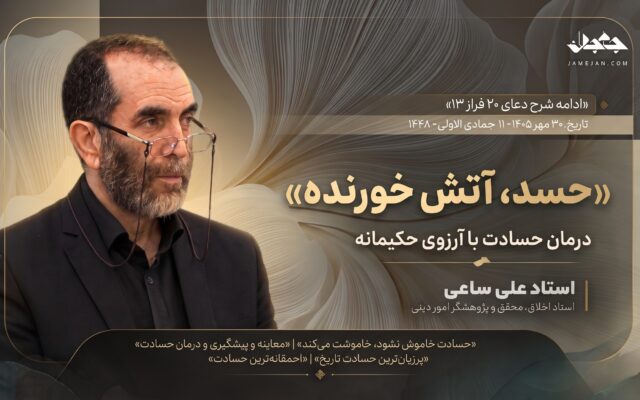
Written transcript of the lecture
The Meshkat-e Noor teachings series🌻🔆Imam al-Kazim (peace be upon him), another Haydar🔆🌻
🌼🔆🌼Imam al-Kazim (peace be upon him), a sign of boundlessness🌼🔆🌼
🌹🔅☘️ بِسْمِ اللَّهِ الرَّحْمنِ الرَّحيمِ ☘️🔅🌹
🔅🌹 “The inner depths of the knowledge of Imamate” “The strange mysteries of Kazimiyya” “The eloquence of Madinah” “The miraculous eloquence of al-Kazim (peace be upon him)” “The night of mourning for Imam Musa ibn Ja‘far (peace be upon him)” and more … Abstract, with an addendum 1404.10.25 Ali Sa‘i (Abdullah Meshkat) 110.141(903) 🌹🔅
❇️Alas for the Kazimi treasury
🌹 Awaken the Kazim within you! Set this immense treasury of divine knowledge in motion within your soul! Al-Kazim is one of the particular and exalted attributes of God (کل یوم هو فی شأن). The Kazimi attribute has no equal—just as none of our senses has an equal! To be deprived of al-Kazim is to be deprived of an immense world, an extraordinary, distinguished, and unparalleled sense.
❇️The son of the conqueror of Khaybar is another Haydar
🌹 Imam Musa ibn Ja‘far (peace be upon him) is a Kazimi Haydar. From beneath the chains of malice and out of the prison of his satanic enemies, he conquered Khaybars.
❇️Al-Kazim, the secret of perfection and adornment
🌹 Al-Kazim is God’s storm, God’s rain; the secret of purity and refinement, the summit of grace.
💫 وَ مَنْ أَحَبَّ أَنْ يَلْقَى اللَّهَ عَزَّ وَ جَلَّ طَاهِراً مُطَهَّراً، فَلْيَتَوَلَّ مُوسَى بْنَ جَعْفَرٍ الْكَاظِمَ.[1]
🔆And whoever wishes to meet God in a state of purity and cleanliness must be under the guardianship of Imam Musa ibn Ja‘far al-Kazim (peace be upon him).
🌹 Imam al-Kazim (peace be upon him) is the secret of connection to the Ahl al-Bayt, the secret of becoming heavenly, of becoming Muhammadan, of becoming one of the family of Muhammad, and of becoming Salmanian.
Imam al-Kazim (peace be upon him) is the secret of meeting the Lord at the summit of grace and refinement.
❇️Imam al-Kazim (peace be upon him) crowns those who love wilayah
🌹 He keeps account of, and records, all the true lovers of Imam al-Kazim (peace be upon him); he also brings to light the deeds of all the enemies of Islam and shatters all the hypocrites of the world ( وَ مُوسَى بْنُ جَعْفَرٍ مُحْصِي الْمُحِبِّينَ وَ الْمُبْغِضِينَ وَ قَامِعُ الْمُنَافِقِين)
His Eminence distinguishes the number of those who love him from those who hate him.
Imam al-Kazim (peace be upon him) issues a record of identity to those who love him; he finds the believers and brings them out of exile, marks them out and introduces them to the world. He does not allow believers to remain unknown or lost in the world; he makes their truth and greatness manifest. Truly, Imam al-Kazim (peace be upon him) is the screen on which truth is displayed.
Imam al-Kazim (peace be upon him) makes believers shine and frees them from bewilderment. He administers their affairs in this world and the next, and exposes those who infiltrate the ranks of believers with hatred in their hearts.
❇️Imam al-Kazim (peace be upon him), the “neither eastern” Light Verse
💫 روي عن جابر بن عبد الله الأنصاري، قال: دخلت إلى مسجد الكوفة، و أمير المؤمنين (صلوات الله و سلامه عليه) يكتب بإصبعه و يتبسم، فقلت له: يا أمير المؤمنين، ما الذي يضحكك؟ فقال: «عجبت لمن يقرأ هذه الآية و لم يعرفها حق معرفتها». فقلت له: أي آية، يا أمير المؤمنين؟
He said: “Regarding the words of the Exalted: اللَّهُ نُورُ السَّماواتِ وَ الْأَرْضِ مَثَلُ نُورِهِ كَمِشْكاةٍ, ‘the Niche’ is Muhammad (peace be upon him and his family); ‘within it is a lamp’—I am the lamp. ‘In a glass’—the glass is al-Hasan and al-Husayn (peace be upon them); كَأَنَّها كَوْكَبٌ دُرِّيٌ and he is Ali ibn al-Husayn (peace be upon him); يُوقَدُ مِنْ شَجَرَةٍ مُبارَكَةٍ Muhammad ibn Ali (peace be upon him); ‘an olive tree’ is Ja‘far ibn Muhammad (peace be upon him); ‘neither eastern’ is Musa ibn Ja‘far (peace be upon him), ‘nor western’ is Ali ibn Musa (peace be upon him); يَكادُ زَيْتُها يُضِيءُ Muhammad ibn Ali (peace be upon him); وَ لَوْ لَمْ تَمْسَسْهُ نارٌ Ali ibn Muhammad (peace be upon him); نُورٌ عَلى نُورٍ al-Hasan ibn Ali (peace be upon him); يَهْدِي اللَّهُ لِنُورِهِ مَنْ يَشاءُ the قائم, the Mahdi (peace be upon him) وَ يَضْرِبُ اللَّهُ الْأَمْثالَ لِلنَّاسِ وَ اللَّهُ بِكُلِّ شَيْءٍ عَلِيمٌ.”[2]
🔆
🌹A reality called East and West is distinct from a reality called “neither eastern nor western.” “Neither eastern nor western” speaks of boundlessness.
Time speaks of limitation, while timelessness embodies pre-eternity and eternity. “Neither eastern nor western” embodies the dawn of the “Morning of Eternity,” and is the supreme sign of “the grandeur and stature of eternity,” a window onto what lies beyond time. “Neither eastern nor western” is a primordial sign of the Everlasting, Never-Ending Lord: that is, Imam Musa al-Kazim (peace be upon him) is a supreme sign of God, the Everlasting and Imperishable.
Imam al-Kazim (peace be upon him) is the manifestation of pre-eternity and eternity in the lantern of divine authority.
Imam al-Kazim (peace be upon him) is the “neither eastern nor western” of the boundless sky, and his consent is its “neither western”; Lady Ma‘suma is the moth of the boundless garden of “neither eastern nor western.”
The East and West of the world are immersed in the “neither eastern nor western” of the Muhammadan Niche.
“Neither eastern nor western” is like the archway of the Prophet’s City of Knowledge.
“Neither eastern nor western” means breaking through the vault of space and place, and shattering the horizons.
“Neither eastern nor western” means a glimpse of boundlessness within the horizons. “Neither eastern nor western” means limitless light.
❇️Growing in knowledge
🌹If we forget the treasury of al-Kazim, the riches of this world and the next will be lost to us! Imam Musa ibn Ja‘far (peace be upon him) is God’s own book and record.
What score would we get in the al-Kazim exam?! Our al-Kazim nature must break open and blossom in our hearts.
✨The All-Merciful: 29 يَسْئَلُهُ مَنْ فِي السَّماواتِ وَ الْأَرْضِ كُلَّ يَوْمٍ هُوَ في شَأْنٍ
All who are in the heavens and the earth beseech Him; every day He is engaged in a new affair!
❇️The treasury of treasuries
🌹The Qur’an and God’s Proof are both treasuries of God. The treasury of the Qur’an lies within the heart of the treasury of the Proof.
💫رَوَى حَفْصُ بْنُ غِيَاثٍ عَنِ الزُّهْرِيِّ قَالَ سَمِعْتُ عَلِيَّ بْنَ الْحُسَيْنِ ع يَقُولُ آيَاتُ الْقُرْآنِ خَزَائِنُ الْعِلْمِ فَكُلَّمَا فَتَحْتَ خِزَانَةً فَيَنْبَغِي لَكَ أَنْ تَنْظُرَ مَا فِيهَا.[3]
🔆
💫 السَّلَامُ عَلَيْكُمْ يَا أَهْلَ بَيْتِ النُّبُوَّةِ وَ مَوْضِعَ الرِّسَالَةِ وَ مُخْتَلَفَ الْمَلَائِكَةِ وَ مَهْبِطَ الْوَحْيِ وَ مَعْدِنَ الرَّحْمَةِ وَ مَأْوَى السَّكِينَةِ وَ خَزَائِنَ الْعِلْمِ وَ مُنْتَهَى الْحِلْمِ وَ أُصُولَ الْكَرَم[4]
🔆
🌹At every moment, new knowledge flows forth from the All-Knowing.
Since the treasuries of divine knowledge are the Qur’an and the Prophet’s household, God’s Proof is God’s speaking treasury.
The Proof of each age is the appointed keeper of that age’s treasury.
The treasuries of the Qur’an lie within the heart of God’s Proof. In other words, God’s treasury lies within God’s treasury: God’s Proof is the treasury of all treasuries.
If we are heedless of any proof of God, we will be deprived of the distinctive knowledge of that age, and the loss will be irreparable.
Let us not be intellectually impoverished in any age; the knowledge of no age can be repeated.
The secret of spiritual perfection lies in completing the Book of Wilāya. Every verse of the Qur’an must be recited and committed to memory; every proof of God must be remembered and recited—that is, known. We must live under their authority, know them, love them, and follow them.
From the heart of every person, the shoot of each Imam must blossom. The majesty and glory of every Imam must flower within us. We must be immersed in the Imam’s knowledge; we must drink in all of it. From every Imam, we must receive complete nourishment in knowledge and noble virtues.
❇️The Imam is the Day of God
🌹 The Lord is at work in a new manner in each of His days, and the Imam is the Day of God—that is, the Imam is where God’s wondrous new manifestations come into being! He is the means through which God’s unique artistry is brought to life.
💫 الْأَيَّامُ نَحْنُ مَا قَامَتِ السَّمَاوَاتُ وَ الْأَرْضُ وَ السَّبْتُ اسْمُ رَسُولِ اللَّهِ ص وَ الْأَحَدُ أَمِيرُ الْمُؤْمِنِينَ وَ الْإِثْنَيْنِ الْحَسَنُ وَ الْحُسَيْنُ وَ الثَّلَاثَاءُ عَلِيُّ بْنُ الْحُسَيْنِ وَ مُحَمَّدُ بْنُ عَلِيٍّ وَ جَعْفَرُ بْنُ مُحَمَّدٍ وَ الْأَرْبِعَاءُ مُوسَى بْنُ جَعْفَرٍ وَ عَلِيُّ بْنُ مُوسَى وَ مُحَمَّدُ بْنُ عَلِيٍّ وَ أَنَا وَ الْخَمِيسُ ابْنِي الْحَسَنُ وَ الْجُمُعَةُ ابْنُ ابْنِي وَ إِلَيْهِ يَجْتَمِعُ عِصَابَةُ الْحَقِّ وَ هُوَ الَّذِي يَمْلَأُهَا قِسْطاً وَ عَدْلًا كَمَا مُلِئَتْ جَوْراً فَهَذَا مَعْنَى الْأَيَّامِ فَلَا تُعَادُوهُمْ فِي الدُّنْيَا فتعاديكم [فَيُعَادُوكُمْ] فِي الْآخِرَةِ ثُمَّ قَالَ وَدِّعْ فَلَا آمَنُ عَلَيْكَ.[5]
🔆
💫 عَنِ الصَّقْرِ بْنِ أَبِي دُلَفَ قَالَ: لَمَّا حَمَلَ الْمُتَوَكِّلُ سَيِّدِي أَبَا الْحَسَنِ ع جِئْتُ أَسْأَلُ عَنْ خَبَرِهِ قَالَ فَنَظَرَ إِلَيَّ الْمُتَوَكِّلُ فَأَمَرَ أَنْ أُدْخَلَ إِلَيْهِ فَقَالَ يَا صَقْرُ مَا شَأْنُكَ قُلْتُ خَيْرٌ أَيُّهَا الْأُسْتَادُ فَقَالَ اقْعُدْ قَالَ الصَّقْرُ فَأَخَذَنِي مَا تَقَدَّمَ وَ مَا تَأَخَّرَ فَقُلْتُ أَخْطَأْتُ فِي الْمَجِيءِ قَالَ فوجى [فَوَحَى] النَّاسَ عَنْهُ ثُمَّ قَالَ مَا شَأْنُكَ وَ فِيمَ جِئْتَ قُلْتُ بِخَيْرٍ فَقَالَ لَعَلَّكَ جِئْتَ تَسْأَلُ عَنْ مَوْلَاكَ فَقُلْتُ لَهُ وَ مَنْ مَوْلَايَ يَا أَمِيرَ الْمُؤْمِنِينَ فَقَالَ اسْكُتْ مَوْلَاكَ هُوَ الْحَقُّ لَا تَحْتَشِمْنِي فَإِنِّي عَلَى مَذْهَبِكَ فَقُلْتُ الْحَمْدُ لِلَّهِ فَقَالَ تُحِبُّ أَنْ تَرَاهُ قُلْتُ نَعَمْ قَالَ اجْلِسْ حَتَّى يَخْرُجَ صَاحِبُ الهد [الْبَرِيدِ] قَالَ فَجَلَسْتُ فَلَمَّا خَرَجَ قَالَ لِغُلَامٍ لَهُ خُذْ بِيَدِ الصَّقْرِ فَأَدْخِلْهُ إِلَى الْحُجْرَةِ الَّتِي فِيهَا الْعَلَوِيُّ الْمَحْبُوسُ وَ خَلِّ بَيْنَهُ وَ بَيْنَهُ قَالَ فَأَدْخَلَنِي الْحُجْرَةَ وَ أَوْمَأَ إِلَى بَيْتٍ فَدَخَلْتُ فَإِذَا هُوَ ع جَالِسٌ عَلَى صَدْرِ حَصِيرٍ وَ بِحِذَاهُ قَبْرٌ مَحْفُورٌ قَالَ فَسَلَّمْتُ فَرَدَّ ثُمَّ أَمَرَنِي بِالْجُلُوسِ فَجَلَسْتُ ثُمَّ قَالَ يَا صَقْرُ مَا أَتَى بِكَ قُلْتُ سَيِّدِي جِئْتُ أَتَعَرَّفُ خَبَرَكَ قَالَ ثُمَّ نَظَرْتُ إِلَى الْقَبْرِ فَبَكَيْتُ فَنَظَرَ إِلَيَّ وَ قَالَ يَا صَقْرُ لَا عَلَيْكَ لَنْ تصلوا [يَصِلُوا] إِلَيْنَا بِسُوءٍ فَقُلْتُ الْحَمْدُ لِلَّهِ ثُمَّ قُلْتُ يَا سَيِّدِي حَدِيثٌ يُرْوَى عَنِ النَّبِيِّ ص لَا أَعْرِفُ مَعْنَاهُ فَقَالَ وَ مَا هُوَ قُلْتُ قَوْلُهُ ص لَا تُعَادُوا الْأَيَّامَ فَتُعَادِيَكُمْ مَا مَعْنَاهُ فَقَالَ نَعَمْ الْأَيَّامُ نَحْنُ مَا قَامَتِ السَّمَاوَاتُ وَ الْأَرْضُ وَ السَّبْتُ اسْمُ رَسُولِ اللَّهِ ص وَ الْأَحَدُ أَمِيرُ الْمُؤْمِنِينَ وَ الْإِثْنَيْنِ الْحَسَنُ وَ الْحُسَيْنُ وَ الثَّلَاثَاءُ عَلِيُّ بْنُ الْحُسَيْنِ وَ مُحَمَّدُ بْنُ عَلِيٍّ وَ جَعْفَرُ بْنُ مُحَمَّدٍ وَ الْأَرْبِعَاءُ مُوسَى بْنُ جَعْفَرٍ وَ عَلِيُّ بْنُ مُوسَى وَ مُحَمَّدُ بْنُ عَلِيٍّ وَ أَنَا وَ الْخَمِيسُ ابْنِي الْحَسَنُ وَ الْجُمُعَةُ ابْنُ ابْنِي وَ إِلَيْهِ يَجْتَمِعُ عِصَابَةُ الْحَقِّ وَ هُوَ الَّذِي يَمْلَأُهَا قِسْطاً وَ عَدْلًا كَمَا مُلِئَتْ جَوْراً فَهَذَا مَعْنَى الْأَيَّامِ فَلَا تُعَادُوهُمْ فِي الدُّنْيَا فتعاديكم [فَيُعَادُوكُمْ] فِي الْآخِرَةِ ثُمَّ قَالَ وَدِّعْ فَلَا آمَنُ عَلَيْكَ.[6]
🔆
🌹 God, ever wondrous in His creation, is at work in a new manner through His Kazim—and through all His Kazims.
Every Imam is a world of divine attributes and wonders.
Pearls have their place, coral has its place, and rubies have theirs.
💫 عَنْ أَبِي إِسْحَاقَ السَّبِيعِيِّ عَنِ الْحَارِثِ الْأَعْوَرِ قَالَ: خَطَبَ أَمِيرُ الْمُؤْمِنِينَ ع خُطْبَةً بَعْدَ الْعَصْرِ فَعَجِبَ النَّاسُ مِنْ حُسْنِ صِفَتِهِ وَ مَا ذَكَرَهُ مِنْ تَعْظِيمِ اللَّهِ جَلَّ جَلَالُهُ قَالَ أَبُو إِسْحَاقَ فَقُلْتُ لِلْحَارِثِ أَ وَ مَا حَفِظْتَهَا قَالَ قَدْ كَتَبْتُهَا فَأَمْلَاهَا عَلَيْنَا مِنْ كِتَابِهِ الْحَمْدُ لِلَّهِ الَّذِي لَا يَمُوتُ وَ لَا تَنْقَضِي عَجَائِبُهُ لِأَنَّهُ كُلَّ يَوْمٍ فِي شَأْنٍ مِنْ إِحْدَاثِ بَدِيعٍ لَمْ يَكُنِ الَّذِي لَمْ يَلِدْ فَيَكُونَ فِي الْعِزِّ مُشَارَكاً وَ لَمْ يُولَدْ فَيَكُونَ مَوْرُوثاً هَالِكاً وَ لَمْ تَقَعْ عَلَيْهِ الْأَوْهَامُ فَتُقَدِّرَهُ شَبَحاً مَاثِلًا وَ لَمْ تُدْرِكْهُ الْأَبْصَارُ فَيَكُونَ بَعْدَ انْتِقَالِهَا حَائِلًا الَّذِي لَيْسَتْ فِي أَوَّلِيَّتِهِ نِهَايَةٌ وَ لَا لآِخِرِيَّتِهِ حَدٌّ وَ لَا غَايَةٌ الَّذِي لَمْ يَسْبِقْهُ وَقْتٌ وَ لَمْ يَتَقَدَّمْهُ زَمَانٌ وَ لَا يَتَعَاوَرُهُ زِيَادَةٌ وَ لَا نُقْصَانٌ وَ لَا يُوصَفُ بِأَيْنٍ وَ لَا بِمَ وَ لَا مَكَانٍ الَّذِي بَطَنَ مِنْ خَفِيَّاتِ الْأُمُورِ وَ ظَهَرَ فِي الْعُقُولِ بِمَا يُرَى فِي خَلْقِهِ مِنْ عَلَامَاتِ التَّدْبِيرِ الَّذِي سُئِلَتِ الْأَنْبِيَاءُ عَنْهُ فَلَمْ تَصِفْهُ بِحَدٍّ وَ لَا بِبَعْضٍ بَلْ وَصَفَتْهُ بِفِعَالِهِ وَ دَلَّتْ عَلَيْهِ بِآيَاتِهِ لَا تَسْتَطِيعُ عُقُولُ الْمُتَفَكِّرِينَ جَحْدَهُ لِأَنَّ مَنْ كَانَتِ السَّمَاوَاتُ وَ الْأَرْضُ فِطْرَتَهُ وَ مَا فِيهِنَّ وَ مَا بَيْنَهُنَّ وَ هُوَ الصَّانِعُ لَهُنَّ فَلَا مَدْفَعَ لِقُدْرَتِهِ الَّذِي نَأَى مِنَ الْخَلْقِ فَلَا شَيْءَ كَمِثْلِهِ الَّذِي خَلَقَ خَلْقَهُ لِعِبَادَتِهِ وَ أَقْدَرَهُمْ عَلَى طَاعَتِهِ بِمَا جَعَلَ فِيهِمْ وَ قَطَعَ عُذْرَهُمْ بِالْحُجَجِ فَعَنْ بَيِّنَةٍ هَلَكَ مَنْ هَلَكَ وَ بِمَنِّهِ نَجَا مَنْ نَجَا وَ لِلَّهِ الْفَضْلُ مُبْدِئاً وَ مُعِيداً ثُمَّ إِنَّ اللَّهَ وَ لَهُ الْحَمْدُ افْتَتَحَ الْحَمْدَ لِنَفْسِهِ وَ خَتَمَ أَمْرَ الدُّنْيَا وَ مَحَلَّ الْآخِرَةِ بِالْحَمْدِ لِنَفْسِهِ فَقَالَ وَ قَضَى بَيْنَهُمْ بِالْحَقِ وَ قِيلَ الْحَمْدُ لِلَّهِ رَبِّ الْعالَمِينَ الْحَمْدُ لِلَّهِ اللَّابِسِ الْكِبْرِيَاءِ بِلَا تَجْسِيدٍ وَ الْمُرْتَدِي بِالْجَلَالِ بِلَا تَمْثِيلٍ وَ الْمُسْتَوِي عَلَى الْعَرْشِ بِغَيْرِ زَوَالٍ وَ الْمُتَعَالِي عَلَى الْخَلْقِ بِلَا تَبَاعُدٍ مِنْهُمْ وَ لَا مُلَامَسَةٍ مِنْهُ لَهُمْ لَيْسَ لَهُ حَدٌّ يُنْتَهَى إِلَى حَدِّهِ وَ لَا لَهُ مِثْلٌ فَيُعْرَفَ بِمِثْلِهِ ذَلَّ مَنْ تَجَبَّرَ غَيْرَهُ وَ صَغُرَ مَنْ تَكَبَّرَ دُونَهُ وَ تَوَاضَعَتِ الْأَشْيَاءُ لِعَظَمَتِهِ وَ انْقَادَتْ لِسُلْطَانِهِ وَ عِزَّتِهِ وَ كَلَّتْ عَنْ إِدْرَاكِهِ طُرُوفُ الْعُيُونِ وَ قَصُرَتْ دُونَ بُلُوغِ صِفَتِهِ أَوْهَامُ الْخَلَائِقِ الْأَوَّلِ قَبْلَ كُلِّ شَيْءٍ وَ لَا قَبْلَ لَهُ وَ الْآخِرِ بَعْدَ كُلِّ شَيْءٍ وَ لَا بَعْدَ لَهُ الظَّاهِرِ عَلَى كُلِّ شَيْءٍ بِالْقَهْرِ لَهُ وَ الْمُشَاهِدِ لِجَمِيعِ الْأَمَاكِنِ بِلَا انْتِقَالٍ إِلَيْهَا لَا تَلْمِسُهُ لَامِسَةٌ وَ لَا تُحِسُّهُ حَاسَّةٌ هُوَ الَّذِي فِي السَّماءِ إِلهٌ وَ فِي الْأَرْضِ إِلهٌ وَ هُوَ الْحَكِيمُ الْعَلِيمُ أَتْقَنَ مَا أَرَادَ مِنْ خَلْقِهِ مِنَ الْأَشْبَاحِ كُلِّهَا لَا بِمِثَالٍ سَبَقَ إِلَيْهِ وَ لَا لُغُوبٍ دَخَلَ عَلَيْهِ فِي خَلْقِ مَا خَلَقَ لَدَيْهِ ابْتَدَأَ مَا أَرَادَ ابْتِدَاءَهُ وَ أَنْشَأَ مَا أَرَادَ إِنْشَاءَهُ عَلَى مَا أَرَادَ مِنَ الثَّقَلَيْنِ الْجِنِّ وَ الْإِنْسِ لِيَعْرِفُوا بِذَلِكَ رُبُوبِيَّتَهُ وَ تَمَكَّنَ فِيهِمْ طَاعَتُهُ نَحْمَدُهُ بِجَمِيعِ مَحَامِدِهِ كُلِّهَا عَلَى جَمِيعِ نَعْمَائِهِ كُلِّهَا وَ نَسْتَهْدِيهِ لِمَرَاشِدِ أُمُورِنَا وَ نَعُوذُ بِهِ مِنْ سَيِّئَاتِ أَعْمَالِنَا وَ نَسْتَغْفِرُهُ لِلذُّنُوبِ الَّتِي سَبَقَتْ مِنَّا وَ نَشْهَدُ أَنْ لَا إِلَهَ إِلَّا اللَّهُ وَ أَنَّ مُحَمَّداً عَبْدُهُ وَ رَسُولُهُ بَعَثَهُ بِالْحَقِّ نَبِيّاً دَالًّا عَلَيْهِ وَ هَادِياً إِلَيْهِ فَهَدَى بِهِ مِنَ الضَّلَالَةِ وَ اسْتَنْقَذَنَا بِهِ مِنَ الْجَهَالَةِ مَنْ يُطِعِ اللَّهَ وَ رَسُولَهُ فَقَدْ فازَ فَوْزاً عَظِيماً وَ نَالَ ثَوَاباً جَزِيلًا وَ مَنْ يَعْصِ اللَّهَ وَ رَسُولَهُ فَقَدْ خَسِرَ خُسْراناً مُبِيناً وَ اسْتَحَقَّ عَذَاباً أَلِيماً فَأَنْجِعُوا بِمَا يَحِقُّ عَلَيْكُمْ مِنَ السَّمْعِ وَ الطَّاعَةِ وَ إِخْلَاصِ النَّصِيحَةِ وَ حُسْنِ الْمُؤَازَرَةِ وَ أَعِينُوا عَلَى أَنْفُسِكُمْ بِلُزُومِ الطَّرِيقَةِ الْمُسْتَقِيمَةِ وَ هَجْرِ الْأُمُورِ الْمَكْرُوهَةِ وَ تعاطوا الحق بينكم و تعاونوا به دوني و خذوا على يد الظالم السفيه و مروا بالمعروف و انهوا عن المنكر و اعرفوا لذوي الفضل فضلهم عصمنا الله و إياكم بالهدى و ثبتنا و إياكم على التقوى وَ أَسْتَغْفِرُ اللَّهَ لِي وَ لَكُمْ.[7]
🔆
❇️A Journey through the Garden of Kazemiyeh’s Words
The words of the Imam are a key to mysteries, a vessel of knowledge and a flight of the spirit. They possess depth and vast breadth.
❇️Nearness and distance are God’s creation
💫 ذُكِرَ عِنْدَهُ قَوْمٌ يَزْعُمُونَ أَنَّ اللَّهَ تَبَارَكَ وَ تَعَالَى يَنْزِلُ إِلَى السَّمَاءِ الدُّنْيَا فَقَالَ إِنَ اللَّهَ لَا يَنْزِلُ وَ لَا يَحْتَاجُ إِلَى أَنْ يَنْزِلَ إِنَّمَا مَنْظَرُهُ فِي الْقُرْبِ وَ الْبُعْدِ سَوَاءٌ لَمْ يَبْعُدْ مِنْهُ قَرِيبٌ وَ لَمْ يَقْرُبْ مِنْهُ بَعِيدٌ
🔆When he was told that some people believed God descends to the lowest heaven, he replied: “Indeed, Allah does not descend, nor does He need to descend. The truth is simply that, from His perspective, nearness and distance are the same. What is near has not moved away from Him, and what is far has not drawn near to Him.”
❇️His will regards the near and the far alike
🌹Our perspective is confined by the limits of our vision, capacity, reason and thought. Our understanding cannot reach God’s majesty, which is peerless in its station. Even the grandeur of God’s creation cannot fit within the bounds of our hearts and minds—how much less the majesty of the One who is supremely majestic.
Distance and nearness, for us, are largely feelings and perceptions—and those feelings are only our interpretation of distance and nearness. We interpret His will, yet for Him nothing is far or near. By one act of will He makes the far distant, and by another He makes the near close. God’s will encompasses whatever He wills, whether near or far, whatever its extent.
Time and space, distance and nearness, are for us merely sensations and perceptions—our interpretations of a single reality.
We do not even know the nature of time and space. When He creates time, no “time” takes shape within the act of creating “time.” His will encompasses time and space; temporal and spatial distance or nearness have no bearing on Him.
If He wills, He makes the far near and the near far. Just as, by His will, He can make fire cold and coldness into fire, or bring harmony between fire and ice, distance and nearness are alike to Him.
💫 وَ بِهَذَا الْإِسْنَادِ عَنِ النَّبِيِّ ص قَالَ: إِنَّ لِلَّهِ تَبَارَكَ وَ تَعَالَى مَلَكاً مِنَ الْمَلَائِكَةِ نِصْفُ جَسَدِهِ الْأَعْلَى نَارٌ وَ نِصْفُهُ الْأَسْفَلُ ثَلْجٌ فَلَا النَّارُ تُذِيبُ الثَّلْجَ وَ لَا الثَّلْجُ يُطْفِئُ النَّارَ وَ هُوَ قَائِمٌ يُنَادِي بِصَوْتٍ لَهُ رَفِيعٍ سُبْحَانَ اللَّهِ الَّذِي كَفَّ حَرَّ هَذِهِ النَّارِ فَلَا تُذِيبُ هَذَا الثَّلْجَ وَ كَفَّ بَرْدَ هَذَا الثَّلْجِ فَلَا يُطْفِئُ حَرَّ هَذِهِ النَّارِ اللَّهُمَّ يَا مُؤَلِّفاً بَيْنَ الثَّلْجِ وَ النَّارِ أَلِّفْ بَيْنَ قُلُوبِ عِبَادِكَ الْمُؤْمِنِينَ عَلَى طَاعَتِكَ.[8]
❇️He does not descend
💫 وَ مَنْ قَالَ أَيْنَ فَقَدْ غَيَّاهُ وَ مَنْ قَالَ عَلَامَ فَقَدْ أَخْلَى مِنْهُ وَ مَنْ قَالَ فِيمَ فَقَدْ ضَمَّنَهُ.[9]
🔆
🌹Contradictory descriptions of the Divine Essence affirm His majesty and show that He is beyond the reach of reason and comprehension.
The existence of anything—earth or sky—shows that His will continually sustains it.
No one can go beyond himself, his own knowledge, his grammar, his alphabet or his words.
How can a one-dimensional being grasp higher dimensions? And how can a being confined within dimensions reach beyond them?
How can a being imprisoned in time and confined to space gain awareness or understanding of what lies beyond time and space?
❇️Infinite motion points to an infinite limit
If the infinite were to move, it would have to become either less or more than itself. Either would imply a deficiency in the infinite, which is impossible.
Movement must occur either outward from a thing or inward toward it. Outward movement signifies growth and increase; inward movement signifies diminution and decrease. Both call into question the possibility of an infinite capacity.
Thus, movement toward infinity would imply infinite increase, which is impossible!
💫 عَنْ أَبِي إِبْرَاهِيمَ ع قَالَ: ذُكِرَ عِنْدَهُ قَوْمٌ يَزْعُمُونَ أَنَّ اللَّهَ تَبَارَكَ وَ تَعَالَى يَنْزِلُ إِلَى السَّمَاءِ الدُّنْيَا فَقَالَ إِنَّ اللَّهَ لَا يَنْزِلُ وَ لَا يَحْتَاجُ إِلَى أَنْ يَنْزِلَ إِنَّمَا مَنْظَرُهُ فِي الْقُرْبِ وَ الْبُعْدِ سَوَاءٌ لَمْ يَبْعُدْ مِنْهُ قَرِيبٌ وَ لَمْ يَقْرُبْ مِنْهُ بَعِيدٌ- وَ لَمْ يَحْتَجْ إِلَى شَيْءٍ بَلْ يُحْتَاجُ إِلَيْهِ وَ هُوَ ذُو الطَّوْلِ لا إِلهَ إِلَّا هُوَ الْعَزِيزُ الْحَكِيمُ أَمَّا قَوْلُ الْوَاصِفِينَ إِنَّهُ يَنْزِلُ تَبَارَكَ وَ تَعَالَى فَإِنَّمَا يَقُولُ ذَلِكَ مَنْ يَنْسُبُهُ إِلَى نَقْصٍ أَوْ زِيَادَةٍ وَ كُلُّ مُتَحَرِّكٍ مُحْتَاجٌ إِلَى مَنْ يُحَرِّكُهُ أَوْ يَتَحَرَّكُ بِهِ فَمَنْ ظَنَّ بِاللَّهِ الظُّنُونَ هَلَكَ فَاحْذَرُوا فِي صِفَاتِهِ مِنْ أَنْ تَقِفُوا لَهُ عَلَى حَدٍّ تَحُدُّونَهُ بِنَقْصٍ أَوْ زِيَادَةٍ أَوْ تَحْرِيكٍ أَوْ تَحَرُّكٍ أَوْ زَوَالٍ أَوِ اسْتِنْزَالٍ أَوْ نُهُوضٍ أَوْ قُعُودٍ فَإِنَّ اللَّهَ جَلَّ وَ عَزَّ عَنْ صِفَةِ الْوَاصِفِينَ وَ نَعْتِ النَّاعِتِينَ وَ تَوَهُّمِ الْمُتَوَهِّمِينَ وَ تَوَكَّلْ عَلَى الْعَزِيزِ الرَّحِيمِ الَّذِي يَراكَ حِينَ تَقُومُ وَ تَقَلُّبَكَ فِي السَّاجِدِينَ.[10]
🔆
💫 عَنِ الْفَتْحِ بْنِ يَزِيدَ الْجُرْجَانِيِّ قَالَ: ضَمَّنِي وَ أَبَا الْحَسَنِ ع الطَّرِيقُ فِي مُنْصَرَفِي مِنْ مَكَّةَ إِلَى خُرَاسَانَ وَ هُوَ سَائِرٌ إِلَى الْعِرَاقِ فَسَمِعْتُهُ يَقُولُ مَنِ اتَّقَى اللَّهَ يُتَّقَى وَ مَنْ أَطَاعَ اللَّهَ يُطَاعُ فَتَلَطَّفْتُ فِي الْوُصُولِ إِلَيْهِ فَوَصَلْتُ فَسَلَّمْتُ عَلَيْهِ فَرَدَّ عَلَيَّ السَّلَامَ ثُمَّ قَالَ يَا فَتْحُ مَنْ أَرْضَى الْخَالِقَ لَمْ يُبَالِ بِسَخَطِ الْمَخْلُوقِ وَ مَنْ أَسْخَطَ الْخَالِقَ فَقَمَنٌ أَنْ يُسَلِّطَ اللَّهُ عَلَيْهِ سَخَطَ الْمَخْلُوقِ وَ إِنَّ الْخَالِقَ لَا يُوصَفُ إِلَّا بِمَا وَصَفَ بِهِ نَفْسَهُ وَ أَنَّى يُوصَفُ الَّذِي تَعْجِزُ الْحَوَاسُّ أَنْ تُدْرِكَهُ وَ الْأَوْهَامُ أَنْ تَنَالَهُ وَ الْخَطَرَاتُ أَنْ تَحُدَّهُ وَ الْأَبْصَارُ عَنِ الْإِحَاطَةِ بِهِ جَلَّ عَمَّا وَصَفَهُ الْوَاصِفُونَ وَ تَعَالَى عَمَّا يَنْعَتُهُ النَّاعِتُونَ نَأَى فِي قُرْبِهِ وَ قَرُبَ فِي نَأْيِهِ فَهُوَ فِي نَأْيِهِ قَرِيبٌ وَ فِي قُرْبِهِ بَعِيدٌ كَيَّفَ الْكَيْفَ فَلَا يُقَالُ كَيْفَ وَ أَيَّنَ الْأَيْنَ فَلَا يُقَالُ أَيْنَ إِذْ هُوَ مُنْقَطِعُ الْكَيْفُوفِيَّةِ وَ الْأَيْنُونِيَّةِ. [11]
🔆
💫 وَ أَنْتَ اللَّهُ لَا إِلَهَ إِلَّا أَنْتَ، الدَّانِي فِي عُلُوِّهِ، وَ الْعَالِي فِي دُنُوِّه[12]
🔆
🔅🌼 The Principle of Describing God 🌼🔅
🌷🔆عَنْ إِبْرَاهِيمَ عَنْ مُحَمَّدِ بْنِ حَكِيمٍ قَالَ: كَتَبَ أَبُو الْحَسَنِ مُوسَى بْنُ جَعْفَرٍ ع إِلَى أَبِي أَنَّ اللَّهَ أَعْلَى وَ أَجَلُّ وَ أَعْظَمُ مِنْ أَنْ يُبْلَغَ كُنْهُ صِفَتِهِ فَصِفُوهُ بِمَا وَصَفَ بِهِ نَفْسَهُ وَ كُفُّوا عَمَّا سِوَى ذَلِكَ.[13]
🔆Musa ibn Ja‘far, peace be upon him, wrote to my father: “God is too exalted and too great for the reality of His attribute to be grasped. So describe Him by what He has described Himself, and leave aside all else.”
🌹When describing the One you worship, follow the One you worship!
🌹Listen to how God describes Himself, and repeat those words!
🌹Let Him sing His own song through you!
🌹Never forget: Allahu akbar!
🌹Let the Four Glorifications flow from your tongue, heart and soul.
🌹Let God’s words settle into your soul; make yourself an instrument for His tender grace and divine melody.
For the divine attribute—the Breath of the All-Merciful—is imbued with the spirit of the attribute. It has wings for flight; it is a vessel that carries us aloft. It does not leave a person frozen; it brings them to life. It is a key that unlocks; it has inner depths; it is an elixir that transforms.
A divine attribute is like an angelic guide. It is like a human being, not confined to the physical form;
within and behind every divine attribute lies a reality beyond reason. Its first rational taste draws a person beyond reason and guides them towards the attribute’s highest destination.
💫 يَا عَظِيماً لَا يُوصَف
🔅🌼 Is anyone more acquainted with God than God Himself? 🌼🔅
🌷🔆عَنِ الْمُفَضَّلِ قَالَ: سَأَلْتُ أَبَا الْحَسَنِ ع عَنْ شَيْءٍ مِنَ الصِّفَةِ فَقَالَ لَا تَجَاوَزْ مَا فِي الْقُرْآنِ. [14]
🔆
Every verse is like a seed, a star glimpsed from afar, a sea, a sealed treasure-house. It must be opened, made to blossom in our hearts through reflection, its treasures gathered and its energy released.
God’s attributes and names are like this too: we must not judge them wholly by their outward appearance. The words describing them are a path we must travel; they are a light by which we must behold realities.
💫 قَالَ رَسُولُ اللَّهِ ص أَيُّهَا النَّاسُ إِنَّكُمْ فِي دَارِ هُدْنَةٍ وَ أَنْتُمْ عَلَى ظَهْرِ سَفَرٍ وَ السَّيْرُ بِكُمْ سَرِيعٌ وَ قَدْ رَأَيْتُمُ اللَّيْلَ وَ النَّهَارَ وَ الشَّمْسَ وَ الْقَمَرَ يُبْلِيَانِ كُلَّ جَدِيدٍ وَ يُقَرِّبَانِ كُلَّ بَعِيدٍ وَ يَأْتِيَانِ بِكُلِّ مَوْعُودٍ فَأَعِدُّوا الْجَهَازَ لِبُعْدِ الْمَجَازِ قَالَ فَقَامَ الْمِقْدَادُ بْنُ الْأَسْوَدِ فَقَالَ يَا رَسُولَ اللَّهِ وَ مَا دَارُ الْهُدْنَةِ قَالَ دَارُ بَلَاغٍ وَ انْقِطَاعٍ فَإِذَا الْتَبَسَتْ عَلَيْكُمُ الْفِتَنُ كَقِطَعِ اللَّيْلِ الْمُظْلِمِ فَعَلَيْكُمْ بِالْقُرْآنِ فَإِنَّهُ شَافِعٌ مُشَفَّعٌ وَ مَاحِلٌ مُصَدَّقٌ وَ مَنْ جَعَلَهُ أَمَامَهُ قَادَهُ إِلَى الْجَنَّةِ وَ مَنْ جَعَلَهُ خَلْفَهُ سَاقَهُ إِلَى النَّارِ وَ هُوَ الدَّلِيلُ يَدُلُّ عَلَى خَيْرِ سَبِيلٍ وَ هُوَ كِتَابٌ فِيهِ تَفْصِيلٌ وَ بَيَانٌ وَ تَحْصِيلٌ وَ هُوَ الْفَصْلُ لَيْسَ بِالْهَزْلِ وَ لَهُ ظَهْرٌ وَ بَطْنٌ فَظَاهِرُهُ حُكْمٌ وَ بَاطِنُهُ عِلْمٌ ظَاهِرُهُ أَنِيقٌ وَ بَاطِنُهُ عَمِيقٌ لَهُ نُجُومٌ وَ عَلَى نُجُومِهِ نُجُومٌ لَا تُحْصَى عَجَائِبُهُ وَ لَا تُبْلَى غَرَائِبُهُ فِيهِ مَصَابِيحُ الْهُدَى وَ مَنَارُ الْحِكْمَةِ وَ دَلِيلٌ عَلَى الْمَعْرِفَةِ لِمَنْ عَرَفَ الصِّفَةَ فَلْيَجْلُ جَالٍ بَصَرَهُ وَ لْيُبْلِغِ الصِّفَةَ نَظَرَهُ يَنْجُ مِنْ عَطَبٍ وَ يَتَخَلَّصْ مِنْ نَشَبٍ فَإِنَّ التَّفَكُّرَ حَيَاةُ قَلْبِ الْبَصِيرِ كَمَا يَمْشِي الْمُسْتَنِيرُ فِي الظُّلُمَاتِ بِالنُّورِ فَعَلَيْكُمْ بِحُسْنِ التَّخَلُّصِ وَ قِلَّةِ التَّرَبُّصِ.[15]
🔆The Messenger of God (PBUH) said: “People, you are in a temporary abode of peace, and are journeying towards the Hereafter. Your journey carries you swiftly onward. You have seen how night and day, the sun and moon, wear down everything new, bring every distant thing near, and make every promise come to pass—that is, death and the Resurrection. So prepare provisions of good deeds for the long passage ahead.”
Al-Miqdad ibn al-Aswad rose and asked, “Messenger of God, what is the abode of temporary peace?”
He replied: “It is an abode in which the message is delivered and then comes to an end. When trials become confused for you, like fragments of a pitch-dark night, hold fast to the Qur’an. For the Qur’an is an intercessor whose intercession is accepted, and a serious, truthful word that is affirmed.
Whoever places it before himself, it will lead him to Paradise; whoever puts it behind him, it will drive him to Hell. The Qur’an is a guide that leads to the best path, a Book containing detailed explanation, clarification and the attainment of perfection. It distinguishes truth from falsehood and is no idle talk. It has an outward and an inward dimension: its outward dimension is law, and its inward dimension is knowledge. Its outward is beautiful, and its inward profound. It has stars—clear signs—and above those stars, further stars—meanings layered one upon another. Its wonders never end, and its marvels never grow old. Within it are lamps of guidance, lanterns of wisdom, and a guide to knowledge for anyone who comes to know its qualities. So let the seeker set his eyes in motion and direct his gaze to the Qur’an’s qualities, that he may escape ruin and be freed from the snare of misguidance. For reflection is the life of the seeing heart, just as a traveller carrying a light walks through darkness by its glow. So make a good departure from this world, and do not delay in expectation.»
❇️A luminous commentary on the sermon:
☘️1. The world as “a dwelling of truce” and a journey
A dwelling of truce: a place of temporary ceasefire or precarious calm. The world is not a place to settle; it is only a temporary waystation.
A journey: movement towards the Hereafter. This journey is unavoidable and swift.
Night and day, the sun and the moon: symbols of time passing—turning youth into old age, bringing what is distant near, and ushering in death and the Resurrection.
☘️2. The call to prepare one’s provisions
Provisions: what one needs for the journey to the Hereafter—that is, righteous deeds, faith, piety, charity, prayer and knowledge of the Qur’an.
☘️3. Miqdad’s question and the Prophet’s (PBUH) reply
A dwelling of truce = a place of deliverance and departure:
Deliverance: conveying God’s message and fulfilling one’s duty.
Departure: separation from the world and its attachments.
Dark trials: intellectual, social and moral turmoil in which truth and falsehood become confused.
☘️4. The Qur’an, a means of salvation in times of trial
Here, the Prophet (PBUH) describes the Qur’an’s qualities in extraordinary terms:
An intercessor whose intercession is accepted.
A solemn and truthful word.
A guide to Paradise or Hell: this depends on the place the Qur’an holds in our lives.
A guide to the best path.
Detailed explanation, clarification and the attainment of perfection: it expounds, illuminates and brings one to perfection.
A criterion, not idle talk: it distinguishes truth from falsehood and is no falsehood.
☘️5. The Qur’an’s outward and inward dimensions
Outward: practical rulings—what is lawful and unlawful, and commands and prohibitions.
Inward: profound knowledge of divine unity, spirituality and ethics.
☘️6. Stars upon stars
Stars: clear signs.
Above its stars, further stars: meanings beneath each verse, layered and deeper still.
This alludes to the Qur’an’s interpretation and inner dimensions, known only to those firmly grounded in knowledge—the infallible Imams (peace be upon them).
☘️7. Reflection: a guiding light through darkness
The life of the seeing heart: reflection gives life to the perceptive heart.
Walking through darkness by the light: moving through the darkness of trials by the light of the Qur’an.
A good departure and little delay: one should make a good departure from this world and not put off repentance or action.
Key messages of the sermon:
1. The world is a passage—do not become attached to it.
2. Time passes swiftly—let us not waste our opportunities.
3. The only way to find safety amid turmoil is to hold fast to the Qur’an—not merely by reciting it, but by keeping it before you.
4. The Qur’an has both an outward and an inward dimension; we must draw on both.
5. Reflecting on the Qur’an is a light of guidance. Without reflection, the Qur’an does not touch the heart.
This sermon is a charter for a blessed life in a turbulent world.
May God’s blessings be upon the Prophet who brought such precious gems to humanity, and upon his pure family, who interpret them.
☘️1. Syntactic and morphological analysis:
a) “فَلْيَجْلُ جَالٍ بَصَرَهُ”:
فَلْيَجْلُ: The imperative lām + a jussive imperfect verb (جَلَا یَجْلُو), meaning to draw aside a veil, clarify, or reveal.
جَالٍ: The subject (an intensive form from the root ج ل و), meaning a persistent seeker, one who probes deeply.
Literal translation: “So let the persistent seeker unveil/reveal his eye (from the veils of ignorance).”
b) “وَ لْيُبْلِغِ الصِّفَةَ نَظَرَهُ»: لْيُبْلِغِ: The imperative lām + a jussive imperfect verb (بَلَغَ یَبْلُغُ), meaning to convey or attain.
الصِّفَةَ: The object (the description—that is, the reality of the Qur’an mentioned in the preceding passages). نَظَرَهُ: The subject (his gaze/reflection/attention).
Literal translation: “And let him direct his gaze toward the description (of the Qur’an).”
c) “يَنْجُ مِنْ عَطَبٍ وَ يَتَخَلَّصْ مِنْ نَشَبٍ”:
يَنْجُ: An imperfect verb (نجا یَنجو), meaning to be saved.
مِنْ عَطَبٍ: عَطَب = ruin, destruction.
يَتَخَلَّصْ: A jussive imperfect verb (تَخَلَّصَ یَتَخَلَّصُ), meaning to be freed.
مِنْ نَشَبٍ: نَشَب = snare, predicament, trap.
Translation: “So that he may be saved from ruin and freed from the snare (of sin and misguidance).”
d) “فَإِنَّ التَّفَكُّرَ حَيَاةُ قَلْبِ الْبَصِيرِ”:
التَّفَكُّرَ: The subject. حَيَاةُ: The predicate. قَلْبِ الْبَصِيرِ: مضافٌ إلیه (the discerning eye, the conscious heart). Translation: “For reflection is the life of the discerning heart.”
e) “كَمَا يَمْشِي الْمُسْتَنِيرُ فِي الظُّلُمَاتِ بِالنُّورِ» كَمَا: Like. يَمْشِي: Walks. الْمُسْتَنِيرُ: One who has been illumined (an adjective derived from استنار). بِالنُّورِ: By means of light.
Translation: “Just as one illumined walks through the darkness by the light.”
f) “فَعَلَيْكُمْ بِحُسْنِ التَّخَلُّصِ وَ قِلَّةِ التَّرَبُّصِ”:
بِحُسْنِ التَّخَلُّصِ: By making a good escape (from the world or from sins).
قِلَّةِ التَّرَبُّصِ: By waiting less (to repent or act). تَرَبُّص means waiting hesitantly.
Translation: “So hold fast to making a good escape and to waiting no longer.”
☘️2. Rhetorical and semantic analysis:
a) Verbal and conceptual wordplay:
«بَصَرَهُ» (his eye) and «الْبَصِيرِ» (discerning) ← a connection between the instrument of sight and the state of seeing.
«عَطَبٍ» (ruin) and «نَشَبٍ» (snare) ← two forms of danger: utter destruction and entrapment in misguidance.
b) Key metaphors:
1. “فَلْيَجْلُ جَالٍ بَصَرَهُ”:
The eye = the faculty of perception and understanding.
Unveiling the eye = clearing away the dust of heedlessness and prejudice.
A metaphor for polishing the mirror of the heart.
2. “يَمْشِي الْمُسْتَنِيرُ فِي الظُّلُمَاتِ بِالنُّورِ”:
Darknesses = trials, doubts, and sins.
Light = the Qur’an, reason, and divine guidance.
Walking by the light = moving through life by the lamp of revelation.
C) Meaningful contrasts:
Life ↔ ruin.
Release ↔ entrapment.
Light ↔ darkness.
3. Philosophical and mystical interpretation:
The stages of spiritual wayfaring in this passage:
1. Detachment (جلاء البصر):
Purifying the faculties of understanding from material concerns and preconceptions.
2. Connection (إبلاغ النظر إلى الصفة):
Turning one’s attention to the reality of the Qur’an, described at length in the preceding passage.
3. Salvation (النجاة من العطب):
Deliverance from spiritual and otherworldly ruin.
4. Liberation (التخلص من النشب):
Freedom from the snares of the self and Satan.
5. Life of the heart (حیات قلب البصیر):
The heart comes alive through reflection.
6. Practical wayfaring (المشی بالنور):
Moving through life along the path illuminated by guidance.
7. Departure from this world (حسن التخلص):
Preparing for death and the Hereafter.
8. Hastening to act (قلة التربص):
Avoiding delay in repentance and righteous deeds.
4. A key message for people today:
True understanding requires inner purification (جلاء البصر).
The Qur’an is not only for recitation; one must also let its meaning penetrate deeply.
Reflection brings the heart to life; without it, the heart dies.
In a turbulent world of darkness, only the light of the Qur’an shows the way.
We must free ourselves from worldly attachments and hasten toward the Hereafter, for time is short.
This passage lays out a comprehensive map of Qur’anic wayfaring, as traced by the Prophet (PBUH): it begins with purification of the self, leads to connection with the Qur’an, and reaches its culmination in salvation in the Hereafter and life of the heart.
Blessings upon the Prophet who showed us such a radiant path! 🌟
☘️To escape both تعطیل and تشبیه, we must enter the garden of the Qur’an’s descriptions.
The method of description: every description must rest on four pillars (سبحان الله و الحمدلله و لا اله الا الله و الله اکبر).
Every description must pass through this system!
Glorification (سبحان من…)، magnification (لا یحد-لا یوصف)، declaring God incomparable (لیس کمثله …)، and praise (هو السمیع البصیر).
The song of the four glorifications is the song of pure monotheism. This elixir is the pure wine of divine unity: it intoxicates the soul with the presence of the Almighty and carries it to its destination.
✨النحل : 89 وَ يَوْمَ نَبْعَثُ في كُلِّ أُمَّةٍ شَهيداً عَلَيْهِمْ مِنْ أَنْفُسِهِمْ وَ جِئْنا بِكَ شَهيداً عَلى هؤُلاءِ وَ نَزَّلْنا عَلَيْكَ الْكِتابَ تِبْياناً لِكُلِّ شَيْءٍ وَ هُدىً وَ رَحْمَةً وَ بُشْرى لِلْمُسْلِمينَ
🔆 “And remember the Day when We shall raise up from every community a witness against them from among themselves, and bring you as a witness against these people. We have sent down to you the Book as an explanation of all things, and as guidance, mercy, and good news for the Muslims.”
Only after we have journeyed through the whole world—and then through the world of Qur’anic description—can we claim to understand Qur’anic description.
Mounted upon every verse, every attribute, and then soaring.
Expressions are keys to allusions.
❇️Understanding the Teachings of Imam al-Kazim
💫Imam al-Kazim «ع»: Study the religion of God deeply! For understanding religion is the key to insight, completes worship, and leads to exalted stations and lofty ranks in both religion and worldly life.
The superiority of a scholar of religion over a worshipper is like that of the sun over the stars. And God is not pleased with the deeds of one who does not study their religion deeply.
🔆Imam al-Kazim «ع»: Study and seek deep understanding of God’s religion, for understanding religion is the key to insight, completes worship, and leads to exalted stations and lofty ranks in both religion and worldly life. The superiority of a scholar of religion over a worshipper is like that of the sun over the stars. And God is not pleased with the deeds of one who does not study their religion deeply.
❇️A precise semantic analysis of several terms and their differences:
☘️1. تَحْرِيك (Tahrīk) Root: ح ـ ر ـ ک (movement) Form: II (causative)
Meaning: to move something else, set it in motion, or act as its mover.
Example: «تحريك السياره» = moving the car.
☘️2. تَحَرُّك (Taharruk) Root: ح ـ ر ـ ک Form: V (reflexive or intransitive)
Meaning: to move oneself; spontaneous movement; a change of place or state brought about by the subject itself.
Example: «تحرّك الطائر» = the bird moved.
☘️3. اِسْتِنْزَال (Istinzāl) Root: ن ـ ز ـ ل Form: X (seeking or causing)
Meaning: to bring something down, lower it, or cause it to descend. Example: «استنزال المطر» = bringing down the rain.
☘️4. تَنَزُّل (Tanazzul) Root: ن ـ ز ـ ل Form: V (reflexive) Meaning: to descend, come down. Example: «تنزّل من الجبل» = he came down from the mountain.
✅A lesson in spiritual knowledge on the night of the exiles
On the night of mourning for Kazim, scion of the family of Muhammad, may the celestial realm accept our condolences. O God, make Yourself, Your Prophet, Your proof, and Your Kazim known to us. We are strangers to Kazim, living in the absence of true knowledge of the Imam. O God, if I do not receive the grace of knowing Imam al-Kazim, I will never attain knowledge of Imam al-Rida or the Imam of our time.
✅The path of spiritual perfection
No one attains the station of servanthood and faith without first knowing God, and then knowing the Messenger and the Immaculate Imams. We must come to know each of the Infallibles. Without this knowledge, we will remain strangers, deprived of faith. Imam al-Baqir, peace be upon him, said: “How can one come to know the last Imam when one is absent from knowledge of the first?”
✅Kazim, the mark of distinction and identifying sign of the faithful
Knowing Imam Musa ibn Ja‘far, peace be upon him, is the secret of connection to the Truth. Kazim is the “neither of the east” of the Verse of Light: the highest horizon of pre-eternity, the blossoming form of that which shall never cease to be. He has cleft the East and traversed the expanse. The light of Kazim distinguishes the faithful from the hypocrites. He has given the faithful their identity and set the crown of dignity upon their heads.
✅The treasuries of knowledge and the Kazimi treasure
The Qur’an and the Ahl al-Bayt are two vast treasuries of God. The Ahl al-Bayt are the key that unlocks the treasury of the Qur’an and all the world’s knowledge. Every age has its own treasury, waiting to be opened. The Kazimi treasury is a storehouse of knowledge that must be taken into the heart. If it remains closed, we will stray from the circle of the Qur’an and the Household.
✅The Days of God and the Imam’s ever-growing stature
The Imams are the Days of God and the pillars of the heavens and the earth. God is each day engaged in a new affair—an affair manifested in the being of the Imam. Imam al-Kazim is one of God’s wondrous and magnificent creations. The book of wilaya is still being written, and the pages of the Kazimi tradition continue to grow.
✅Understanding religion: the key to vision and insight
Imam Kazim said: “Fiqh is not limited to practical principles; it encompasses all knowledge and the knowledge of God. May God have mercy on a servant who knows people while they do not know him. Fiqh is the key to insight and a cord that leads a person to lofty stations. The merit of a jurist is like the sun’s superiority over the stars.”
✅ Tawhid: Beyond Imagination and Conception
God has no need to descend, for He is free of every constraint of time and place. Whoever confines God to decrease, increase, or a place is doomed. Describing God lies beyond the grasp of reason and the limited alphabet of humankind. He is nearer than anything near, and though beyond our reach, He is exalted above all.
✅ The Path to Salvation: A Quranic Description
The Imam said: “When describing God, do not go beyond the Quran’s own description. God must be praised just as He has described Himself in the Quran. The Quran has a wise outward aspect and a profound inner meaning. We will not reach its depths unless the lamp of reflection is kindled in the heart. We must free ourselves from the bonds of this world to become worthy of understanding the divine verses.”
🌼Ali Saei (Abdullah Meshkat) 110.141 (903)🌼
[1] The Garden of the Virtues of the Commander of the Faithful, ʿAlī ibn Abī Ṭālib (peace be upon them both), by Ibn Shādhān al-Qummī; p. 207. Ibn Shādhān al-Qummī, Abū al-Faḍl Shādhān ibn Jibrāʾīl. Maktabat al-Amīn, Qom, Iran; first edition, 1423 AH.
[2] Al-Burhān fī Tafsīr al-Qurʾān; vol. 4; p. 72. Baḥrānī, Sayyid Hāshim ibn Sulaymān. Muʾassasat al-Biʿtha, Qom; first edition, 1374 SH.
[3] عدة الداعي و نجاح الساعي ؛ ؛ ص285Ibn Fahd al-Ḥillī, Aḥmad ibn Muḥammad. Dār al-Kutub al-Islāmī; first edition, 1407 AH.
[4] بحار الأنوار (ط – بيروت) ؛ ج99 ؛ ص148Majlisī, Muḥammad Bāqir ibn Muḥammad Taqī. Dār Iḥyāʾ al-Turāth al-ʿArabī, Beirut; second edition, 1403 AH.
[5] كفاية الأثر في النص على الأئمة الإثني عشر ؛ ؛ ص289 خزاز رازى، على بن محمد، بيدار – قم، 1401 ق.
[6] كفاية الأثر في النص على الأئمة الإثني عشر ؛ ؛ ص289 خزاز رازى، على بن محمد، بيدار – قم، 1401 ق.
[7] الكافي (ط – الإسلامية) ؛ ج1 ؛ ص141Kulaynī, Muḥammad ibn Yaʿqūb ibn Isḥāq. Dār al-Kutub al-Islāmiyya, Tehran; fourth edition, 1407 AH.
[8] التوحيد (للصدوق) ؛ ؛ ص280 Ibn Bābawayh, Muḥammad ibn ʿAlī. Society of Seminary Teachers, Qom, Iran; first edition, 1398 AH.
[9] الكافي (ط – الإسلامية) ؛ ج1 ؛ ص140Kulaynī, Muḥammad ibn Yaʿqūb ibn Isḥāq. Dār al-Kutub al-Islāmiyya, Tehran; fourth edition, 1407 AH.
[10] الكافي (ط – الإسلامية) ؛ ج1 ؛ ص125 Kulaynī, Muḥammad ibn Yaʿqūb ibn Isḥāq. Dār al-Kutub al-Islāmiyya, Tehran; fourth edition, 1407 AH.
[11] الكافي (ط – الإسلامية) ؛ ج1 ؛ ص137 Kulaynī, Muḥammad ibn Yaʿqūb ibn Isḥāq. Dār al-Kutub al-Islāmiyya, Tehran; fourth edition, 1407 AH.
[12] الصحيفة السجادية ؛ ؛ ص210 ʿAlī ibn al-Ḥusayn (peace be upon him), the fourth Imam. Daftar Nashr al-Hādī, Qom; first edition, 1376 SH.
[13] الكافي (ط – الإسلامية) ؛ ج1 ؛ ص102Kulaynī. Dār al-Kutub al-Islāmiyya, Tehran; fourth edition, 1407 AH.
[14] الكافي (ط – الإسلامية) ؛ ج1 ؛ ص102Kulaynī. Dār al-Kutub al-Islāmiyya, Tehran; fourth edition, 1407 AH.
[15] Al-Kāfī (Islamic edition), vol. 2, p. 598 al-Kulaynī, Islamic Book House, Tehran, fourth edition, 1407 AH.