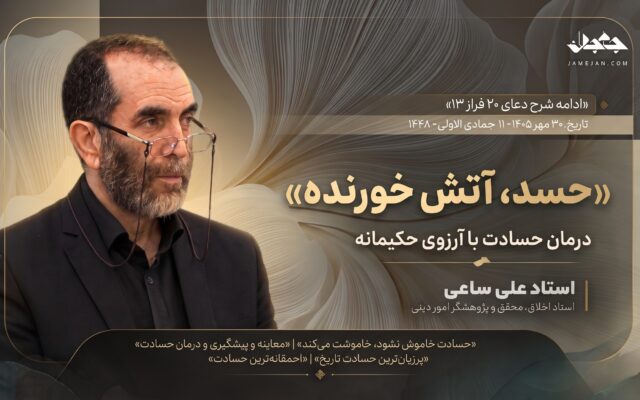
Written transcript of the lecture
The Meshkat-e Noor teachings series🌼🔆🌼The Secret of Remembering ʿAlī🌼🔆🌼
🌹🔅☘️ بِسْمِ اللَّهِ الرَّحْمنِ الرَّحيمِ ☘️🔅🌹
🔅🌹 “The Wonders of Ghadir and the Master” “The Dearest of Things” “The Secret of Satan’s Lament” “Raw Love” “Ghadir at Dusk” and more … A summary with an addendum 1405.03.14 Ali Saei (Abdullah Meshkat) 110.141(903) 🌹🔅
🤲 الْحَمْدُ لِلَّهِ الَّذِي جَعَلَنَا مِنَ الْمُتَمَسِّكِينَ بِوَلَايَةِ أَمِيرِ الْمُؤْمِنِينَ وَ الْأَئِمَّةِ Peace be upon them🔆
✨Your beauty, a gift that brings smiles to all the world on “يَوْمُ التَّبَسُّمِ” 💫
🌸 فَرَوْحٌ وَ رَيْحانٌ وَ جَنَّةُ نَعيمٍ🌷
🍃May the Ghadir of your heart overflow with flowing water🌼
Prologue—A living body nourished by the waters of Ghadir
❇️ The nature of Ghadir
Every Ghadir brings a fresh event and subtle marvels. Prepare your heart for a renewed Ghadir! Take the measure of the Ghadir within you!
Ghadir is an interwoven system, a defining essence within every being! Each person is transformed in proportion to their faith and response to Ghadir!
Why should the inner dimensions of Ghadir not continue to unfold? They do!
💫🔆… وَ فِي يَوْمِ الْغَدِيرِ عَرَضَ اللَّهُ الْوَلَايَةَ عَلَى أَهْلِ السَّمَاوَاتِ السَّبْعِ فَتَسْبِقُ إِلَيْهَا أَهْلُ السَّمَاءِ السَّابِعَةِ فَزَيَّنَ بِهَا الْعَرْشَ ثُم…[1]
🔆 … On the day of Ghadir, God presented the wilayah to the inhabitants of the seven heavens. The inhabitants of the seventh heaven were the first to accept it, and so [God] adorned the Throne with it [the wilayah]. Then…
❇️ Ghadir, the center of wonders
The universe is a continuous, unified system; every event within it affects the whole of existence!
If the system’s core changes, the whole universe changes!
Why does Ghadir matter? Because it is the heart of wondrous events!
Ghadir is not confined to the earth; its earthly manifestation is only one branch of it!
Ghadir is eternally bound to ʿAlī. To know Ghadir is to know ʿAlī. If you wish to know ʿAlī, you must take flight beyond his earthly form and soar to the heights of his spirit and essence!
❇️ Why Ghadir, and why ʿAlī?
The pure light of divine unity is the secret of Ghadir and the secret of ʿAlī!
ʿAlī means the flame of pure life in divine unity: its breath, its pulse, its tree bearing fruits of divine unity; its colour and taste; the springtime of divine unity; the pure remembrance, the pure, sanctified Name!
ʿAlī, peace be upon him, is the supreme banner of divine unity. To become Ghadiri is to keep that banner flying high!
To become Ghadiri is to receive leave to ascend from the Most High, to reach—as ʿAlī did—the summit of divine unity and take on the hue of servanthood!
🔸وَ عِزَّتِي وَ جَلَالِي مَا خَلَقْتُ خَلْقاً أَحَبَ لِي مِنَ الْمُقِرِّينَ بِتَوْحِيدِي وَ أَنْ لَا إِلَهَ غَيْرِي[2]
❇️ أحبّ الأشياء إليك و هو التّوحيد
💫🔆إلهي! أطعت في أحبّ الأشياء إليك و هو التّوحيد و لم أعصك في أبغض الأشياء إليك و هو الكفر؛ فاغفر لى ما بينهما.[3]
🔆ʿAlī, Commander of the Faithful, peace be upon him: My God! I have obeyed You in what is dearest to You—divine oneness—and I have not disobeyed You in what is most hateful to You—associating partners with You. So forgive my sins that lie between these two [states].
💫🔆The intimate supplication of Amir al-Mu’minin, peace be upon him: وَ لَوْ لَمْ تُعَرِّفْنِي حَلَاوَةَ مَعْرِفَتِكَ مَا عَرَفْتُ وَ لَوْ لَمْ تُبَيِّنْ لِي شَدِيدَ عِقَابِكَ مَا اسْتَجَرْتُ إِلَهِي أَطَعْتُكَ فِي أَحَبِ الْأَشْيَاءِ إِلَيْكَ وَ هُوَ التَّوْحِيدُ وَ لَمْ أَعْصِكَ فِي أَبْغَضِ الْأَشْيَاءِ إِلَيْكَ وَ هُوَ الْكُفْرُ فَاغْفِرْ لِي مَا بَيْنَهُمَا إِلَهِي أُحِبُّ طَاعَتَكَ[4]
🔆“Had You not let me taste the sweetness of knowing You, I would never have known You; and had You not made the severity of Your punishment clear to me, I would not have sought refuge. My God, I have obeyed You in what You love most—the affirmation of Your oneness—and I have not disobeyed You in what You detest most—disbelief. So forgive me for all that lies between these two. My God, I love obedience to You.”
❇️Why Satan wailed on the Day of Ghadir
Why should Satan wail?! Because a wail signifies “defeat, despair, hopelessness, light overcoming darkness, truth overcoming falsehood, the radiance of divine unity, and the erasure of polytheism.”
So has Satan still not succeeded, despite all the injustice, oppression, and sin in the world?!
Were all the sins in the world gathered together, they would be silenced by the radiance of a single act of worship by Ali, peace be upon him!
The light of Ali’s worship, peace be upon him, reflects the grandeur of his spirit and his noble essence!
When he draws breath, when he glorifies and magnifies God, knowledge itself is transformed by the radiance of his remembrance!
Ghadir means affirming and ratifying a life grounded in divine unity!
💫🔆قَالَ: وَ حَدَّثَنِي مَسْعَدَةُ بْنُ صَدَقَةَ قَالَ: حَدَّثَنِي جَعْفَرُ بْنُ مُحَمَّدٍ، عَنْ أَبِيهِ: «إِنَّ إِبْلِيسَ عَدُوُّ اللَّهِ رَنَّ أَرْبَعَ رَنَّاتٍ: يَوْمَ لُعِنَ، وَ يَوْمَ أُهْبِطَ إِلَى الْأَرْضِ، وَ يَوْمَ بُعِثَ النَّبِيُّ صَلَّى اللَّهُ عَلَيْهِ وَ آلِهِ، وَ يَوْمَ الْغَدِيرِ»[5]
🔆 The narrator said: Mus‘ada ibn Sadaqa related to me, saying that Ja‘far ibn Muhammad (Imam al-Sadiq, peace be upon him) told me, on the authority of his father (Imam al-Baqir, peace be upon him): “Indeed, Iblis, the enemy of God, cried out and wailed four times: on the day he was cursed, the day he was cast down to earth, the day the Prophet (peace and blessings be upon him and his family) was sent, and the Day of Ghadir.”
❇️The Garden of Knowing Our Master Amir al-Mu’minin, peace be upon him
Part One: Cultivating Love
Let us not underestimate love grounded in allegiance!
Love can work wonders on a small scale! What, then, can it do on a greater scale?!
Even a little love can make a person lose their mind over it, and spend all they have for its sake!
Even a little love can overcome every obstacle!
What, then, can one do with a love that is immense—indeed, supreme?!
Love must be alive!
Love that is merely professed is cold and dark; it must become warm and radiant!
The practical key to transcendent love is to follow the commands of the Qur’an and the Ahl al-Bayt!
❇️Immature Love
Love that is merely passive feeds only on affection and becomes a burden to the beloved. Love that is empty, immature, merely professed and devoid of understanding is a torment to the beloved’s soul!
Love must grow into devoted affection; this means putting love into practice!
A mother’s love for her child is active and practical; a child’s love for its mother springs from need!
Love for the immaculate and pure Ahl al-Bayt must be mature, grounded in understanding, radiant, and expressed in devoted affection!
❇️Following Them: A Condition of Transcendent Love
✨ 🔆 Āl ‘Imrān: 31 قُلْ إِنْ كُنْتُمْ تُحِبُّونَ اللَّهَ فَاتَّبِعُوني يُحْبِبْكُمُ اللَّهُ وَ يَغْفِرْ لَكُمْ ذُنُوبَكُمْ وَ اللَّهُ غَفُورٌ رَحيمٌ
🔆 Say: “If you love God, follow me, and God will love you and forgive your sins. God is All-Forgiving, Most Merciful.”
❇️ Faith and righteous deeds: the conditions for the wilayah of Mawla Ali (peace be upon him)
Mawaddah is an ardent love—a warm, passionate, radiant love. In other words, it is a love filled with longing and yearning.
The wilayah of Ali (peace be upon him) is the highest expression of this love.
One who possesses mawaddah is devoted to wilayah: a lover who longs for it—not a merely claimed wilayah, but a love of serving, a love of being under command, like becoming the likes of Salman, Abu Dharr and Miqdad—not becoming an extremist. The extremists are those who have incurred the Commander of the Faithful’s displeasure.
Extremism is the worst, most poisonous and most deadly form of false love!
A true lover of the Commander of the Faithful (peace be upon him) must place themselves under his command!
✨ 🔆 Maryam: 96 إِنَّ الَّذينَ آمَنُوا وَ عَمِلُوا الصَّالِحاتِ سَيَجْعَلُ لَهُمُ الرَّحْمنُ وُدًّا
🔆 Surely those who believe and do righteous deeds—the All-Merciful will place love for them in people’s hearts!
💫🔆عَنْ أَبِي بَصِيرٍ عَنْ أَبِي عَبْدِ اللَّهِ عَلَيْهِ السَّلَامُ قُلْتُ: قَوْلُهُ: «إِنَّ الَّذِينَ آمَنُوا وَ عَمِلُوا الصَّالِحاتِ سَيَجْعَلُ لَهُمُ الرَّحْمنُ وُدًّا» قَالَ: وَلَايَةُ أَمِيرِ الْمُؤْمِنِينَ هِيَ الْوُدُّ الَّذِي قَالَ اللَّهُ.[6]
🔆 It is narrated from Abu Basir that he said to Imam al-Sadiq (peace be upon him): “What is the interpretation of the verse ‘إِنَّ الَّذِينَ آمَنُوا وَ عَمِلُوا الصَّالِحاتِ سَيَجْعَلُ لَهُمُ الرَّحْمنُ وُدًّا’—‘Surely those who believe and do righteous deeds, the All-Merciful will place love for them’?”
He replied: “The wilayah of the Commander of the Faithful (peace be upon him) is the love God speaks of.”
❇️ The unmistakable sign of mawaddah
The wilayah of Ali (peace be upon him) is no small matter! Only faith and righteous deeds are the unmistakable signs of wilayah and love for Ali (peace be upon him)!
Anyone devoid of faith, whose faith does not take shape in righteous deeds, is lying when they claim love for Ali (peace be upon him) and allegiance to his wilayah!
Faith and righteous deeds are the condition for “love of Ali and wilayah of His Eminence,” and for their very realisation. The initial love and mawaddah are gifts bestowed to fuel one’s journey along the path of sincere love. Through sincere action, both love and mawaddah deepen, and they go hand in hand with the manifestation of faith and righteous deeds. Each strengthens the other: “faith and righteous deeds” strengthen “love,” and “love” strengthens “faith and righteous deeds”!
Thus, the initial gift must grow after one accepts wilayah!
Mawaddah is both a sign of faith and righteous deeds and a means of increasing them. If this is not so, accepting wilayah is nothing more than a claim!
Indeed, faith and righteous deeds are the fragrance and blossoms of wilayah!
❇️ God Himself plants love for Ali (peace be upon him)
💫🔆فِي تَفْسِيرِ الْعَيَّاشِيِّ عَنْ عَمَّارِ بْنِ سُوَيْدٍ قَالَ: سَمِعْتُ أَبَا عَبْدِ اللَّهِ عَلَيْهِ السَّلَامُ يَقُولُ فِي هَذِهِ الْآيَةِ: «فَلَعَلَّكَ تارِكٌ بَعْضَ ما يُوحى إِلَيْكَ» وَ ذَكَرَ حَدِيثاً طَوِيلًا وَ فِي آخِرِهِ:
وَ دَعَا رَسُولُ اللَّهِ صَلَّى اللَّهُ عَلَيْهِ وَ آلِهِ لِأَمِيرِ الْمُؤْمِنِينَ عَلَيْهِ السَّلَامُ فِي آخِرِ صَلَوتِهِ رَافِعاً بِهَا صَوْتَهُ يُسْمِعُ النَّاسَ يَقُولُ: اللَّهُمَّ هَبْ لِعَلِيٍّ الْمَوَدَّةَ فِي صُدُورِ الْمُؤْمِنِينَ، وَ الْهَيْبَةَ وَ الْعَظَمَةَ فِي صُدُورِ الْمُنَافِقِينَ فَأَنْزَلَ اللَّهُ: «إِنَّ الَّذِينَ آمَنُوا وَ عَمِلُوا الصَّالِحاتِ سَيَجْعَلُ لَهُمُ الرَّحْمنُ وُدًّا فَإِنَّما يَسَّرْناهُ بِلِسانِكَ لِتُبَشِّرَ بِهِ الْمُتَّقِينَ وَ تُنْذِرَ بِهِ قَوْماً لُدًّا» بَنِي أُمَيَّةَ، فَقَالَ: رُكَعُ وَ اللَّهِ لَصَاعٌ مِنْ تَمْرٍ فِي شَنٍّ بَالٍ أَحَبُّ إِلَيَّ مِمَّا سَأَلَ مُحَمَّدٌ رَبَّهُ، أَ فَلَا سَأَلَهُ مَلَكاً يَعْضُدُهُ، أَوْ كَنْزاً يَسْتَظْهِرُ بِهِ عَلَى فَاقَتِهِ؟ فَأَنْزَلَ اللَّهُ فِيهِ عَشْرَ آيَاتٍ مِنْ هُودٍ أَوَّلُهَا: «فَلَعَلَّكَ تارِكٌ بَعْضَ ما يُوحى إِلَيْكَ» الْآيَةَ.[7]
🔆 In Tafsir al-Ayyashi, Ammar ibn Suwayd relates: I heard Imam al-Sadiq, peace be upon him, speaking about this verse: «فَلَعَلَّكَ تارِكٌ بَعْضَ ما يُوحى إِلَيْكَ» (Perhaps, then, you may leave aside some of what is revealed to you), and he recounted a lengthy hadith. At the end of it, we read:
During his final prayer, the Messenger of God, peace and blessings be upon him and his family, raised his voice so that the people could hear and prayed for the Commander of the Faithful, peace be upon him: «O God, place love for Ali in the hearts of the believers, and awe and reverence for him in the hearts of the hypocrites.» Then God revealed this verse: «إِنَّ الَّذِينَ آمَنُوا وَ عَمِلُوا الصَّالِحاتِ سَيَجْعَلُ لَهُمُ الرَّحْمنُ وُدًّا…» (the same verse quoted above), followed by the verse «فَإِنَّما يَسَّرْناهُ بِلِسانِكَ لِتُبَشِّرَ بِهِ الْمُتَّقِينَ وَ تُنْذِرَ بِهِ قَوْماً لُدًّا» (We have made the Qur’an easy upon your tongue, so that you may give glad tidings through it to the God-fearing and warn a contentious people). “A contentious people” referred to the Umayyads.
The narrator says:] Then [one of his opponents] said: “By God, a measure of dates in an old waterskin is dearer to me than what Muhammad asked of his Lord. Why did he not ask Him for an angel to help him, or for a treasure that would free him from poverty?” Thereupon God revealed ten verses of Surat Hud about him, the first of which is «فَلَعَلَّكَ تارِكٌ بَعْضَ ما يُوحى إِلَيْكَ».
❇️ Excessive love makes one a hypocrite
💫🔆وَ قَالَ ع هَلَكَ فِيَّ رَجُلَانِ مُحِبٌ غَالٍ وَ مُبْغِضٌ قَال[8]
“And he, peace be upon him, said:”
“Two men have perished on my account: an excessive lover, and a hostile slanderer.”
(Some manuscripts read: مُبْغِضٌ قَالٍ, meaning “a fierce, foul-mouthed enemy,” or “one whose hatred makes him disavow me.”)
❇️ Both the “excessive lover” and the “hostile slanderer” are hypocrites
The “excessive lover” sells allegiance and love for next to nothing, while the “hostile slanderer” gives short measure in allegiance!
Woe to those who give short measure in their allegiance!
One refuses to buy; the other sells for nothing—or sets it on fire!
One gives short measure (the hostile slanderer); the other sells it for next to nothing (the extremist).
We must make allegiance the crown upon our heads and the light of our eyes; we must honour its majesty!
We must be an adornment to allegiance, not a blemish, a disgrace, or a burden upon it!
We must not join the doomed, for both groups are losers—and the excessive lover is the greater loser!
Those who love excessively are worse than ISIS! They trample the light of allegiance underfoot instead of letting it illuminate the horizons of servitude to God!
❇️ The manifestation of the allegiance to the Ahl al-Bayt, peace be upon them, on the Day of Resurrection
✨ 🔆 al-Ḥadīd: 12 يَوْمَ تَرَى الْمُؤْمِنينَ وَ الْمُؤْمِناتِ يَسْعى نُورُهُمْ بَيْنَ أَيْديهِمْ وَ بِأَيْمانِهِمْ بُشْراكُمُ الْيَوْمَ جَنَّاتٌ تَجْري مِنْ تَحْتِهَا الْأَنْهارُ خالِدينَ فيها ذلِكَ هُوَ الْفَوْزُ الْعَظيمُ
🔆 (This great reward will be granted) on the Day when you see believing men and women, with their light hastening ahead of them and to their right. They will be told, “Good news for you today: gardens beneath which rivers flow, where you will abide forever. That is the supreme triumph!”
✨ 🔆 al-Ḥadīd: 13 يَوْمَ يَقُولُ الْمُنافِقُونَ وَ الْمُنافِقاتُ لِلَّذينَ آمَنُوا انْظُرُونا نَقْتَبِسْ مِنْ نُورِكُمْ قيلَ ارْجِعُوا وَراءَكُمْ فَالْتَمِسُوا نُوراً فَضُرِبَ بَيْنَهُمْ بِسُورٍ لَهُ بابٌ باطِنُهُ فيهِ الرَّحْمَةُ وَ ظاهِرُهُ مِنْ قِبَلِهِ الْعَذابُ
🔆 On the Day when the hypocritical men and women will say to the believers, “Wait for us, so that we may take some of your light!” They will be told, “Go back and seek light for yourselves!” Then a wall will be set up between them, with a gate in it: on its inner side is mercy, and on its outer side, punishment.
✨ 🔆 al-Taḥrīm: 8 يا أَيُّهَا الَّذينَ آمَنُوا تُوبُوا إِلَى اللَّهِ تَوْبَةً نَصُوحاً عَسى رَبُّكُمْ أَنْ يُكَفِّرَ عَنْكُمْ سَيِّئاتِكُمْ وَ يُدْخِلَكُمْ جَنَّاتٍ تَجْري مِنْ تَحْتِهَا الْأَنْهارُ يَوْمَ لا يُخْزِي اللَّهُ النَّبِيَّ وَ الَّذينَ آمَنُوا مَعَهُ نُورُهُمْ يَسْعى بَيْنَ أَيْديهِمْ وَ بِأَيْمانِهِمْ يَقُولُونَ رَبَّنا أَتْمِمْ لَنا نُورَنا وَ اغْفِرْ لَنا إِنَّكَ عَلى كُلِّ شَيْءٍ قَديرٌ
🔆 O you who believe, turn to God in sincere repentance. It may be that your Lord will thereby forgive your sins and admit you into gardens beneath which rivers flow, on the Day when God will not disgrace the Prophet or those who believed with him. Their light will hasten ahead of them and to their right, and they will say, “Our Lord, perfect our light for us and forgive us. Surely You have power over all things!”
💫🔆قَالَ أَبُو عَبْدِ اللَّهِ (عَلَيْهِ السَّلَامُ): «يَسْعى نُورُهُمْ بَيْنَ أَيْدِيهِمْ وَ بِأَيْمانِهِمْ أَئِمَّةُ الْمُؤْمِنِينَ يَوْمَ الْقِيَامَةِ تَسْعَى بَيْنَ يَدَيِ الْمُؤْمِنِينَ وَ بِأَيْمَانِهِمْ حَتَّى يُنْزِلُوهُمْ مَنَازِلَ أَهْلِ الْجَنَّةِ».[9]
💫🔆 Imam al-Ṣādiq (peace be upon him) said:
“Their light hastens ahead of them and to their right. On the Day of Resurrection, the Imams of the believers will go ahead of them and to their right, leading them to their abodes in Paradise.”
❇️The higher one’s degrees of faith, the greater one’s share in the wilayah
💫🔆عَنْ عَلِيٍّ، عَنْ أَبِي بَصِيرٍ، قَالَ: قَالَ أَبُو عَبْدِ اللَّهِ (عَلَيْهِ السَّلَامُ): «إِنَّ النَّاسَ يُقَسَّمُ بَيْنَهُمُ النُّورُ يَوْمَ الْقِيَامَةِ عَلَى قَدْرِ إِيمَانِهِمْ، وَ يُقْسَمُ لِلْمُنَافِقِ فَيَكُونُ نُورُهُ عَلَى [قَدْرِ] إِبْهَامِ رِجْلِهِ الْيُسْرَى، فَيَطَأُ نُورَهُ، فَيَقُولُ: مَكَانَكُمْ حَتَّى أَقْتَبِسَ مِنْ نُورِكُمْ. قِيلَ: ارْجِعُوا وَراءَكُمْ فَالْتَمِسُوا نُوراً يَعْنِي حَيْثُ قُسِمَ النَّارُ». قَالَ: «فَيَرْجِعُونَ فَيُضْرَبُ بَيْنَهُمُ السُّورُ، فَيُنَادُونَهُمْ مِنْ وَرَاءِ السُّورِ: أَ لَمْ نَكُنْ مَعَكُمْ قالُوا بَلى وَ لكِنَّكُمْ فَتَنْتُمْ أَنْفُسَكُمْ وَ تَرَبَّصْتُمْ وَ ارْتَبْتُمْ وَ غَرَّتْكُمُ الْأَمانِيُّ حَتَّى جاءَ أَمْرُ اللَّهِ وَ غَرَّكُمْ بِاللَّهِ الْغَرُورُ* فَالْيَوْمَ لا يُؤْخَذُ مِنْكُمْ فِدْيَةٌ وَ لا مِنَ الَّذِينَ كَفَرُوا مَأْواكُمُ النَّارُ هِيَ مَوْلاكُمْ وَ بِئْسَ الْمَصِيرُ».
ثُمَّ قَالَ: «يَا أَبَا مُحَمَّدٍ، أَمَا وَ اللَّهِ مَا قَالَ اللَّهُ لِلْيَهُودِ وَ النَّصَارَى، وَ لَكِنَّهُ عَنَى أَهْلَ الْقِبْلَةِ».[10]
💫🔆 It is reported from ʿAlī (ibn Abī Ḥamza?) from Abū Baṣīr, who said: Imam al-Ṣādiq (peace be upon him) said:
“On the Day of Resurrection, light will be apportioned among the people according to the measure of their faith. The hypocrite, too, will be given light, but only enough to reach the tip of his left big toe. He will place his light beneath his feet [or his light will be trampled beneath his feet]. Then he will say, ‘Wait for us, so that we may take light from yours.’ He will be told, ‘Go back and seek light’”—that is, to the very place where the fire was apportioned.
He said: “So they will turn back, and a wall will be raised between them. From the other side, [those who have light] will call out to them: ‘Were we not with you?’ They will say, ‘Yes, but you led yourselves into temptation, waited [for our downfall], doubted, and were deceived by your hopes until God’s command [death] came to pass, and the deceiver [Satan] deceived you about God. So today no ransom will be accepted from you, nor from those who disbelieved. The Fire is your home; it is your guardian—and what a wretched destination!’”
Then he said: “O Abu Muhammad, by God, this statement was not revealed concerning the Jews and Christians; rather, it refers to the people of the qibla.”
❇️Part Two: What Does “Remembering Ali Is Worship” Mean?
Can we make the names of the Infallible Ones, peace be upon them, into a devotional formula and repeat them as we repeat the name of God?
Absolutely not! For remembering Muhammad and the Family of Muhammad, peace be upon him, does not mean repeating their names in the way we repeat the name of Almighty God. Nor has any such practice been prescribed by the Ahl al-Bayt, peace be upon them.
Rather, it means recalling their virtues and merits, and turning to them with understanding in order to gain their highest benefit.
It also means remembering them in our intimate prayers to our Almighty Lord.
Thus, remembering Muhammad and the Family of Muhammad, peace be upon him, means recalling their merits and virtues, invoking blessings upon them, turning to them sincerely, and expressing affection and love for them.
Among the finest ways of remembering them are invoking blessings upon them, visiting their shrines, doing good in their honour, holding celebrations for their birthdays, and observing special gatherings on the eve of Ashura and on the anniversaries of their martyrdoms.
The finest way to remember them is through a comprehensive visitation text—a ziyara in which they are remembered through the virtues of their servitude to God.
Ziyarat al-Jamiʿa al-Kabira is both a comprehensive visitation text and, at the same time, a comprehensive guide to their knowledge and recognition.
Remembering them also means reflecting on their hadiths and sharing their teachings.
Any repetition of their names that takes on the character of supplication or worship is impermissible.
For they are the means and the vessel by which one journeys towards God. To stop on the road runs counter to the road’s purpose and destination.
✨🔆Al-Ma’ida: 7 وَ اذْكُرُوا نِعْمَةَ اللَّهِ عَلَيْكُمْ وَ ميثاقَهُ الَّذي واثَقَكُمْ بِهِ إِذْ قُلْتُمْ سَمِعْنا وَ أَطَعْنا وَ اتَّقُوا اللَّهَ إِنَّ اللَّهَ عَليمٌ بِذاتِ الصُّدُورِ
And remember God’s blessing upon you and the covenant He made with you, binding you firmly, when you said, “We hear and we obey.” Be mindful of God; surely God knows what lies within people’s hearts.
Remembering blessings and favours is in no way the same as worshipping them.
We must not misuse hadiths.
We must not turn clear hadiths into ambiguous ones.
The Ahl al-Bayt, peace be upon them, are the means by which we reach God—not a source originating from God.
❇️ أَخْرِجِ الْبُغْضَ وَ الْمُنْكَرَ وَ الْغُلُوَّ
💫🔆مِنْ جُمْلَتِهَا هَذَا الدُّعَاءُ مَنْسُوباً إِلَى لَيْلَةِ الْغَدِيرِ وَ هُوَ اللَّهُمَّ إِنَّكَ دَعَوْتَنَا إِلَى سَبِيلِ طَاعَتِكَ وَ طَاعَةِ نَبِيِّكَ وَ وَصِيِّهِ وَ عِتْرَتِهِ دُعَاءً لَهُ نُورٌ وَ ضِيَاءٌ وَ بَهْجَةٌ وَ اسْتِنَارٌ فَدَعَانَا نَبِيُّكَ لِوَصِيِّهِ يَوْمَ غَدِيرِ خُمٍّ فَوَفَّقْتَنَا لِلْإِصَابَةِ وَ سَدَّدْتَنَا لِلْإِجَابَةِ لِدُعَائِهِ فَأَنَبْنَا إِلَيْكَ بِالْإِنَابَةِ وَ أَسْلَمْنَا لِنَبِيِّكَ قُلُوبَنَا وَ لِوَصِيِّهِ نُفُوسَنَا وَ لِمَا دَعَوْتَنَا إِلَيْهِ عُقُولَنَا فَتَمَّ لَنَا نُورُكَ يَا هَادِيَ الْمُضِلِّينَ أَخْرِجِ الْبُغْضَ وَ الْمُنْكَرَ وَ الْغُلُوَّ لِأَمِينِكَ أَمِيرِ الْمُؤْمِنِينَ وَ الْأَئِمَّةِ مِنْ وُلْدِهِ مِنْ قُلُوبِنَا وَ نُفُوسِنَا وَ أَلْسِنَتِنَا وَ هُمُومِنَا وَ زِدْنَا مِنْ مُوَالاتِهِ وَ مَحَبَّتِهِ وَ مَوَدَّتِهِ لَهُ وَ الْأَئِمَّةِ مِنْ بَعْدِهِ زِيَادَاتٍ لَا انْقِطَاعَ لَهَا وَ مُدَّةً لَا تَنَاهِيَ لَهَا وَ اجْعَلْنَا نُعَادِي لِوَلِيِّكَ مَنْ نَاصَبَهُ وَ نُوَالِي مَنْ أَحَبَّهُ وَ نَأْمُلُ بِذَلِكَ طَاعَتَكَ يَا أَرْحَمَ الرَّاحِمِينَ اللَّهُمَّ اجْعَلْ عَذَابَكَ وَ سَخَطَكَ عَلَى مَنْ نَاصَبَ وَلِيَّكَ وَ جَاحَدَ [وَ جَحَدَ] إِمَامَتَهُ وَ أَنْكَرَ وَلَايَتَهُ وَ قَدَّمْتَهُ أَيَّامَ فِتْنَتِكَ فِي كُلِّ عَصْرٍ وَ زَمَانٍ وَ أَوَانٍ إِنَّكَ عَلى كُلِّ شَيْءٍ قَدِيرٌ اللَّهُمَّ بِحَقِّ مُحَمَّدٍ رَسُولِكَ وَ عَلِيٍّ وَلِيِّكَ وَ الْأَئِمَّةِ مِنْ بَعْدِهِ حُجَجِكَ فَأَثْبِتْ قَلْبِي عَلَى دِينِكَ وَ مُوَالاةِ أَوْلِيَائِكَ وَ مُعَادَاةِ أَعْدَائِكَ مَعَ خَيْرِ الدُّنْيَا وَ الْآخِرَةِ تَجْمَعُهُمَا لِي وَ لِأَهْلِي وَ وُلْدِي وَ إِخْوَانِيَ الْمُؤْمِنِينَ إِنَّكَ عَلى كُلِّ شَيْءٍ قَدِيرٌ يَا أَرْحَمَ الرَّاحِمِين[11]
One of these supplications is the prayer attributed to the night of Ghadir:
“O God, You called us to obey You, Your Messenger, and his trustee and family—a call filled with light, radiance, joy, and brilliance. So, on the day of Ghadir Khumm, Your Messenger called us to follow his trustee. You enabled us to accept Your call and guided us to answer his prayer. We therefore turned to You, entrusting our hearts to Your Messenger, our souls to his trustee, and our minds to that to which You had called us. Thus Your light was made complete for us, O Guide of the astray! Remove from our hearts, souls, tongues, and thoughts all resentment, ignorance, and excess concerning Your trusted one, the Commander of the Faithful, and the Imams among his descendants. Grant us ever-increasing and unending love, affection, and devotion to him and to the Imams who follow him. Make us enemies of whoever is hostile to Your friend, and lovers of whoever loves him, and let us hope through this act to earn Your obedience, O Most Merciful of the merciful!
O God, visit Your punishment and wrath upon whoever opposed Your friend, denied his imamate, and refused his authority—and upon those whom You gave precedence over Your friend in every age and time, and at every trial You brought about. You have power over all things.
O God, by the right of Muhammad, Your Messenger, and Ali, Your friend, and the Imams who came after him, Your proofs, make my heart steadfast in Your religion, in love for Your friends, and in enmity toward Your enemies. Grant me the best of this world and the next, and bring these blessings together for me, my family, my children, and my believing brothers. You have power over all things, O Most Merciful of the merciful!”
❇️Sacred Remembrance
God’s Proof is counted as the remembrance of God, His name and His sign. Through remembrance of God, His name and His sign, God must be remembered in the finest way—not forgotten!
Through the remembrance of the rememberer, the Remembered One—His Eminence, Allah—is remembered.
To remember remembrance itself through remembrance is a mistake!
Remembrance is a means of reaching the Remembered One! Remembrance is a means of reaching God!
Through remembrance, we worship the Remembered One! Remembrance is a means of worship! The means themselves are not worshipped!
❇️Remembering the Virtues of God’s Proof
💫🔆عَنْ أَبِيهِ مُحَمَّدِ بْنِ عَلِيٍّ عَنْ آبَائِهِ الصَّادِقِينَ ع قَالَ قَالَ رَسُولُ اللَّهِ ص إِنَّ اللَّهَ تَبَارَكَ وَ تَعَالَى جَعَلَ لِأَخِي عَلِيِّ بْنِ أَبِي طَالِبٍ فَضَائِلَ لَا يُحْصِي عَدَدَهَا غَيْرُهُ فَمَنْ ذَكَرَ فَضِيلَةً مِنْ فَضَائِلِهِ مُقِرّاً بِهَا غَفَرَ اللَّهُ لَهُ مَا تَقَدَّمَ مِنْ ذَنْبِهِ وَ مَا تَأَخَّرَ وَ لَوْ وَافَى الْقِيَامَةَ بِذُنُوبِ الثَّقَلَيْنِ وَ مَنْ كَتَبَ فَضِيلَةً مِنْ فَضَائِلِ عَلِيِّ بْنِ أَبِي طَالِبٍ ع لَمْ تَزَلِ الْمَلَائِكَةُ تَسْتَغْفِرُ لَهُ مَا بَقِيَ لِتِلْكَ الْكِتَابَةِ رَسْمٌ وَ مَنِ اسْتَمَعَ إِلَى فَضِيلَةٍ مِنْ فَضَائِلِهِ غَفَرَ اللَّهُ لَهُ الذُّنُوبَ الَّتِي اكْتَسَبَهَا بِالاسْتِمَاعِ وَ مَنْ نَظَرَ إِلَى كِتَابَةٍ فِي فَضَائِلِهِ غَفَرَ اللَّهُ لَهُ الذُّنُوبَ الَّتِي اكْتَسَبَهَا بِالنَّظَرِ ثُمَّ قَالَ رَسُولُ اللَّهِ ص النَّظَرُ إِلَى عَلِيِّ بْنِ أَبِي طَالِبٍ ع عِبَادَةٌ وَ ذِكْرُهُ عِبَادَةٌ وَ لَا يُقْبَلُ إِيمَانُ عَبْدٍ إِلَّا بِوَلَايَتِهِ وَ الْبَرَاءَةِ مِنْ أَعْدَائِهِ.[12]
💫🔆 It is narrated from Muhammad ibn Ali (Imam al-Baqir (AS)), through his noble forefathers (AS), that the Messenger of God (PBUH) said:
“Indeed, God, blessed and exalted, has bestowed upon my brother Ali ibn Abi Talib virtues whose number no one but he can reckon. Whoever recounts one of his virtues, acknowledging its truth, will have their past and future sins forgiven by God—even if they come on the Day of Resurrection bearing the sins of both human beings and jinn. Whoever writes down one of Ali ibn Abi Talib’s (AS) virtues will have the angels pray for their forgiveness for as long as any trace of that writing remains. Whoever listens to one of his virtues will have the sins they have incurred through hearing forgiven by God. And whoever looks at a written account of his virtues will have the sins they have incurred through looking [at what is forbidden] forgiven by God.”
Then the Messenger of God (PBUH) said: “Looking upon Ali ibn Abi Talib (AS) is an act of worship; remembering him is an act of worship. No servant’s faith is accepted except through allegiance to him and disavowal of his enemies.”
❇️The purpose of mentioning “Muhammad and the Family of Muhammad (PBUH)” is to understand their standing and virtues in the sight of God
💫🔆قَالَ رَسُولُ اللَّهِ ص ذِكْرُ اللَّهِ عَزَّ وَ جَلَّ عِبَادَةٌ وَ ذِكْرِي عِبَادَةٌ وَ ذِكْرُ عَلِيٍ عِبَادَةٌ وَ ذِكْرُ الْأَئِمَّةِ مِنْ وُلْدِهِ عِبَادَةٌ وَ الَّذِي بَعَثَنِي بِالنُّبُوَّةِ وَ جَعَلَنِي خَيْرَ الْبَرِيَّةِ إِنَّ وَصِيِّي لَأَفْضَلُ الْأَوْصِيَاءِ وَ إِنَّهُ لَحُجَّةُ اللَّهِ عَلَى عِبَادِهِ وَ خَلِيفَتُهُ عَلَى خَلْقِهِ وَ مِنْ وُلْدِهِ الْأَئِمَّةُ الْهُدَاةُ بَعْدِي بِهِمْ يَحْبِسُ اللَّهُ الْعَذَابَ عَنْ أَهْلِ الْأَرْضِ وَ بِهِمْ يُمْسِكُ السَّماءَ أَنْ تَقَعَ عَلَى الْأَرْضِ إِلَّا بِإِذْنِهِ وَ بِهِمْ يُمْسِكُ الْجِبَالَ أَنْ تَمِيدَ بِهِمْ وَ بِهِمْ يَسْقِي خَلْقَهُ الْغَيْثَ وَ بِهِمْ يُخْرِجُ النَّبَاتَ أُولَئِكَ أَوْلِيَاءُ اللَّهِ حَقّاً وَ خُلَفَائِي صِدْقاً عِدَّتُهُمْ عِدَّةُ الشُّهُورِ وَ هِيَ اثْنا عَشَرَ شَهْراً وَ عِدَّتُهُمْ عِدَّةُ نُقَبَاءِ مُوسَى بْنِ عِمْرَانَ ثُمَّ تَلَا ع هَذِهِ الْآيَةَ وَ السَّماءِ Essence الْبُرُوجِ ثُمَّ قَالَ أَ تَقْدِرُ يَا ابْنَ عَبَّاسٍ إِنَّ اللَّهَ يُقْسِمُ بِالسَّمَاءِ ذَاتِ الْبُرُوجِ وَ يَعْنِي بِهِ السَّمَاءَ وَ بُرُوجَهَا قُلْتُ يَا رَسُولَ اللَّهِ فَمَا ذَاكَ قَالَ أَمَّا السَّمَاءُ فَأَنَا وَ أَمَّا الْبُرُوجُ فَالْأَئِمَّةُ بَعْدِي أَوَّلُهُمْ عَلِيٌّ وَ آخِرُهُمْ الْمَهْدِيُّ صَلَوَاتُ اللَّهِ عَلَيْهِمْ أَجْمَعِين[13]
💫🔆 The Messenger of God (PBUH) said:
“Remembering God, Mighty and Exalted, is an act of worship; remembering me is an act of worship; remembering Ali is an act of worship; and remembering the Imams among his descendants is an act of worship. By Him who sent me as a prophet and made me the best of humankind, my legatee is the foremost of all legatees. He is God’s proof to His servants and His vicegerent over His creation. From among his descendants will come the Imams who guide after me. Through them, God averts punishment from the people of the earth; through them, He holds the sky back from falling upon the earth except by His permission; through them, He keeps the mountains from trembling; through them, He sends rain to His creation; and through them, He makes vegetation grow. They are God’s true friends and my rightful successors. Their number is like the number of the months—twelve—and like the number of the chiefs of Moses ibn Imran.”
Then the Imam (AS) recited this verse: «وَ السَّماءِ ذاتِ الْبُرُوجِ» (By the heaven with its constellations). He then said, “O Ibn Abbas, do you know that when God swears by the heaven with its constellations, He means the heaven and its constellations?”
I asked, “O Messenger of God, what does that mean?”
He replied, “As for the heaven, that is me; and as for the constellations, they are the Imams who will come after me. The first is Ali and the last is the Mahdi. May God’s blessings be upon them all.”
❇️ Contemplating Ali (AS) as the Book of Creation
To contemplate Ali (AS) as the Supreme Sign of God, and to remember and invoke Ali, is to read the divine Book.
Remembering Ali means drawing near to God through Ali.
Remembering Ali as an interpretation of the verse:
✨🔆 Yā Sīn: 12 إِنَّا نَحْنُ نُحْيِ الْمَوْتى وَ نَكْتُبُ ما قَدَّمُوا وَ آثارَهُمْ وَ كُلَّ شَيْءٍ أَحْصَيْناهُ في إِمامٍ مُبينٍ
🔆Surely We bring the dead to life, and record what they have sent ahead and all the traces they have left behind; and We have enumerated everything in a manifest Imam!
In every word of Nahj al-Balagha, the Sahifa of Ali, and the other sayings of His Eminence, the Commander of the Faithful (AS), let us behold Ali’s beauty, remember him, and invoke blessings upon him!
Ali’s words are a cup that reflects his beauty!
By following Ali and walking in the way of his teachings, conduct, and tradition, let us taste the essence of Ali!
💫🔆 عَنْ أَنَسٍ عَنْ عُمَرَ بْنِ الْخَطَّابِ وَ اللَّفْظُ لِعَائِشَةَ قَالَتْ كَانَ أَبُو بَكْرٍ يُدِيمُ النَّظَرَ إِلَى عَلِيٍّ ع فَقِيلَ لَهُ فِي ذَلِكَ فَقَالَ سَمِعْتُ رَسُولَ اللَّهِ ص يَقُولُ النَّظَرُ إِلَى عَلِيٍّ عِبَادَةٌ
الْإِبَانَةِ عَنِ ابْنِ بُطَّةَ رَوَى أَبُو صَالِحٍ عَنْ أَبِي هُرَيْرَةَ قَالَ رَأَيْتُ مُعَاذاً يُدِيمُ النَّظَرَ إِلَى وَجْهِ عَلِيٍّ فَقُلْتُ لَهُ إِنَّكَ تُدِيمُ النَّظَرَ إِلَيْهِ كَأَنَّكَ لَمْ تَرَهُ فَقَالَ سَمِعْتُ رَسُولَ اللَّهِ ص يَقُولُ النَّظَرُ إِلَى وَجْهِ عَلِيِّ بْنِ أَبِي طَالِبٍ عِبَادَةٌ
وَ هُوَ أَكْثَرُ فِي الرِّوَايَاتِ
وَ فِي رِوَايَةِ عَمَّارٍ وَ مُعَاذٍ وَ عَائِشَةَ عَنِ النَّبِيِّ ص النَّظَرُ إِلَى عَلِيِّ بْنِ أَبِي طَالِبٍ عِبَادَةٌ وَ ذِكْرُهُ عِبَادَةٌ وَ لَا يُقْبَلُ إِيمَانٌ إِلَّا بِوَلَايَتِهِ وَ الْبَرَاءَةِ مِنْ أَعْدَائِهِ
شِيرَوَيْهِ فِي الْفِرْدَوْسِ قَالَتْ عَائِشَةُ قَالَ النَّبِيُ ذِكْرُ عَلِيٍ عِبَادَةٌ
الْخَرْكُوشِيُّ فِي شَرَفِ النَّبِيِ أَنَّهُ كَانَ النَّاسُ يُصَلُّونَ وَ أَبُو ذَرٍّ يَنْظُرُ إِلَى أَمِيرِ الْمُؤْمِنِينَ ع فَقِيلَ لَهُ فِي ذَلِكَ فَقَالَ سَمِعْتُ رَسُولَ اللَّهِ يَقُولُ النَّظَرُ إِلَى عَلِيِّ بْنِ أَبِي طَالِبٍ عِبَادَةٌ وَ النَّظَرُ إِلَى الْوَالِدَيْنِ بِرَأْفَةٍ وَ رَحْمَةٍ عِبَادَةٌ وَ النَّظَرُ فِي الْمُصْحَفِ عِبَادَةٌ وَ النَّظَرُ إِلَى الْكَعْبَةِ عِبَادَةٌ
أَبُو ذَرٍّ قَالَ النَّبِيُّ ص مَثَلُ عَلِيٍّ فِيكُمْ أَوْ قَالَ فِي هَذِهِ الْأُمَّةِ كَمَثَلِ الْكَعْبَةِ الْمَسْتُورَةِ النَّظَرُ إِلَيْهَا عِبَادَةٌ وَ الْحَجُّ إِلَيْهَا فَرِيضَة[14]
💫🔆 It is narrated from Anas, from Umar ibn al-Khattab—and the wording is Aisha’s—that he said: Abu Bakr would constantly gaze at Ali (AS). He was asked about it, and replied, “I heard the Messenger of God (PBUH) say, ‘Looking at Ali is an act of worship.’”
In Ibn Battah’s book al-Ibānah, it is narrated from Abu Salih, from Abu Hurayra, who said: “I saw Muadh constantly gazing at Ali’s (AS) face. I said to him, ‘You gaze at him as though you had never seen him before.’ He replied, ‘I heard the Messenger of God (PBUH) say, “Looking at the face of Ali ibn Abi Talib is an act of worship.”’”
This meaning is found in many narrations.
In a report from the Prophet (PBUH) narrated by ʿAmmār, Muʿādh and ʿĀʾisha, he said: «Looking upon ʿAlī ibn Abī Ṭālib is an act of worship, remembering him is an act of worship, and no faith is accepted without loyalty to him and disavowal of his enemies.»
Shīrūyah relates from ʿĀʾisha in *al-Firdaws* that the Prophet (PBUH) said: «Remembering ʿAlī is an act of worship.»
In *Sharaf al-Nabī*, Khargūshī relates: The people were occupied in prayer while Abū Dharr looked upon the Commander of the Faithful (AS). He was questioned about this and replied, “I heard the Messenger of God (PBUH) say: «Looking upon ʿAlī ibn Abī Ṭālib is an act of worship; a child’s compassionate and merciful gaze upon their parents is an act of worship; looking into the Qur’an is an act of worship; and looking upon the Kaʿba is an act of worship.»”
It is related from Abū Dharr that the Prophet (PBUH) said: «The likeness of ʿAlī among you—or, he said, in this community—is that of the Kaʿba, veiled: looking upon it is an act of worship, and pilgrimage to it is an obligation.»
❇️ ʿAlī (AS), the Means of Ascent
💫🔆 عَنْ أَبِي هُرَيْرَةَ وَ اللَّفْظُ لِزَيْدٍ قَالَ النَّبِيُّ ص مَنْ أَحَبَّ أَنْ يَتَمَسَّكَ بِالْقَضِيبِ الْأَحْمَرِ الَّذِي غَرَسَهُ اللَّهُ فِي جَنَّةِ عَدْنٍ بِيَمِينِهِ فَلْيَتَمَسَّكْ بِحُبِّ عَلِيِّ بْنِ أَبِي طَالِبٍ
Khaṭīb Munīḥ
| لقد غرس الإله بدار عدن | قضيبا و هو خير الغارسينا | |
| من الياقوت يستعلي و ينمو | على قضبانها حسنا و لينا | |
| فإن شئتم تمسكتم فكونوا | بحبل أخي من المتمسكينا-. | |
al-Ṣaqr al-Baṣrī
| يروى بأن أبا هريرة قال لي | إني ملأت من النبي مسامعا | |
| من رام أن يتمسك الغصن الذي | من أحمر الياقوت أصبح لامعا | |
| من غرس رب العالمين و زرعه | من جنتي عدن تبارك زارعا | |
| فليبقين لولاية الهادي أبي | حسن علي ذي المناقب تابعا[15] | |
💫🔆 It is related from Abū Hurayra—and in another wording, from Zayd—that the Prophet (PBUH) said:
«Whoever wishes to grasp the red branch that God planted with His right hand in the Garden of Eden should hold fast to love for ʿAlī ibn Abī Ṭālib.»
The poet Khaṭīb Minīkh says:
Indeed, God planted a sapling in the Garden of Eden,
and He is the best of planters.
Of ruby, it rises and grows
in beauty and grace upon its branches.
So, if you wish to hold fast,
be among those who cling to the cord of the Prophet’s brother.
The poet Ṣaqr al-Baṣrī says:
It is related that Abū Hurayra told me:
I filled my ears with the Prophet’s words [when he said]:
Whoever wishes to grasp that branch
that gleams with red ruby,
the branch planted and sown by the Lord of all worlds
in the two Gardens of Eden—blessed be the planter—
must remain ever a follower of the guidance and authority of
Abū al-Ḥasan ʿAlī, endowed with many virtues.
خَطِيبٌ مُنِيحٌ
لَقَدْ غَرَسَ الْإِلَهُ بِدَارِ عَدْنٍ قَضِيبًا وَ هُوَ خَيْرُ الْغَارِسِينَا
مِنَ الْيَاقُوتِ يَسْتَعْلِي وَ يَنْمُو عَلَى قُضْبَانِهَا حُسْنًا وَ لِينَا
فَإِنْ شِئْتُمْ تَمَسَّكْتُمْ فَكُونُوا بِحَبْلِ أَخِي مِنَ الْمُتَمَسِّكِينَا
O virtuous orator!
Truly, God planted a sapling in the land of Eden—and He is the best of planters.
It rises from ruby and grows upon its branches in beauty and grace.
So if you wish to hold fast, be among those who hold fast to the cord of my brother.
الصَّقْرُ الْبَصْرِيُّ
يُرْوَى بِأَنَّ أَبَا هُرَيْرَةَ قَالَ لِي إِنِّي مَلَأْتُ مِنَ النَّبِيِّ مَسَامِعَا
مَنْ رَامَ أَنْ يَتَمَسَّكَ الْغُصْنَ الَّذِي مِنْ أَحْمَرَ الْيَاقُوتِ أَصْبَحَ لَامِعَا
مِنْ غَرْسِ رَبِّ الْعَالَمِينَ وَ زَرْعِهِ مِنْ جَنَّتَيْ عَدْنٍ تَبَارَكَ زَارِعَا
فَلْيَبْقِيَنَّ لِوِلَايَةِ الْهَادِي أَبِي حَسَنٍ عَلِيٍّ ذِي الْمَنَاقِبِ تَابِعَا
Ṣaqr al-Baṣrī relates that Abū Hurayra said to me:
“Indeed, I have filled my ears with the words of the Prophet.”
Whoever wishes to hold fast to a branch made radiant with red ruby,
from the planting of the Lord of the worlds and His cultivation, from the two gardens of Eden—blessed be their planter—
must always follow the wilayah of the Guide (the Imam), Abū al-Ḥasan ʿAlī, possessor of virtues.
❇️How shall we remember God’s blessings?
God’s blessings are the means to know and love the Holy Divine Presence!
God’s blessings are the special knowledge of the All-Glorious!
To partake of God’s blessings is to partake of divine knowledge! God’s blessings and favors are not merely for satiety, pleasure, and growth; they are for understanding and drawing near!
The greatest divine blessing is the greatest sign of God, the gateway to drawing near to Him!
The wilayah of the Ahl al-Bayt, peace be upon them, is among the mightiest of God’s blessings, and His greatest blessings are means to worship God in the most exalted way!
Thus, to remember God’s blessings is to remember His proofs—that is, to employ them as God’s greatest means for worshipping Him in the most exalted way!
✨ 🔆 الأعراف : 69 أَ وَ عَجِبْتُمْ أَنْ جاءَكُمْ ذِكْرٌ مِنْ رَبِّكُمْ عَلى رَجُلٍ مِنْكُمْ لِيُنْذِرَكُمْ وَ اذْكُرُوا إِذْ جَعَلَكُمْ خُلَفاءَ مِنْ بَعْدِ قَوْمِ نُوحٍ وَ زادَكُمْ فِي الْخَلْقِ بَصْطَةً فَاذْكُرُوا آلاءَ اللَّهِ لَعَلَّكُمْ تُفْلِحُونَ
🔆 Have you wondered that a reminder from your Lord should come to you through a man from among yourselves, to warn you? Remember when He made you successors after the people of Noah and increased your stature and strength. So remember God’s blessings, that you may prosper!”
✨ 🔆 الأعراف : 74 وَ اذْكُرُوا إِذْ جَعَلَكُمْ خُلَفاءَ مِنْ بَعْدِ عادٍ وَ بَوَّأَكُمْ فِي الْأَرْضِ تَتَّخِذُونَ مِنْ سُهُولِها قُصُوراً وَ تَنْحِتُونَ الْجِبالَ بُيُوتاً فَاذْكُرُوا آلاءَ اللَّهِ وَ لا تَعْثَوْا فِي الْأَرْضِ مُفْسِدينَ
🔆 Remember when He made you successors after the people of ʿĀd and settled you in the land, where you build palaces on its plains and carve homes into its mountains. So remember God’s blessings, and do not spread corruption in the land!”
💫🔆 عَنْ أَبِي يُوسُفَ الْبَزَّازِ قَالَ تَلَا أَبُو عَبْدِ اللَّهِ عَلَيْهِ السَّلَامُ هَذِهِ الْآيَةَ فَاذْكُرُوا آلاءَ اللَّهِ قَالَ: أَ تَدْرِي مَا آلَاءُ اللَّهِ؟ قُلْتُ: لَا قَالَ: هِيَ أَعْظَمُ نِعَمِ اللَّهِ عَلَى خَلْقِهِ وَ هِيَ وَلَايَتُنَا.[16]
🔆 It is related from Abu Yusuf al-Bazzaz that he said: Imam al-Sadiq (peace be upon him) recited this verse: “فَاذْكُرُوا آلاءَ اللَّهِ” (So remember God’s greatest blessings.) Then he said, “Do you know what God’s blessings are?” I replied, “No.” He said, “They are God’s greatest blessings upon His creation: the wilayah of us, the People of the Household.”
❇️How to remember God’s blessing
✨ 🔆 Āl ʿImrān: 103 وَ اعْتَصِمُوا بِحَبْلِ اللَّهِ جَميعاً وَ لا تَفَرَّقُوا وَ اذْكُرُوا نِعْمَتَ اللَّهِ عَلَيْكُمْ إِذْ كُنْتُمْ أَعْداءً فَأَلَّفَ بَيْنَ قُلُوبِكُمْ فَأَصْبَحْتُمْ بِنِعْمَتِهِ إِخْواناً وَ كُنْتُمْ عَلى شَفا حُفْرَةٍ مِنَ النَّارِ فَأَنْقَذَكُمْ مِنْها كَذلِكَ يُبَيِّنُ اللَّهُ لَكُمْ آياتِهِ لَعَلَّكُمْ تَهْتَدُونَ
🔆 Hold fast, all together, to the rope of God [the Qur’an and Islam, and every means of unity], and do not become divided. Remember God’s blessing upon you: how you were enemies, and He brought your hearts together, so that by His blessing you became brothers. You stood at the brink of a pit of fire, and He rescued you from it. Thus God makes His signs clear to you, so that you may be guided.
❇️To dwell on betrayal is itself a betrayal of remembrance
By its light, they find the way and travel along it; they do not stop in the light. They draw knowledge from the light and gain insight!
❇️Wronging God’s blessings
Beware lest, while remembering God, we forget God
The state of many who are heedless, negligent, or excessive is like reciting a prayer in which, even while praying, they do not remember God!
✨🔆 al-Dhāriyāt: 11 الَّذينَ هُمْ في غَمْرَةٍ ساهُونَ
🔆Those who are sunk in ignorance and heedlessness,
✨🔆 بِسْمِ اللَّهِ الرَّحْمَنِ الرَّحِيمِ
أَ رَءَيْتَ الَّذِى يُكَذِّبُ بِالدِّينِ(1) al-Māʿūn
فَذَالِكَ الَّذِى يَدُعُّ الْيَتِيمَ(2)
وَ لَا يحَُضُّ عَلىَ طَعَامِ الْمِسْكِينِ(3)
So woe to those who pray
الَّذِينَ هُمْ عَن صَلَاتهِِمْ سَاهُونَ(5)
الَّذِينَ هُمْ يُرَاءُونَ(6)
وَ يَمْنَعُونَ الْمَاعُونَ(7)
❇️Part Three: Unveiling the station and rank of our master, the Commander of the Faithful, ʿAlī (peace be upon him)
ʿAlī (peace be upon him) joins this world to the Hereafter. ʿAlī is God’s path from this world to the Hereafter; our master’s majesty and greatness reach their height at the end!
Know ʿAlī (peace be upon him) well, so that you may be well equipped through him and scale the heights of servitude to God!
❇️Worldly attachment to God’s vicegerent guarantees attachment in the Hereafter
💫🔆فِي أَمَالِي شَيْخِ الطَّائِفَةِ قُدِّسَ سِرُّهُ بِإِسْنَادِهِ إِلَى أَبِي عَبْدِ اللَّهِ (ع) قَالَ إِذَا كَانَ يَوْمُ الْقِيَامَةِ نَادَى مُنَادٍ مِنْ بُطْنَانِ الْعَرْشِ أَيْنَ خَلِيفَةُ اللَّهِ فِي أَرْضِهِ؟ فَيَقُومُ دَاوُدُ (ع) فَيَأْتِي النِّدَاءُ مِنْ عِنْدِ اللَّهِ عَزَّ وَ جَلَّ لَسْنَا إِيَّاكَ أَرَدْنَا وَ إِنْ كُنْتَ لِلَّهِ تَعَالَى خَلِيفَةً، ثُمَّ يُنَادَى ثَانِيَةً أَيْنَ خَلِيفَةُ اللَّهِ فِي أَرْضِهِ فَيَقُومُ أَمِيرُ الْمُؤْمِنِينَ عَلِيُّ بْنُ أَبِي طَالِبٍ (ع) فَيَأْتِي النِّدَاءُ مِنْ قِبَلِ اللَّهِ عَزَّ وَ جَلَّ يَا مَعْشَرَ الْخَلَائِقِ هَذَا عَلِيُّ بْنُ أَبِي طَالِبٍ خَلِيفَةُ اللَّهِ فِي أَرْضِهِ، وَ حُجَّتُهُ عَلَى عِبَادِهِ، فَمَنْ تَعَلَّقَ بِحَبْلِهِ فِي دَارِ الدُّنْيَا فَلْيَتَعَلَّقْ بِحَبْلِهِ فِي هَذَا الْيَوْمِ، يَسْتَضِيءُ بِنُورِهِ، وَ يَتْبَعُهُ إِلَى الدَّرَجَاتِ الْعُلَى مِنَ الْجِنَانِ، قَالَ فَيَقُومُ النَّاسُ الَّذِينَ قَدْ تَعَلَّقُوا بِحَبْلِهِ فِي الدُّنْيَا فَيَتَّبِعُونَهُ إِلَى الْجَنَّةِ، ثُمَّ يَأْتِي النِّدَاءُ مِنْ عِنْدِ اللَّهِ جَلَّ جَلَالُهُ الّا مَنِ ائْتَمَّ بِإِمَامٍ فِي دَارِ الدُّنْيَا فَليَتَّبِعْهُ إِلَى حَيْثُ يَذْهَبُ بِهِ، فَحِينَئِذٍ يَتَبَرَّأُ «الَّذِينَ اتُّبِعُوا مِنَ الَّذِينَ اتَّبَعُوا وَ رَأَوُا الْعَذابَ وَ تَقَطَّعَتْ بِهِمُ الْأَسْبابُ وَ قالَ الَّذِينَ اتَّبَعُوا لَوْ أَنَّ لَنا كَرَّةً فَنَتَبَرَّأَ مِنْهُمْ كَما تَبَرَّؤُا مِنَّا كَذلِكَ يُرِيهِمُ اللَّهُ أَعْمالَهُمْ حَسَراتٍ عَلَيْهِمْ وَ ما هُمْ بِخارِجِينَ مِنَ النَّارِ».[17]
🔆In Amālī of Shaykh Ṭūsī (may God sanctify his spirit), it is related through his chain of transmission from Imam Jaʿfar al-Ṣādiq (peace be upon him) that he said: “When the Day of Resurrection comes, a caller will cry out from within the Throne: ‘Where is God’s vicegerent on His earth?’ David (peace be upon him) will rise, but a call will come from God, Mighty and Exalted: ‘We did not mean you, though you are indeed the vicegerent of God, the Most High.’ Then the call will come a second time: ‘Where is God’s vicegerent on His earth?’ The Commander of the Faithful, ʿAlī ibn Abī Ṭālib (peace be upon him), will rise. Then a call will come from God, Mighty and Exalted: ‘O assembly of creatures! This is ʿAlī ibn Abī Ṭālib, God’s vicegerent on His earth and His proof before His servants. So whoever clung to his cord in the abode of this world, let him cling to it today as well, seek illumination from his light, and follow him to the highest ranks of Paradise.’” The narrator says: “Those who had clung to his cord in this world will rise and follow him to Paradise. Then a call will come from God, Glorified and Exalted: ‘Take heed! Whoever followed an imam in the abode of this world must follow him wherever he goes.’ It is then that ‘those who were followed will disown their followers, and they will see the punishment, and all their ties will be severed. The followers will say, “If only we could return, we would disown them just as they have disowned us.” Thus God will show them their deeds as bitter regrets, and they will never emerge from the Fire.’”
❇️Part Four: The Technology of Earth
When earth is connected to its software and hardware, life comes into view, beauty appears, and every kind of flavor emerges!
✨🔆Iron: 17 اعْلَمُوا أَنَّ اللَّهَ يُحْيِ الْأَرْضَ بَعْدَ مَوْتِها قَدْ بَيَّنَّا لَكُمُ الْآياتِ لَعَلَّكُمْ تَعْقِلُونَ
🔆Know that God gives the earth life after its death! We have made the signs clear to you, so that you may reflect!
Human beings, too, are earth: when connected to their software and hardware, they become an exhibition of wonders and beauty!
From the perspective of the world-reflecting cup of ʿAlī, the father of earth, he is the earth’s supercomputer!
❇️The dust of ʿAlī al-Murtaḍā’s threshold is kohl for the eyes of all creation
✨🔆The Tidings: 40 إِنَّا أَنْذَرْناكُمْ عَذاباً قَريباً يَوْمَ يَنْظُرُ الْمَرْءُ ما قَدَّمَتْ يَداهُ وَ يَقُولُ الْكافِرُ يا لَيْتَني كُنْتُ تُراباً
🔆We have warned you of an imminent punishment: a day when each person will see what their own hands have sent ahead, and the unbeliever will say, “If only I were dust, and had not faced this punishment!”
💫🔆 وَ قَالَ الطَّبْرِسِيُّ فِي مَعْنَى الرُّوحُ: رَوَى عَلِيُّ بْنُ إِبْرَاهِيمَ فِي (تَفْسِيرِهِ) بِإِسْنَادِهِ، عَنِ الصَّادِقِ (عَلَيْهِ السَّلَامُ)، قَالَ: «هُوَ مَلَكٌ أَعْظَمُ مِنْ جَبْرَئِيلَ وَ مِيكَائِيلَ».
I said: The meaning of the Spirit has already been discussed in connection with the verse: وَ يَسْئَلُونَكَ عَنِ الرُّوحِ قُلِ الرُّوحُ مِنْ أَمْرِ رَبِّيو in the words of the Almighty وَ كَذلِكَ أَوْحَيْنا إِلَيْكَ رُوحاً مِنْ أَمْرِنا.
The Almighty’s words:
إِنَّا أَنْذَرْناكُمْ عَذاباً قَرِيباً يَوْمَ يَنْظُرُ الْمَرْءُ ما قَدَّمَتْ يَداهُ وَ يَقُولُ الْكافِرُ يا لَيْتَنِي كُنْتُ تُراباً ʿAlī ibn Ibrāhīm, commenting on the Almighty’s words: إِنَّا أَنْذَرْناكُمْ عَذاباً قَرِيباً, said: “In the Fire.” The Almighty’s words: يَوْمَ يَنْظُرُ الْمَرْءُ ما قَدَّمَتْ يَداهُ وَ يَقُولُ الْكافِرُ يا لَيْتَنِي كُنْتُ تُراباً, he said: “Dust-like,” that is, of ʿAlid descent. He said: “The Messenger اللّه (صلّى اللّه , peace and blessings be upon him and his family, المُكَنِّي أَمِيرَ الْمُؤْمِنِينَ (عَلَيْهِ السَّلَامُ) أَبَا تُرَابٍ.”[18]
💫🔆 Al-Ṭabrisī, explaining the meaning of “the Spirit,” said: ʿAlī ibn Ibrāhīm narrated in his commentary, with his chain of transmission, from Imam al-Ṣādiq (peace be upon him) that he said: “It is an angel greater than Gabriel and Michael.”
I say: The meaning of “the Spirit” has already been discussed in the verse, “They ask you about the Spirit. Say: The Spirit is of my Lord’s command,” and in the words of the Almighty, “Thus We revealed to you a spirit by Our command.”
The Almighty’s words: “إِنَّا أَنْذَرْناكُمْ عَذاباً قَرِيباً يَوْمَ يَنْظُرُ الْمَرْءُ ما قَدَّمَتْ يَداهُ وَ يَقُولُ الْكافِرُ يا لَيْتَنِي كُنْتُ تُراباً”
(Indeed, We have warned you of an imminent punishment, the day when a person will see what his hands have sent ahead, and the disbeliever will say, “If only I were dust.”)
ʿAlī ibn Ibrāhīm says: “‘A near punishment’ means in the Fire. ‘The day when a person will see what his hands have sent ahead’ means the day when a person sees what he has sent ahead. And ‘the disbeliever will say, “If only I were dust”’ means ‘ʿAlawī’—that is, affiliated with ʿAlī. He also said that the Messenger of God (peace and blessings be upon him and his family) gave the title Abū Turāb to the Commander of the Faithful (peace be upon him).”
💫🔆 عَنْ أَبِي عَبْدِ اللَّهِ (عَلَيْهِ السَّلَامُ)، قَالَ: «قَوْلُهُ تَعَالَى: يَوْمَ يَنْظُرُ الْمَرْءُ ما قَدَّمَتْ يَداهُ وَ يَقُولُ الْكافِرُ يا لَيْتَنِي كُنْتُ تُراباً يَعْنِي عَلَوِيّاً يُوَالِي أَبَا تُرَابٍ».[19]
💫🔆 It is narrated from Imam al-Ṣādiq (peace be upon him) that he said: “The Almighty’s words, ‘The day when a person will see what his hands have sent ahead, and the disbeliever will say, “If only I were dust,”’ mean that he wishes he were an ʿAlawī—that is, one of the followers of Abū Turāb, loyal to Abū Turāb.”
💫🔆 قَالَ: وَ جَاءَ فِي بَاطِنِ تَفْسِيرِ أَهْلِ الْبَيْتِ (عَلَيْهِمُ السَّلَامُ) مَا يُؤَيِّدُ هَذَا التَّأْوِيلَ فِي تَأْوِيلِ قَوْلِهِ تَعَالَى:
أَمَّا مَنْ ظَلَمَ فَسَوْفَ نُعَذِّبُهُ ثُمَّ يُرَدُّ إِلى رَبِّهِ فَيُعَذِّبُهُ عَذاباً نُكْراً[20], قَالَ: «هُوَ يُرَدُّ إِلَى أَمِيرِ الْمُؤْمِنِينَ (عَلَيْهِ السَّلَامُ)، فَيُعَذِّبُهُ عَذَاباً نُكْراً، حَتَّى يَقُولَ: يَا لَيْتَنِي كُنْتُ تُرَاباً، أَيْ مِنْ شِيعَةِ أَبِي تُرَابٍ، وَ مَعْنَى رَبِّهِ أَيْ صَاحِبِهِ».[21]
💫🔆 He said: In the esoteric interpretation of the Household (peace be upon them), a point that supports this interpretation is found in the commentary on the Almighty’s words:
“أَمَّا مَنْ ظَلَمَ فَسَوْفَ نُعَذِّبُهُ ثُمَّ يُرَدُّ إِلى رَبِّهِ فَيُعَذِّبُهُ عَذاباً نُكْراً” (But whoever does wrong, We shall soon punish him; then he will be returned to his Lord, who will punish him with a terrible punishment.)
He said: “He will be returned to the Commander of the Faithful (peace be upon him), who will punish him with a terrible punishment, until he says, ‘If only I were dust’—that is, if only I had been one of the followers of Abū Turāb. The word ‘his Lord’ means his master.”
💫🔆 عَنْ عَبَايَةَ بْنِ رِبْعِيٍّ، قَالَ: قُلْتُ لِعَبْدِ اللَّهِ بْنِ عَبَّاسٍ: لِمَ كَنَّى رَسُولُ اللَّهِ (صَلَّى اللَّهُ عَلَيْهِ وَ آلِهِ) عَلِيّاً (عَلَيْهِ السَّلَامُ) أَبَا تُرَابٍ؟ قَالَ: لِأَنَّهُ صَاحِبُ الْأَرْضِ، وَ حُجَّةُ اللَّهِ عَلَى أَهْلِهَا بَعْدَهُ، وَ بِهِ بَقَاؤُهَا، وَ إِلَيْهِ سُكُونُهَا، وَ لَقَدْ سَمِعْتُ رَسُولَ اللَّهِ (صَلَّى اللَّهُ عَلَيْهِ وَ آلِهِ) يَقُولُ: «إِنَّهُ إِذَا كَانَ يَوْمُ الْقِيَامَةِ، وَ رَأَى الْكَافِرُ مَا أَعَدَّ اللَّهُ تَبَارَكَ وَ تَعَالَى لِشِيعَةِ عَلِيٍّ مِنَ الثَّوَابِ وَ الزُّلْفَى وَ الْكَرَامَةِ، قَالَ: يَا لَيْتَنِي كُنْتُ تُرَاباً، أَيْ مِنْ شِيعَةِ عَلِيٍّ، وَ ذَلِكَ قَوْلُ اللَّهِ عَزَّ وَ جَلَّ: وَ يَقُولُ الْكافِرُ يا لَيْتَنِي كُنْتُ تُراباً».[22]
💫🔆 It is narrated from Abaya ibn Rab‘i that he said: I asked Abdullah ibn Abbas, “Why did the Messenger of God (peace be upon him and his family) give Ali (peace be upon him) the kunya Abu Turab?”
He replied, “Because he is the master of the earth and God’s proof to its inhabitants after [God], and through him the earth endures and finds its peace. I heard the Messenger of God (peace be upon him and his family) say: ‘When the Day of Resurrection comes, and the unbeliever sees what God, Blessed and Exalted, has prepared for the followers of Ali in reward, nearness, and honor, he will say: “Would that I were dust”—that is, one of Ali’s followers. This is the word of God, Mighty and Majestic: “And the unbeliever will say, ‘Would that I were dust.’”’”
✅ Just as Ali is the father of dust, he is the father of water, spirit, and life. If this is what he does with dust, what might he do with life itself!
Part Five: The Technology of the Qur’an and the Ahl al-Bayt
❇️The Qur’an and the Ahl al-Bayt: two distinct and singular manifestations of the Word of God!
To hold fast to the Qur’an and the Ahl al-Bayt is to equip oneself with the latest, most up-to-the-minute, ever-renewing technology in all existence!
Holding fast to the Qur’an and the Ahl al-Bayt means connecting to a transcendent network—a conduit of transcendent technology.
With a single connection, the human being becomes both a world and, in the truest sense, a knower عالِم! عالَم و عالِم who is ever-renewing! One matures, attaining the height of maturity and eloquence!
By seeing, a person analyzes and understands—that is, grasps the meanings of what is seen! One acquires knowledge: a transcendent understanding of meanings through transcendent visual and auditory signs!
When the Two Weighty Things become interwoven with a person’s veins, flesh, and blood, their whole being penetrates the wonders of existence in manifold ways.
God’s signs are divine lights, each a sun with its own particular radiance!
Part Six: Every Human Being Is a Component of a Vast System
❇️A follower of Ali is a vital part of Master Ali
A follower of Ali is one of Ali’s members. When Ali, wielder of Dhu’l-Fiqar, is brought to life, why should his followers, amid all these wonders, not come alive through Ali as well!
Ali is God’s guardian, God’s light, God’s wondrous system of wonders! Whoever joins this system
will advance from experimental trials to industrial-scale applications: the more we expand our capacity, the further we progress from the experimental stage toward industrialization!
Until now, the world has been in Ali’s shadow; it must enter into Ali’s light!
Those who fail in the laboratory will never reach industrialization!
The Most High God has not yet revealed Ali in his full and perfect measure!
Ali’s masterpieces are yet to come!
One day, Ali’s supreme manifestation will shine forth.
The extremists are deprived of the grace of divine guardianship!
His majesty and grandeur belong exclusively to those who affirm God’s oneness!
❇️Tawhid: the key to connecting with Ali
How can we attune ourselves to Ali’s rhythm?
The secret of becoming a Shi‘i of Ali is transcendent monotheism: amid the waves of Ali’s words, the pearls of divine unity shine.
“The perfection of sincerity toward Him lies in denying attributes of Him.”
Ali (AS) has shown us the summit of monotheism!
To accompany Ali and share his intimacy is to journey toward the summit of monotheism; the place where one meets Ali lies on the path to conquering that summit!
Beware of associating partners with God under a veneer of monotheism: it is a deadly whirlpool of shirk!
Monotheistic delusions lead to the perils of shirk!
Only those who uphold pure monotheism are entrusted with Ali’s secrets!
❇️ The Eye of Shirk
💫🔆«أَنَا قَاتِلُ الْأَقْرَانِ وَ مُجَدِّلُ الشُّجْعَانِ، أَنَا الَّذِي فَقَأْتُ عَيْنَ الشِّرْكِ وَ ثَلَلْتُ عَرْشَهُ، غَيْرَ مُمْتَنٍ عَلَى اللَّهِ بِجِهَادِي وَ لَا مُدِلٍّ إِلَيْهِ بِطَاعَتِي، وَ لَكِنْ أُحَدِّثُ بِنِعْمَةِ رَبِّي.»[23]
🔆«I am the slayer of those who set themselves up as equals, the one who brings down the brave. I am he who tore the eye of shirk from its socket and toppled its throne. I do not claim merit before God for my struggle, nor boast before Him of my obedience; rather, I speak of my Lord’s blessing [and proclaim it].»
🌼Ali Sa‘i (Abdullah Meshkat) 110.141 (903)🌼
🌟 A summary of the text “The Pure Secret of Ghadir”
1. Key themes (main topics)
Ghadir as an ontological system: Ghadir is not merely a historical event, but the “heart of wondrous events” and an interconnected system at the core of existence that influences the universe.
Ali (AS) and monotheism: Ali (AS) is the manifestation of the “pure light of divine unity,” the “supreme banner of monotheism,” and the “flame of pure monotheistic life.” Ghadir means affirming monotheistic life.
Love, devotion, and the danger of exaggeration: The text distinguishes between “raw, professed love,” “active devotion,” and “mature, knowing love.” It strongly condemns exaggeration in love and warns that those who exaggerate are placed alongside the hypocrites.
The essential condition of wilayah: “Faith and righteous deeds” are required for “wudd” (that is, devotion to Ali) to be realised. Love without following the Qur’an and the Ahl al-Bayt is incomplete and cold.
The place of remembering the Ahl al-Bayt (AS): Remembering their names does not mean repeating them as one repeats God’s name. It means recalling their virtues, invoking blessings upon them, visiting their shrines, spreading their teachings, and reflecting on their hadiths. Remembrance is a means of drawing near to God, not an end in itself.
The Hereafter and light: On the Day of Resurrection, the light of believers will be apportioned according to their faith, with the Imams (AS) leading them. “The disbeliever’s wish to be dust” is interpreted as a wish to be an Alawite—a follower of Abu Turab.
2. Contrasting concepts (to avoid confusion)
| Correct concept (the axis of monotheism and wilayah) | False concept (deviation from wilayah) |
| Following Ali (AS) out of love for God (Qur’an 3:31) | Raw, professed love without action |
| Wudd = love expressed as aspiration and action | Exaggerated love (ghuluw), which incurs the Imam’s displeasure |
| Remembrance = recalling virtues, invoking blessings, and visiting shrines | Remembrance = repeating a name as one repeats God’s name |
| Ali (AS) as a means of drawing near to God | Ali (AS) as “from God” (on a par with God) |
| The believers’ light = degrees of faith | The hypocrites’ light = trampled underfoot |
3. Practical guidance and cautions
For transcendent love: Love must be transformed into “devotion” and practical obedience to the commands. For example, a mother’s active love for her child, as distinct from a child’s dependent love.
For remembering the Ahl al-Bayt: Hold gatherings celebrating their births and commemorating their martyrdoms; recite Ziyarat al-Jami‘a al-Kabira; invoke blessings upon them; reflect on their hadiths; and spread their teachings. Strongly avoid any repetition of their names that takes on the character of worship.
A grave warning: “Those who love to excess and those who hate by falling short are both doomed.” The fanatics are more dangerous than ISIS, for they trample the light of divine authority.
4. The Text’s Remarkable Insights into Ghadir
Satan’s lament: Satan lamented on four days: when he was cursed, when he was cast down to earth, when the Prophet (PBUH) was sent, and on the day of Ghadir.
The offer of divine authority to the heavens: God offered divine authority to the inhabitants of the heavens, and the people of the seventh heaven were the first to accept it.
Ali (AS) and the soil: The honorific Abu Turab means “master of the earth and God’s proof to its inhabitants.” The unbeliever’s wish on the Day of Resurrection—“Would that I were dust”—has been interpreted as “Would that I had been one of the Shi‘a of Abu Turab.”
5. Final Summary (in Plain Language)
Ghadir is not merely a historical event at Khumm; it is the operating system of creation, activated by accepting Ali’s (AS) divine authority. The key to entering this system is pure monotheism, followed by turning professed love into active devotion through faith, righteous deeds, and adherence to the Qur’an and the Ahl al-Bayt. We must guard against the two great afflictions of exaggeration in love and denial—whether through hostility or falling short. Ultimately, invoking the Ahl al-Bayt is a means of drawing near to God, not an end in itself; on the Day of Resurrection, the light of divine authority will shine forth in proportion to each person’s faith.
🌼Ali Saei (Abdullah Meshkat) 110.141(903)🌼
Philosophical Principles (Ontological, Epistemological, and Axiological)
Principles drawn from the text, presented in a structured form
💫A) Ontological Principles: Teachings concerning the nature of existence and the order of being
✨Principle 1: The universe as an interconnected system with a purpose
“The universe is an interconnected, integrated system; every event in it affects the whole of existence.”
Rule: Every event at any point in existence has an existential effect on the entire system.
✨Principle 2: Ghadir as the “brain of events” and the center of change in the order of existence
“Ghadir is the brain of astonishing events.”
✨Principle 3: The divine authority of the Ahl al-Bayt (AS) as the greatest of the “blessings of God” (an ontological blessing)
“آلاء الله اعظم = the divine authority of us, the Ahl al-Bayt”
Rule: Divine blessings have different degrees; divine authority is the greatest blessing and the closest path to nearness to God.
✨Principle 4: Ali (AS) as “the father of earth, water, spirit, and soul”
“Ali is the father of earth, the father of water, spirit, and soul.”
Rule: A transcendent person can stand at the center of the divine will as a foundational element of existence.
💫B) Epistemological Principles: Teachings concerning knowledge and understanding
✨Principle 5: Knowing Ali (AS) by moving beyond the body to the essence
“To know Ali: you must rise beyond his physical form and soar to his spirit and essence.”
Rule: Knowing the reality of God’s saints requires moving from the outward to the inward, and from the material to the immaterial.
✨Principle 6: Invoking the Ahl al-Bayt is a means of knowing, not an end
“Invocation is a means of drawing near to God; the means themselves are not worshipped.”
Rule: Every sign—even the most sacred name—is a means of knowing God; stopping at the sign is an epistemological error.
✨Principle 7: The light of knowledge is distributed in the hereafter according to degrees of faith
“The light is distributed among people in proportion to their faith.”
Rule: Knowledge and faith in this world take form as “light” in the hereafter, and can increase or diminish.
✨Principle 8: Knowledge is attained through “integrating observation, analysis, and transcendent knowledge”
“Through observation, a person analyzes… Knowledge is the transcendent apprehension of meanings through transcendent signs of image and sound.”
Principle: True knowledge is a synthesis of the senses, reason and supra-rational insight (divine affirmation).
💫C) Axiological Principles: Teachings on Values and Obligations
✨Principle 9: The difference between “raw love,” “devoted love” and “transcendent love”
“Raw love brings trouble to the beloved … Devoted love is love put into practice.”
Principle: The worth of love lies in the degree to which it leads to action, self-sacrifice and knowledge; love without action is incomplete in value.
✨Principle 10: The condition for attaining *wilāya* = faith + righteous action
“Only faith and righteous action are clear signs of *wilāya* and love for Ali.”
Principle: Claiming to love the Prophet’s Household without committing to righteous action is false (moral realism).
✨Principle 11: Exaggeration (extremism) is worse than falling short, and even worse than disbelief
“Those who love with excess are worse than ISIS … the extremists are among those who incur the Commander of the Faithful’s wrath.”
Principle: Attributing divinity to an Imam is more dangerous than practical disbelief of any kind.
✨Principle 12: Following the commands of the Qur’an and the Prophet’s Household is the practical expression of love
“The practical expression of transcendent love is following the commands of the Qur’an and the Prophet’s Household.”
Principle: The moral worth of an act is measured by the extent to which it follows a source of divine revelation and *wilāya*.
💫D) Principles of Political and Social Philosophy
✨Principle 13: A Shi‘a is “part of the vast system of *wilāya*”
“To be a Shi‘a of Ali means to be one of Ali’s members.”
Principle: The community of the faithful is like a “supersystem,” with the Imam as its heart and mind.
✨Principle 14: The world must move from Ali’s shadow into Ali’s light
“Until now, the world has been in Ali’s shadow; it must enter Ali’s light.”
Principle: Civilisational progress—from mere order (shadow) towards conscious guidance (light)—is possible in the radiance of complete *wilāya*.
🌟 The Philosophical System of “Ghadiri Wisdom”
1. Ontological Principles (Principles of Being)
Principle One: The interconnected unity of the cosmos
Existence is a “vast, continuous system,” every part of which affects the whole. No event is merely local or separate from the whole.
Principle Two: Ghadir as the “Active Intellect” of the system of existence
Ghadir is not merely an event in time, but the “centre of wonders” and the “mind of the world’s events.” In philosophical terms, Ghadir is the final cause (purpose) and formal cause (ordering principle) of history, both in creation and in divine legislation.
Principle Three: *Wilāya* is the greatest of God’s blessings
Divine blessings have different ranks. The *wilāya* of the Prophet’s Household (AS) is the greatest of these blessings: the nearest path to closeness to God and the greatest means of attaining servitude to Him.
Principle Four: The Perfect Human (Ali, peace be upon him) as the axis of transformation
Ali (AS) is “the father of earth, water, spirit and soul.” This means that the existence of the Perfect Human is the axis around which transcendent transformations in the material and spiritual elements of existence revolve.
2. Epistemological Principles (Principles of Knowledge)
Principle Five: Two levels of knowing—the “Alid body” and the “Alid essence”
Knowledge of God’s *walī* unfolds in two stages:
🔹 First level: knowing the outward, physical form (incomplete knowledge)
🔹 Second level: rising to the “Alid spirit and essence” (complete knowledge)
Principle Six: Remembrance as a means
Remembering the names of the Prophet’s Household (AS) is not an end in itself, but a means of drawing nearer to God. To dwell on the remembrance rather than the One remembered is a form of practical polytheism. Principle: الذكر طريق، لاغير.
Seventh Principle: Knowledge Takes the Form of “Light” in the Hereafter
In this world, faith and knowledge appear in the next as “light,” whose degrees are apportioned according to the measure of one’s faith and righteous deeds.
Eighth Principle: Integrated Knowledge (Senses + Intellect + Illumination)
Knowledge of reality follows three paths:
Observation (the senses)
Analysis (the intellect)
Transcendent understanding of meanings (illumination or divine confirmation)
3. Axiological Principles (Ethics and Normative Requirements)
Ninth Principle: The Hierarchy of Love
Love has three degrees:
Unformed love: merely professed, consumerist, and lacking knowledge (harmful to the beloved)
Mawadda: love put into practice, self-sacrificing, and ardent
Transcendent love: governed by the teachings of the Quran and the Ahl al-Bayt, and grounded in complete knowledge
Tenth Principle: The Condition for Wilayah Is Faith + Righteous Deeds
No wilayah or love is valid without “righteous deeds.” Love without action is a lie. The rule is: الایمانُ یُثبِتُه العملُ الصالحُ و الودُّ.
Eleventh Principle: The “Mote and Sun” Principle in Worship
The light of Ali’s (AS) worship is so immense that it extinguishes all the sins of the world. The rule: the worship of the Perfect Human transcends the scale of ordinary sins.
Twelfth Principle: Exaggeration Is the Most Deadly Deviation
Exaggeration—excessive love and ascribing divinity to an Imam—is more dangerous than simple enmity and even ordinary disbelief. Those who exaggerate are among those most detested by God’s awliya.
4. The Structure of the Educational and Social System
Thirteenth Principle: The “Member of a System” Theory
A true Shi‘i is “one of Ali’s (AS) members.” Just as Dhu’l-Fiqar comes alive in Ali’s hand, so too does the Shi‘i attain true life through connection to this system.
Fourteenth Principle: Moving from the “Shadow of Wilayah” to the “Light of Wilayah”
Humanity has until now lived in the shadow of Ali’s wilayah (which provides the minimum preservation of the order of existence). Humanity’s historical end is to enter the “light of wilayah”—that is, to live consciously, lovingly, and transcendently in the radiance of the Imamate.
Fifteenth Principle: The Quran and the Ahl al-Bayt as a “Transcendent Information Network”
Holding fast to the Two Weighty Things means connecting to a “cable of transcendent technology” and the world’s “most renewable system of knowledge.” This connection makes a person both “knowledgeable” and a “world.”
5. The Teleology of the System of Ghadiri Wisdom
Ultimate Goal: “To become a fluttering banner of divine unity”
To become Ghadiri means:
To reach the summit of divine unity
To take on the color of servitude
To be ready for the supreme manifestation of Ali (AS)
Stages of the spiritual journey in this system:
Accepting wilayah (permission to rise)
Transforming unformed love into mawadda (putting love into practice)
Connecting to the Two Weighty Things system (the Quran and the Ahl al-Bayt)
Passing from the shadow into the light of wilayah
Scaling the summit of divine unity in the radiance of Ali (AS)
Final Table of the Philosophical System of “Ghadiri Wisdom”
| Section | Principles |
| Ontology | The effective unity of existence – Ghadir as the Active Intellect – the Supreme Wilayah of Divine Blessings –⟦44⟁ |
| Epistemology | Two levels of knowing – instrumental role of remembrance – embodiment of the light of knowledge – integrated knowledge (senses + reason + illumination) |
| Axiology | Hierarchy of love – a prerequisite for righteous action – the grandeur of complete worship – prohibition of excess |
| Social education | The individual as a member of a system – movement from shadow to light – the Two Weighty Things as a transcendent network |
| Teleology | Becoming a banner of divine unity – stages of the spiritual journey, from acceptance to reaching the summit |
[1] Iqbal al-A‘mal (old edition), vol. 1, p. 465Ibn Tawus, Ali ibn Musa, Dar al-Kutub al-Islamiyya, Tehran, second edition, 1409 AH.
[2] Al-Amali (by al-Saduq), text, p. 296Ibn Babawayh, Muhammad ibn Ali, Ketabchi, Tehran, sixth edition, 1376 SH.
[3] The Divine Supplications of His Eminence Amir and the Verses of the Qur’an Revealed concerning Ali, text, p. 5Marzbani, Muhammad ibn Imran; Owji, Ali, Ministry of Culture and Islamic Guidance, Tehran, first edition, 1378 SH.
[4] Al-Balad al-Amin wa al-Dir‘ al-Hasin, text, p. 312Kaf‘ami, Ibrahim ibn Ali Amili, Mu’assasat al-A‘lami lil-Matbu‘at, Beirut, first edition, 1418 AH.
[5] Qurb al-Isnad (modern edition), text, p. 9Humayri, Abdullah ibn Ja‘far, Mu’assasat Al al-Bayt, peace be upon them, Qom, first edition, 1413 AH.
[6] Tafsir Nur al-Thaqalayn vol. 3 p. 363 Huwayzi, Abd Ali ibn Jum‘a, Isma‘iliyan, Iran, Qom, 4th edition, 1415 AH.
[7] Tafsir Nur al-Thaqalayn vol. 3 p. 363 Huwayzi, Abd Ali ibn Jum‘a, Isma‘iliyan, Iran, Qom, 4th edition, 1415 AH.
[8] Nahj al-Balagha (edited by Subhi Salih), p. 489Sharif al-Radi, Muhammad ibn Husayn, Hijrat, Qom, first edition, 1414 AH.
[9] Al-Burhan fi Tafsir al-Qur’an vol. 5 p. 284 Bahrani, Hashim ibn Sulayman, Mu’assasat al-Bi‘tha, Department of Islamic Studies, Iran, Qom, 1st edition, 1415 AH.
[10] Al-Burhan fi Tafsir al-Qur’an vol. 5 p. 285 Bahrani, Hashim ibn Sulayman, Mu’assasat al-Bi‘tha, Department of Islamic Studies, Iran, Qom, 1st edition, 1415 AH.
[11] Iqbal al-A‘mal (old edition), vol. 1, p. 452Ibn Tawus, Ali ibn Musa, Dar al-Kutub al-Islamiyya, Tehran, second edition, 1409 AH.
[12] Al-Amali (by al-Saduq), text, p. 138Ibn Babawayh, Muhammad ibn Ali, Ketabchi, Tehran, sixth edition, 1376 SH.
[13] Al-Ikhtisas, text, p. 224Mufid, Muhammad ibn Muhammad, International Conference on the Millennium of Shaykh al-Mufid, Iran, Qom, first edition, 1413 AH.
[14] Manaqib Al Abi Talib, peace be upon them (by Ibn Shahrashub), vol. 3, p. 202Ibn Shahrashub Mazandarani, Muhammad ibn Ali, ‘Allama, Qom, first edition, 1379 AH.
[15] Manaqib Al Abi Talib, peace be upon them (by Ibn Shahrashub), vol. 3, p. 201Ibn Shahrashub Mazandarani, Muhammad ibn Ali, ‘Allama, Qom, first edition, 1379 AH.
[16] Tafsīr Nūr al-Thaqalayn vol. 2 44 Huwayzī, ʿAbd ʿAlī ibn Jumʿah, Ismāʿīliyān, Qom, Iran, 4th ed., 1415 AH.
[17] Tafsīr Nūr al-Thaqalayn vol. 1 150 Huwayzī, ʿAbd ʿAlī ibn Jumʿah, Ismāʿīliyān, Qom, Iran, 4th ed., 1415 AH.
[18] Al-Burhān fī Tafsīr al-Qurʾān vol. 5 571 Baḥrānī, Hāshim ibn Sulaymān, al-Biʿthah Foundation, Department of Islamic Studies, Qom, Iran, 1st ed., 1415 AH.
[19] Al-Burhān fī Tafsīr al-Qurʾān vol. 5 571 Baḥrānī, Hāshim ibn Sulaymān, al-Biʿthah Foundation, Department of Islamic Studies, Qom, Iran, 1st ed., 1415 AH.
[20] Al-Kahf 18:87.
[21] Al-Burhān fī Tafsīr al-Qurʾān vol. 5 571 Baḥrānī, Hāshim ibn Sulaymān, al-Biʿthah Foundation, Department of Islamic Studies, Qom, Iran, 1st ed., 1415 AH.
[22] Al-Burhān fī Tafsīr al-Qurʾān vol. 5 571 Baḥrānī, Hāshim ibn Sulaymān, al-Biʿthah Foundation, Department of Islamic Studies, Qom, Iran, 1st ed., 1415 AH.
[23] Sharḥ Nahj al-Balāghah by Ibn Abī al-Ḥadīd; vol. 20; p. 296 Ibn Abī al-Ḥadīd, ʿAbd al-Ḥamīd ibn Hibat Allāh, Āyatullāh Marʿashī Najafī Library, Qom, 1st ed., 1404 AH.