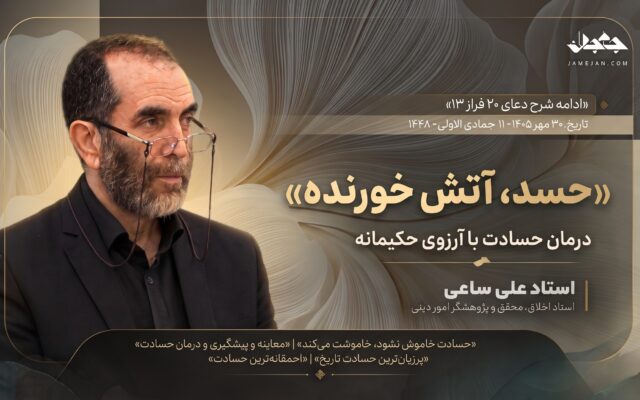
Written transcript of the lecture
The Meshkat-e Noor teachings series🌼🔆🌼A Forerunner of Perfection🌼🔆🌼
🌹🔅☘️ بِسْمِ اللَّهِ الرَّحْمنِ الرَّحيمِ ☘️🔅🌹
🔅🌹“The Secret of the Pool of Kawthar” “The Hidden Secrets of the Hasanids” “The Mystery of Divine Unity” “The Mosque in the Words of Imam Hasan (AS)” “The Evening of the Birth of Imam Hasan al-Mujtaba (AS)” and … An abridged collection with an addendum 1404.12.14 Ali Saei (Abdullah Meshkat) 110.141(903) 🌹🔅
🔅🌼The Hadith of the Pool of Kawthar🌼🔅
عَنِ النَّبِيِّ ص قَالَ أَنَا وَارِدُكُمْ عَلَى الْحَوْضِ وَ أَنْتَ يَا عَلِيُّ السَّاقِي وَ الْحَسَنُ الرَّائِدُ وَ الْحُسَيْنُ الْآمِرُ وَ عَلِيُّ بْنُ الْحُسَيْنِ الْفَارِطُ وَ مُحَمَّدُ بْنُ عَلِيٍّ النَّاشِرُ وَ جَعْفَرُ بْنُ مُحَمَّدٍ السَّائِقُ وَ مُوسَى بْنُ جَعْفَرٍ مُحْصِي الْمُحِبِّينَ وَ الْمُبْغِضِينَ وَ قَامِعُ الْمُنَافِقِينَ وَ عَلِيُّ بْنُ مُوسَى مُزَيِّنُ الْمُؤْمِنِينَ وَ مُحَمَّدُ بْنُ عَلِيٍّ مُنْزِلُ أَهْلِ الْجَنَّةِ فِي دَرَجَاتِهِمْ وَ عَلِيُّ بْنُ مُحَمَّدٍ خَطِيبُ شِيعَتِهِمْ وَ مُزَوِّجُهُمُ الْحُورَ وَ الْحَسَنُ بْنُ عَلِيٍّ سِرَاجُ أَهْلِ الْجَنَّةِ يَسْتَضِيئُونَ بِهِ وَ الْهَادِي الْمَهْدِيُّ شَفِيعُهُمْ يَوْمَ الْقِيَامَةِ حَيْثُ لَا يَأْذَنُ إِلَّا لِمَنْ يَشاءُ وَ يَرْضى[1]
🌷🔆 It is narrated that the Noble Prophet (PBUH) said:
“I will meet you at the Pool [of Kawthar]. And you, Ali, will be its cupbearer. Hasan will be the ‘forerunner’—the guide who leads the way. Husayn will be the commander. Ali ibn al-Husayn will be the pioneer. Muhammad ibn Ali will bear the banner and make [the truths] manifest. Ja‘far ibn Muhammad will lead [people towards Paradise]. Musa ibn Ja‘far will count the friends and enemies [of God] and crush the hypocrites. Ali ibn Musa will adorn the believers. Muhammad ibn Ali will settle the people of Paradise in their stations. Ali ibn Muhammad will be the orator of their Shia and wed them to the houris of Paradise. Hasan ibn Ali will be the lamp of the people of Paradise, whose light they will bask in. And al-Hadi al-Mahdi will intercede for them on the Day of Resurrection, when [God] grants permission [to intercede] only for whomever He wills and approves.”
❇️The enemy of divine authority will find the cup of Kawthar beyond his reach
💫🔆يَا أَمِيرَ الْمُؤْمِنِينَ أَخْبِرْنِي عَنْ حَوْضِ رَسُولِ اللَّهِ ص أَ فِي الدُّنْيَا هُوَ أَمْ فِي الْآخِرَةِ فَقَالَ بَلْ فِي الدُّنْيَا قُلْتُ فَمَنِ الذَّائِدُ عَنْهُ قَالَ أَنَا بِيَدِي هَذِهِ فَلْيَرِدَنَّهُ أَوْلِيَائِي وَ لْيَصْرِفَنَّ عَنْهُ أَعْدَائِي[2]
🔆“O Commander of the Faithful, tell me about the Pool of the Messenger of God (PBUH). Is it in this world or the next?
He replied, “It is in this world.”
I asked, “Then who guards it?”
He replied, “I do, with this very hand of mine. My companions will surely drink from it, while I keep my enemies away.”
❇️The wine-drinker is denied a drink from the cup of Kawthar
💫🔆عَنْ أَبِي بَصِيرٍ عَنْ أَبِي الْحَسَنِ ع قَالَ: إِنَّهُ لَمَّا احْتُضِرَ أَبِي ع قَالَ لِي يَا بُنَيَّ إِنَّهُ لَا يَنَالُ شَفَاعَتَنَا مَنِ اسْتَخَفَّ بِالصَّلَاةِ وَ لَا يَرِدُ عَلَيْنَا الْحَوْضَ مَنْ أَدْمَنَ هَذِهِ الْأَشْرِبَةَ فَقُلْتُ يَا أَبَهْ وَ أَيَّ الْأَشْرِبَةِ فَقَالَ كُلَّ مُسْكِرٍ.[3]
🔆 Abu Basir narrates from Abu al-Hasan (AS), who said: “As my father [Imam al-Baqir (AS)] lay on his deathbed, he said to me, ‘My son, whoever takes prayer lightly will not attain our intercession, and whoever makes a habit of drinking such beverages will not come to our Pool.’”
I asked, “Dear father, which beverages?”
He replied, “Any intoxicating drink.”
❇️The Master of Kawthar and the Supreme Station
💫🔆قَالَ عِيسَى ع إِلَهِي مَنْ هُوَ حَتَّى أُرْضِيَهُ فَلَكَ الرِّضَا قَالَ هُوَ مُحَمَّدٌ رَسُولُ اللَّهِ إِلَى النَّاسِ كَافَّةً أَقْرَبُهُمْ مِنِّي مَنْزِلَةً وَ أَحْضَرُهُمْ شَفَاعَةً طُوبَى لَهُ مِنْ نَبِيٍّ وَ طُوبَى لِأُمَّتِهِ إِنْ هُمْ لَقُونِي عَلَى سَبِيلِهِ يَحْمَدُهُ أَهْلُ الْأَرْضِ وَ يَسْتَغْفِرُ لَهُ أَهْلُ السَّمَاءِ أَمِينٌ مَيْمُونٌ طَيِّبٌ مُطَيَّبٌ خَيْرُ الْبَاقِينَ عِنْدِي يَكُونُ فِي آخِرِ الزَّمَانِ إِذَا خَرَجَ أَرْخَتِ السَّمَاءُ عَزَالِيَهَا وَ أَخْرَجَتِ الْأَرْضُ زَهْرَتَهَا حَتَّى يَرَوُا الْبَرَكَةَ وَ أُبَارِكُ لَهُمْ فِيمَا وَضَعَ يَدَهُ عَلَيْهِ كَثِيرُ الْأَزْوَاجِ قَلِيلُ الْأَوْلَادِ يَسْكُنُ بَكَّةَ مَوْضِعَ أَسَاسِ إِبْرَاهِيمَ يَا عِيسَى دِينُهُ الْحَنِيفِيَّةُ وَ قِبْلَتُهُ يَمَانِيَّةٌ وَ هُوَ مِنْ حِزْبِي وَ أَنَا مَعَهُ فَطُوبَى لَهُ ثُمَّ طُوبَى لَهُ لَهُ الْكَوْثَرُ وَ الْمَقَامُ الْأَكْبَرُ فِي جَنَّاتِ عَدْنٍ يَعِيشُ أَكْرَمَ مَنْ عَاشَ وَ يُقْبَضُ شَهِيداً لَهُ حَوْضٌ أَكْبَرُ مِنْ بَكَّةَ إِلَى مَطْلَعِ الشَّمْسِ مِنْ رَحِيقٍ مَخْتُومٍ فِيهِ آنِيَةٌ مِثْلُ نُجُومِ السَّمَاءِ وَ أَكْوَابٌ مِثْلُ مَدَرِ الْأَرْضِ عَذْبٍ فِيهِ مِنْ كُلِّ شَرَابٍ وَ طَعْمِ كُلِّ ثِمَارٍ فِي الْجَنَّةِ مَنْ شَرِبَ مِنْهُ شَرْبَةً لَمْ يَظْمَأْ أَبَداً وَ ذَلِكَ مِنْ قَسْمِي لَهُ وَ تَفْضِيلِي إِيَّاهُ عَلَى فَتْرَةٍ بَيْنَكَ وَ بَيْنَهُ يُوَافِقُ سِرُّهُ عَلَانِيَتَهُ وَ قَوْلُهُ فِعْلَهُ لَا يَأْمُرُ النَّاسَ إِلَّا بِمَا يَبْدَأُهُمْ بِهِ دِينُهُ الْجِهَادُ فِي عُسْرٍ وَ يُسْرٍ تَنْقَادُ لَهُ الْبِلَاد[4]
💫🔆 … Jesus (AS) said, “Lord, who is this, that I may please him and so please You as well?”
God said, “He is Muhammad, the Messenger of God to all people. He is the nearest to Me in rank and the most entitled to intercede. Blessed is that Prophet, and blessed is his community, if they come before Me following his path. The people of earth praise him, and the people of heaven pray for his forgiveness. He is trustworthy, blessed, pure and protected, and the best of those who come after Me.
He will appear at the end of time, when the sky pours down its clouds and the earth brings forth its plants and vegetation, until people witness the blessing. I shall place blessing in everything his hand touches.
He will have many wives and few children. He will dwell in Mecca, at the Station of Abraham.
O Jesus, his religion is ḥanīfī (the true, monotheistic faith), and his qibla is toward Yemen. He belongs to My party, and I am with him. Blessed is he—and blessed again! In the gardens of Eden, he will have Kawthar and the Praiseworthy Station. He will live with greater honor than anyone else, and he will depart this life as a martyr.
He will have a pool stretching from Mecca to the sunrise, filled with sealed, pure wine. Its vessels will be like the stars in the sky, and its cups like the earth’s soil. Its drink will be sweet, and it will contain every kind of wine and the taste of every kind of fruit in Paradise. Whoever drinks a single draught from it will never thirst again. This is because of the share I have allotted him and the distinction I have granted him over you, despite the distance between you.”
What he conceals accords with what he reveals, and his words with his deeds. He commands people to do nothing without being the first to do it himself. His religion is striving in God’s cause, in hardship and ease. The lands will submit to him.
🔅🌼 The Role of the Imams at Kawthar 🌼🔅
This noble hadith about the Pool of Kawthar describes the role of each of the Infallible Imams (peace be upon them) on the Day of Resurrection, beside the Pool of Kawthar:
The Prophet (PBUH): Welcoming people to the Pool of Kawthar and being its central presence.
Imam Ali (AS): The cupbearer—the one who serves Kawthar and gives its water to the Shi‘a.
Imam Hasan (AS): The guide—the one who leads people toward Paradise.
Imam Husayn (AS): The commander, the one who holds authority in that scene.
Imam Sajjad (AS): The forerunner, the one who steps into action before the others.
Imam Baqir (AS): The standard-bearer, the one who makes knowledge and truths manifest.
Imam Sadiq (AS): The driver, the one who urges people onward and leads them toward Paradise.
Imam Kazim (AS): محصی المحبین و المبغضین و قاعط المنافقین؛ the one who counts the lovers and the haters, and crushes the hypocrites.
Imam Reza (AS): مزین المؤمنین؛ the adornment of the faithful.
Imam Jawad (AS): منزل اهل الجنة فی درجاتهم؛ the one who settles the people of Paradise in their respective ranks and stations.
Imam Hadi (AS): خطیب شیعتهم و مزوجهم الحور؛ the orator and spokesman of their Shi’a, and the one who joins them in marriage with the houris of Paradise.
Imam Hasan Askari (AS): سراج اهل الجنة؛ the radiant lamp of the people of Paradise.
Imam Mahdi (AJ): الهادی المهدی شفیعهم؛ the rightly guided guide and intercessor for the Shi’a on the Day of Resurrection.
This hadith portrays the exalted station of the Ahl al-Bayt (AS) on the Day of Resurrection and the responsibility each bears in guiding and interceding for the community. It underscores the importance of holding fast to them in this life and the next.
🔅🌼 Explaining “رَائِد” 🌼🔅
This passage from the Prophetic hadith describes the role of Imam Hasan al-Mujtaba (AS) at the gathering and on the Day of Resurrection. The word “رَائِد” is key to understanding this station.
💫1. The lexical meaning and semantics of “رائد”
The word derives from “رَوْد,” meaning to travel back and forth and to search. In Arabic, “رائد” is used in several senses, all of which lead to one central idea:
🔶A vanguard: someone who moves ahead of an army to find the way and report on dangers and the conditions lying ahead.
🔶A scout and seeker: someone who goes ahead of others in search of water, pasture, or a safe place.
🔶A guide and pathfinder: someone who knows the way and leads others to their destination.
🔶Lexical conclusion: “رائد” means a pioneer, a guide who leads the way, a pathfinder, and one who makes preparations for others.
✅A poem on the mystery of the Pool of Kawthar
Our state after drinking the wine of Kawthar cannot be described.
The wine of Kawthar is a beginning whose effects make up the full experience;
drinking the pure wine calls for a رائد and requires preparation and groundwork. Imam Hasan al-Mujtaba (AS) is the رائد of the cup of Kawthar.
The wine of Kawthar will bring about a momentous event within our souls; tremendous transformations will unfold in our devotion to God!
Our state and feeling after drinking from the cup of Kawthar will hold wondrous surprises.
The field of our souls will flourish with the celestial waters of Kawthar.
The water of Kawthar is beyond the water of life.
It is the water of life that brings nearness to God, the water of life that nourishes a love uniquely bestowed by Him.
The palate and soul must be made ready for the water of Kawthar, and Imam Hasan al-Mujtaba (AS) prepares them for it.
The water of Kawthar is sealed nectar, not yet opened. No palate has tasted it; its effects and states cannot be grasped or understood. Its effects will be wondrous!
The wine of Kawthar encompasses every joy in the universe. It holds the taste of all things.
It affects those who drink it, inwardly and outwardly, and is the source of fundamental change and transformation!
It will bring about a singular life and usher in the experience of a wholly new way of living!
The water of Kawthar carries the taste of every joy in creation: it is the essence of the universe and the flavour of intimate nearness to God.
Without a رائد of the palate, the palate will never know the cup of Kawthar! To taste its water, we need a special nerve—a Hasanid nerve, as it were—which is one way of understanding the رائد of the water of Kawthar.
✅Imam Hasan is the رائد of good works
The vanguard of intercession, the one who extends intercession, the vanguard of Ashura, the vanguard of goodness
✅ Imam Hasan, peace be upon him, is the guide of the soul.
Without a guide, we lose our way.
Imam Hasan, peace be upon him, holds the secret of discernment.
Imam Hasan, peace be upon him, is the inner and outward guide. Without an Imam, a person may lose their own soul, heart, desires, innate nature, and more; they may forget their world, their identity, and their purpose.
If our senses are left without a guide, they will perceive nothing.
✅ Imam Hasan, peace be upon him, is the guide of hearts, eyes, and ears
✨🔆الأعراف : 179 وَ لَقَدْ ذَرَأْنا لِجَهَنَّمَ كَثيراً مِنَ الْجِنِّ وَ الْإِنْسِ لَهُمْ قُلُوبٌ لا يَفْقَهُونَ بِها وَ لَهُمْ أَعْيُنٌ لا يُبْصِرُونَ بِها وَ لَهُمْ آذانٌ لا يَسْمَعُونَ بِها أُولئِكَ كَالْأَنْعامِ بَلْ هُمْ أَضَلُّ أُولئِكَ هُمُ الْغافِلُونَ
🔆We have certainly created many jinn and humans for Hell: they have hearts with which they do not reflect or understand, eyes with which they do not see, and ears with which they do not hear. They are like cattle—indeed, even more astray. They are the heedless ones, for despite having every means of guidance, they remain lost.
✨🔆الحج : 46 أَ فَلَمْ يَسيرُوا فِي الْأَرْضِ فَتَكُونَ لَهُمْ قُلُوبٌ يَعْقِلُونَ بِها أَوْ آذانٌ يَسْمَعُونَ بِها فَإِنَّها لا تَعْمَى الْأَبْصارُ وَ لكِنْ تَعْمَى الْقُلُوبُ الَّتي فِي الصُّدُورِ
🔆Have they not travelled through the land, so that they might have hearts with which to grasp the truth, or ears with which to hear the call of truth? It is not the eyes that go blind, but the hearts within the chests.
✅ Imam Hasan, peace be upon him, is the guide to truth.
If our eyes are left without a guide, they will not perceive light, brightness, or sights; they will go blind.
The guide of the spirit is the key to understanding spiritual life.
The guide of the nerves and psyche holds the secret of sensation and movement.
The guide of appetite holds the secret of desire, attraction, and being drawn in.
The guide of beauty holds the secret of the aesthetic sense. Even surrounded by beauty, a person without a guide would have no understanding of it.
The guide of knowledge holds the secret of what is known.
Even if we are surrounded by knowledge, ignorance will overcome us if there is no guide to knowledge.
What distinguishes a human being, in the true sense, from an animal is the relationship to a guide.
A human being is encompassed by mercy, blessings, the unseen kingdom, divine might, and the Most Beautiful Names. Without a guide, they will understand none of them.
✅ The guide finds those who are lost
Without Imam Hasan, peace be upon him, we will lose our way in this world and the next.
Imam Hasan, peace be upon him, is the guide to knowledge of God
Without a guide, we will not taste the water or know its secret.
✅ The guide to the summit of perfection
Without a guide, we will not reach the summit or our destination.
✅ The guide knows the way and knows the work
Imam Hasan, peace be upon him, is the guide who fully sets the innate human nature on its way.
The guide is the key to discovering hidden mysteries.
❇️ The Hasanid constellation holds the secret of order and the straight path
Imam Hasan, peace be upon him, holds the secret of running towards water and discerning water from a mirage. The guide of water calls us towards life.
✨🔆Al-Nur: 39 وَ الَّذينَ كَفَرُوا أَعْمالُهُمْ كَسَرابٍ بِقيعَةٍ يَحْسَبُهُ الظَّمْآنُ ماءً حَتَّى إِذا جاءَهُ لَمْ يَجِدْهُ شَيْئاً وَ وَجَدَ اللَّهَ عِنْدَهُ فَوَفَّاهُ حِسابَهُ وَ اللَّهُ سَريعُ الْحِسابِ
🔆As for those who disbelieve, their deeds are like a mirage in a desert, which a thirsty person takes from afar to be water. But when he comes to it, he finds nothing there, and finds God there, Who settles his account in full; and God is swift in reckoning.
💫🔆عَنْ جَابِرِ بْنِ يَزِيدَ، قَالَ: سَأَلْتُ أَبَا جَعْفَرٍ (عَلَيْهِ السَّلَامُ) عَنْ هَذِهِ الْآيَةِ، فَقَالَ: وَ الَّذِينَ كَفَرُوا بَنُو أُمَيَّةَ أَعْمالُهُمْ كَسَرابٍ بِقِيعَةٍ يَحْسَبُهُ الظَّمْآنُ ماءً وَ الظَّمْآنُ: نَعْثَلٌ، فَيَنْطَلِقُ بِهِمْ، فَيَقُولُ أُورِدُكُمُ الْمَاءَ حَتَّى إِذا جاءَهُ لَمْ يَجِدْهُ شَيْئاً وَ وَجَدَ اللَّهَ عِنْدَهُ فَوَفَّاهُ حِسابَهُ وَ اللَّهُ سَرِيعُ الْحِسابِ».[5]
🔆Jabir ibn Yazid said: I asked Abu Ja‘far (peace be upon him) about this verse, and he said:
«وَ الَّذِينَ كَفَرُوا» (“Those who disbelieved”) are the Umayyads; «أَعْمالُهُمْ كَسَرابٍ بِقِيعَةٍ» (“their deeds are like a mirage on level ground”) «يَحْسَبُهُ الظَّمْآنُ ماءً» (“which a thirsty person takes to be water”): the thirsty person is Na‘thal; «فَيَنْطَلِقُ بِهِمْ» (“then he sets out with them”) «فَيَقُولُ أُورِدُكُمُ الْمَاءَ» (“and says, ‘I will bring you to water’”) «حَتَّى إِذا جاءَهُ لَمْ يَجِدْهُ شَيْئاً» (“until he reaches it and finds nothing there”) «وَ وَجَدَ اللَّهَ عِنْدَهُ فَوَفَّاهُ حِسابَهُ» (“and finds God there, Who settles his account in full”) «وَ اللَّهُ سَرِيعُ الْحِسابِ» (“and God is swift in reckoning”).»
❇️The Pharaohs summon their followers to mirage and destruction.
If we do not recognize Imam Hasan (peace be upon him), we will fall captive to the Pharaohs. Our Imam calls us to water, truth, and life, while the Pharaohs summon people to mirage, falsehood, and death.
If we do not recognize the guide, we will fall captive to the Pharaohs and the Mu‘awiyas.
✨🔆Hud: 96 وَ لَقَدْ أَرْسَلْنا مُوسى بِآياتِنا وَ سُلْطانٍ مُبينٍ
🔆We sent Moses with Our signs and clear authority ..
✨🔆Hud: 97 إِلى فِرْعَوْنَ وَ مَلاَئِهِ فَاتَّبَعُوا أَمْرَ فِرْعَوْنَ وَ ما أَمْرُ فِرْعَوْنَ بِرَشيدٍ
🔆to Pharaoh and his chiefs. But they followed Pharaoh’s command, though Pharaoh’s command led neither to sound judgment nor salvation!
✨🔆Hud: 98 يَقْدُمُ قَوْمَهُ يَوْمَ الْقِيامَةِ فَأَوْرَدَهُمُ النَّارَ وَ بِئْسَ الْوِرْدُ الْمَوْرُودُ
🔆On the Day of Resurrection, he will lead his people, and (instead of the pure springs of Paradise) bring them to the Fire! What a wretched watering place it is, to which they are brought!
✨🔆Hud: 99 وَ أُتْبِعُوا في هذِهِ لَعْنَةً وَ يَوْمَ الْقِيامَةِ بِئْسَ الرِّفْدُ الْمَرْفُودُ
🔶«وَ أُتْبِعُوا فِي هذِهِ لَعْنَةً وَ يَوْمَ الْقِيامَةِ» And in this world they are afflicted with a curse—that is, drowning in water—and on the Day of Resurrection they are afflicted with a curse—that is, the punishment of the Hereafter. Some have said that God cursed them in this world by banishing them from His mercy; the prophets and believers also curse them. On the Day of Resurrection, too, they will be afflicted with a curse, which will never leave them wherever they may be.
🔶«بِئْسَ الرِّفْدُ الْمَرْفُودُ» That is, what is granted to those who face the Fire and the curse is a wretched grant. It is called a “grant” in contrast to the gifts bestowed on the people of Paradise from among God’s various blessings. Qatadah said: Two curses from God came upon them in succession: the curse of this world and the curse of the Hereafter. Nafi‘ ibn Razzaq asked Ibn ‘Abbas, “What does «بِئْسَ الرِّفْدُ الْمَرْفُودُ» mean?”
He replied, “Curse upon curse.”[6]
🔶بِئْسَ الرِّفْدُ الْمَرْفُودُ
Hell is a wretched place to arrive at and be received in.
أَرْفَدْتُه: I set aside a gift for him to receive gradually.
❇️The Forerunner
💫Theological exposition and the ultimate significance of Imam Hasan’s role as “the Forerunner”
In Shi‘i thought, the Prophet’s (PBUH) hadith of the Pool of Kawthar points to the divine and celestial duties of the Imams (AS).
🔶In this blessed hadith, Imam Hasan (AS) leads those who are at the forefront of the journey to Paradise. On the Day of Resurrection, he moves ahead of all the believers and Shi‘a, clearing and preparing the way into Paradise and through its stages. He traverses the paths and shows them the dangers and stopping places along the way.
🔶Preparing and explaining the conditions: Just as a “forerunner” in this world assesses the conditions for a journey, Imam Hasan (AS) prepares the necessary conditions and preliminaries for the community’s entry into the abode of the Hereafter and makes them known to them.
🔶Connection with intercession: This role is a prelude to wider intercession. He clears the way for the intercession of the other Imams, especially the great intercession of the Prophet (PBUH) and the Imams (AS).
🔶The Forerunner extends the reach of intercession.
❇️Imam Hasan (AS), the forerunner of Karbala
💫How this rank is connected to Imam Hasan’s life in this world
This description is no accident; it has a deep, both symbolic and real, connection with Imam Hasan’s conduct and life in this world:
🔶A pioneer in knowledge and virtue: In this world, too, he was a “forerunner,” leading the way in divine knowledge, ethics, worship, and spiritual practice, and showing others the path.
🔶Preparing the ground for Imam Husayn’s Imamate: Imam Hasan’s coerced and historic peace with Mu‘awiya is a striking example of a “forerunner’s” action. Through it, like a vanguard, he cleared the way for the uprising and the ultimate revival of religion at the hands of the Master of the Martyrs, Imam Husayn (AS). By protecting the lives of the Shi‘a and the core of the believers, he prepared the ground for the uprising of Karbala. Thus, in this world too, he was Imam Husayn’s forerunner.
🔶Revealing the truth to the community: In the turbulent period after the Prophet (PBUH), Imam Hasan (AS), through his conduct and example, made the truth of pure Islam and the face of hypocrisy clear to the community, exposing it.
🔶His Eminence exposed deceit and hypocrisy.
❇️The forerunner of the water of life, the forerunner of truth,
the forerunner who opens the way through every obstacle.
Imam Hasan al-Mujtaba (AS) is the forerunner to the highest celestial realm. His Eminence is the sovereign who grants passage!
✨🔆The Merciful: 33 or مَعْشَرَ الْجِنِّ وَ الْإِنْسِ إِنِ اسْتَطَعْتُمْ أَنْ تَنْفُذُوا مِنْ أَقْطارِ السَّماواتِ وَ الْأَرْضِ فَانْفُذُوا لا تَنْفُذُونَ إِلاَّ بِسُلْطانٍ
🔆“O company of jinn and humankind! If you can pass beyond the bounds of the heavens and the earth, then pass beyond them. But you cannot do so except by an authority!”
💫🔆رَوَى مَسْعَدَةُ بْنُ صَدَقَةَ عَنْ كُلَيْبٍ قَالَ: كُنَّا عِنْدَ أَبِي عَبْدِ اللَّهِ عَلَيْهِ السَّلَامُ فَأَنْشَأَ يُحَدِّثُنَا فَقَالَ: إِذَا كَانَ يَوْمُ الْقِيَامَةِ جَمَعَ اللَّهُ الْعِبَادَ فِي صَعِيدٍ وَاحِدٍ وَ ذَلِكَ أَنَّهُ يُوحَى إِلَى السَّمَاءِ الدُّنْيَا أَنِ اهْبِطِي بِمَنْ فِيكَ, so it comes to nothing [فَيَهْبِطُ] أَهْلُ السَّمَاءِ الدُّنْيَا بِمِثْلَيْ مَنْ فِي الْأَرْضِ مِنَ الْجِنِّ وَ الْإِنْسِ وَ الْمَلَائِكَةِ، فَلَا يَزَالُونَ كَذَلِكَ حَتَّى يَهْبِطَ أَهْلُ سَبْعِ سَمَاوَاتٍ فَتَصِيرَ الْجِنُّ وَ الْإِنْسُ فِي سَبْعِ سُرَادِقَاتٍ مِنَ الْمَلَائِكَةِ، فَيُنَادِي مُنَادٍ:
“or مَعْشَرَ الْجِنِّ وَ الْإِنْسِ إِنِ اسْتَطَعْتُمْ» الْآيَةَ فَيَنْظُرُونَ فَإِذَا قَدْ أَحَاطَ بِهِمْ سَبْعَةُ أَطْوَاقٍ مِنَ الْمَلَائِكَةِ.[7]
💫🔆This report is transmitted from Mas‘uda ibn Sadaqa, from Kulayb, from Imam Ali ibn Musa al-Rida (AS). It speaks of the Day of Resurrection and the gathering of human beings, jinn, and angels in one vast place (sa‘id wahid). The events in the report unfold in the following order:
Gathering all servants on a single plain: On the Day of Resurrection, God gathers all His servants—human beings, jinn and angels—in one vast, level place.
Commanding the heavens to descend: God commands the lowest heaven (the second heaven), saying, «اهبطی بمن فیک», meaning: “Send down from your heaven those who are in it.”
The inhabitants of the lowest heaven descend: The inhabitants of the lowest heaven—which include jinn, human beings and angels—descend in a number twice that of the people of the earth.
The command is repeated for the seven heavens: The command is repeated in turn for all seven heavens, and each heaven sends its inhabitants down to earth.
The angels’ pavilions take shape: In the end, the jinn and human beings are surrounded by three tiers of angelic pavilions (that is, seven pavilions). These pavilions are layers or groups of angels arranged in circles around them.
A herald calls out: Once everyone has gathered, a herald (مُنَادٍ) calls out:
«يا مَعْشَرَ الْجِنِّ وَ الْإِنْسِ إِنِ اسْتَطَعْتُمْ»
O company of jinn and human beings, if you are able…
This is a challenge or test set before the jinn and human beings,
Surrounded by seven circles of angels: At the end, they see seven rings of angels arranged in circles around them,
❇️The role of the “rāʾid” in the chain of the Imams’ (AS) duties on the Day of Resurrection
The hadith about the Pool of Kawthar presents these roles as an interconnected sequence:
The Prophet (PBUH): the central figure, the one who comes to the Pool (wārid)
Imam Ali (AS): the cupbearer and bestower of blessings (sāqī)
Imam Hasan (AS): the guide and forerunner (rāʾid); he clears the way for people to journey towards the source of grace, Imam Ali (AS).
Imam Husayn (AS): the commander and holder of authority (ʾāmir); once the “rāʾid” has prepared the way, he assumes final command and guidance.
This shows that intercession and guidance on the Day of Resurrection are a coordinated collective undertaking under the authority of God, with each Imam entrusted with a distinct responsibility.
«وَ الْحَسَنُ الرَّائِدُ» means that on the Day of Resurrection, Imam Hasan al-Mujtaba (AS) will be the forerunner and guide who prepares the way for the faithful to enter the abode of the hereafter. This rank accords with his historical role and worldly conduct: he was a forerunner who laid the groundwork for Imam Husayn’s (AS) revivalist uprising and safeguarded the pure Islam of Muhammad (PBUH). This expression portrays his unique standing in the order of intercession and guidance for the community in the hereafter.
❇️Explaining “al-rāʾid” in the light of the wisdom of the Mishkāt and theoretical mysticism
«مُعِدّ الطریق»
❇️A phenomenological-hermeneutic analysis:
The rāʾid as “pre-understanding”
🔶The wayfarers’ pre-understanding: All understanding requires a “pre-understanding” of the whole, so that its particulars can become meaningful. For Imam Hasan (AS), the rank of rāʾid means giving wayfarers a “pre-understanding” of Paradise.
The rāʾid guides understanding towards its summit: a guide to the unknown, illuminating the mind and bringing jurisprudence to maturity. He adds light upon light and gathers mercy upon mercy.
Without Hasan, damnation will seize a person!
Without Hasan, one’s destination is toward «بئس الرفد المرفود».
🔶Understanding the sacred realm: How can Paradise—a realm wholly unfamiliar and “other”—be understood? The rāʾid’s role is to make the unfamiliar familiar. By going ahead, he interprets and reveals to the faithful the first signs, principles and language of that world, preparing the ground for fuller understanding. He is the existential interpreter of the world of the hereafter.
🔶Breaking the veil of estrangement: His movement at the head of the caravan is, in itself, an “emergent symbol” that dispels the estrangement and existential dread caused by the unknown nature of the Resurrection, and brings existential peace.
❇️The *rāʾid* as “leader of the journey”
🔶In the collective unconscious, the “leader of the journey,” or “inner guide,” is an evocative figure, like a light that opens a path for the human being.
🔶Imam Hasan AS as the abiding inner guide of all beings: In this role, Imam Hasan (AS) is the fullest and most exalted embodiment of the inner guide within religious reality. He is the guide of the faithful—not in the realm of imagination, but in the actuality of the Resurrection—leading them across the Ṣirāṭ toward the Pool of Kawthar and then to Paradise.
🔶Beyond myth: This role both dispels myth and gives it truth. Myth is only a faint shadow of this transcendent reality, manifested in the Imam’s being.
❇️An ethical analysis of spiritual and political conduct:
The *rāʾid* as a pioneering “revolutionary subject”
🔶From the perspective of political philosophy, the *rāʾid* may be understood as a revolutionary subject who bears the cost before others in order to open up a new horizon.
🔶Taking the lead in political action: Imam Hasan’s (AS) peace-making was a pioneering act. He was the first to undertake an unconventional course of action—a peace that was only apparent—in order to:
make the horizon clear for the action to follow: Imam Husayn’s uprising;
reveal Muʿawiya’s plan to the community;
offer a model of “active dissimulation” and flexible resistance.
🔶Establishing a paradigm: This peace established a Shiʿi model for confronting tyrannical power under particular circumstances, one in which “the survival of Islam” takes precedence over “the apparent survival of government.” He opened the way for this perspective.
❇️The *rāʾid* as a sensory nerve
🔶Will Imam Hasan AS open the mouths of the Shiʿa and become their sensory nerve?
Entry into Paradise, the experience of paradise, and the perception of its bliss are possible only through a heavenly *rāʾid*.
🔶Imam Hasan al-Mujtaba (AS), in his capacity as “al-rāʾid,” is the first manifestation of the immense grace of the Exalted and Subtle One on the Day of Resurrection,
❇️Imam Hasan al-Mujtaba’s (AS) station as “al-rāʾid”: leading the way to the blessings of the Hereafter
🔶The Imam’s exalted role is not merely to guide the way through Paradise, but to usher people into—and disclose the existential meaning of—the blessings of the Hereafter themselves.
🔶The *rāʾid* and “water” (*māʾ*): Kawthar as knowledge and eternal life
🔶In mystical symbolism, water represents divinely bestowed knowledge, the wholesome life, and pure grace. The Pool of Kawthar is the source of these waters.
🔶The *rāʾid*’s role: Before Imam Ali (AS) becomes the Cupbearer of Kawthar, Imam Hasan (AS) prepares those who arrive to thirst for this water and recognize its greatness. By leading the way, he tears away the veil of heedlessness from the eyes of the wayfarers’ hearts, awakening in them a spiritual thirst to drink from this source. He guides the “seeker of thirst” so that the “Cupbearer” may quench it.
🔶Like someone in the desert who directs travellers toward a mirage, knowing that it alone is real and refreshing.
❇️The *rāʾid* and “light”
🔶The light of Paradise is a manifestation of the Divine Essence, illuminating all things. Yet to one who has come from the darkness of this world, it may be dazzling and unbearable.
🔶The *rāʾid*’s role: Imam Hasan (AS) acts as the one who prepares people for the light. As he moves gradually from the darkness of the Ṣirāṭ toward the radiance of the Pool and Paradise, he gently acclimates the believers’ inner vision to the intensity of that light, sparing them bewilderment and spiritual blindness. He himself is the first, more bearable source of its reflected light.
🔶Like an expert guide who leads climbers to the summit before sunrise, so they can watch the dawn gradually and without harm.
❇️The guide to “Reality” (al-Ḥaqq): perceiving the innermost meanings of the Divine Names and Attributes
🔶Paradise is the realm where realities and the Divine Names and Attributes are manifested without a veil. Perceiving these realities requires mental and existential readiness.
🔶The guide’s role: Imam Hasan (AS) is مُعَدِّ الْمُدرِک (the one who prepares the perceiver). Through his words, gestures, and presence, he prepares believers’ minds and hearts to encounter pure Reality, helping them avoid existential shock. He translates these truths into language each person can absorb, according to their degree of faith.
🔶Like a teacher who reviews the foundations and prerequisites with students before teaching difficult chapters.
❇️The guide to “Riḍwān”: attaining the station of God’s pleasure
🔶Riḍwān is the highest degree of Paradise: God’s pleasure with His servant, and the servant’s pleasure with God. It is a state of being, not a place.
🔶The guide’s role: Imam Hasan (AS) مُعِدُّ القَلْبِ لِلقَبُول (the one who prepares the heart to receive Riḍwān). By revealing the signs and fruits of divine approval along the way, he awakens in those journeying toward this station a longing and yearning for it. He frees their hearts from attachment to worldly things and to lesser rewards in the Hereafter, preparing them to be adorned with this great blessing.
🔶Like an adviser who prepares someone’s spirit and outlook to receive and enjoy the ultimate goal before they reach it—for example, attaining a spiritual station.
❇️The guide to “Meeting God”: beholding the Divine
🔶“Meeting God” is the ultimate end, the final destination of the spiritual wayfarer. This meeting means beholding the Divine Majesty and Beauty at the highest degree possible for a created being.
🔶The guide’s role: Here Imam Hasan (AS) reaches the height of his role. He is the vanguard on the journey to God. He is the first among the community to travel this path as far as is possible and return, marking it out through his very being.
✨🔆الانشقاق : 6 يا أَيُّهَا الْإِنْسانُ إِنَّكَ كادِحٌ إِلى رَبِّكَ كَدْحاً فَمُلاقيهِ
🔆O human being! You are striving toward your Lord, and you will meet Him!
His presence brings peace to those who follow, for they see that someone has travelled this road and returned safely. He discovers the path through the valley of love and bewilderment. Through his very being, Imam Hasan (AS) writes the guidebook for the spiritual journey in the Hereafter.
🔶Like a seasoned mountaineer who scouts and marks the route to the summit ahead of everyone else, making it possible and comprehensible for those who follow. He proves that reaching the summit of the “Meeting” is possible.
❇️The architect of longing
Imam Hasan al-Mujtaba (AS), in his station as “al-Rāʾid,” is more than a guide who knows the terrain. He is the architect of longing, who:
Kindles thirst, awakening the desire for water.
Cultivates sight, preparing it for the light.
Prepares understanding for the encounter with Reality.
Creates the capacity to dwell in Riḍwān.
And inspires the courage and hope needed to meet God.
☀️ Imam Hasan al-Mujtaba’s role as al-Rāʾid completes the roles of “al-Sāqī” (Imam Ali, AS) and “al-Āmir” (Imam Husayn, AS). Without this existential vanguard, the encounter with such immense blessings might bewilder or overwhelm unprepared souls, or even lead them to denial. Through his leadership, Imam Hasan (AS) makes it possible, welcome, and meaningful to receive and partake of all the blessings of the Hereafter.
❇️Let us savour the words of Hasan
🔅🌼 The blessings of coming and going to mosques 🌼🔅
🌷🔆 قَالَ الْحَسَنُ بْنُ عَلِيٍّ ع مَنْ أَدْمَنَ الِاخْتِلَافَ إِلَى الْمَسَاجِدِ لَمْ يَعْدَمْ وَاحِدَةً مِنْ سَبْعٍ أَخاً يَسْتَفِيدُهُ فِي اللَّهِ أَوْ عِلْماً مُسْتَطْرَفاً أَوْ رَحْمَةً مُنْتَظَرَةً أَوْ آيَةً مُحْكَمَةً تَدُلُّ عَلَى هُدًى أَوْ إِنَّهُ أَظُنُّهُ قَالَ سُدَّةً أَوْ رِشْدَةً تَصُدُّهُ عَنْ رَدًى أَوْ يَتْرُكُ ذَنْباً حَيَاءً أَوْ تَقْوَى[8]
🔆Anyone who sets aside time in their day and night for the mosque will gain one of eight benefits: a proof and sign that leads to knowledge; a helpful friend and brother; comprehensive learning and insight; universal mercy and love; words and teachings that guide; a God-given resolve to refrain from sin, either out of modesty or out of reverence for God.
🔅🌼 The Mosque: A Field of Divine Blessings 🌼🔅
🌷🔆وَ قَالَ ع مَنْ أَدَامَ الِاخْتِلَافَ إِلَى الْمَسْجِدِ أَصَابَ إِحْدَى ثَمَانٍ آيَةً مُحْكَمَةً وَ أَخاً مُسْتَفَاداً وَ عِلْماً مُسْتَطْرَفاً وَ رَحْمَةً مُنْتَظَرَةً وَ كَلِمَةً تَدُلُّهُ عَلَى الْهُدَى أَوْ تَرُدُّهُ عَنْ رَدًى وَ تَرْكَ الذُّنُوبِ حَيَاءً أَوْ خَشْيَةً.[9]
🔆Imam Mujtaba, peace be upon him, said: “Whoever frequents the mosque will attain one or more of eight blessings:
1 — Firm and sound arguments in matters of religion—creed, jurisprudence, politics, and the like;
2 — The company of beneficial friends, whose companionship is a source of gain;
3 — New and remarkable knowledge and learning;
4 — Mercy and a blessing awaiting them;
5 — Guidance in words that lead a person to the straight path;
6 — Teachings that keep a person away from baseness and all that is contrary to virtue;
7 — Refraining from sin and forbidden acts, either because one loves to abstain from sin;
8 — Refraining from sin and forbidden acts out of modesty, shame, and reverence for God.”
❇️The Mosque: A Meeting Place with God
Regard the mosque as you would the Cave of Hira or Mount Sinai!
Enter the mosque with faith, good manners, and confidence!
With faith and certainty, recognize the mosque for what it truly is: the House of God!
Consider yourself a special guest of God!
❇️The Mosque and the Eight Gates of Special Divine Favour
1 — A clear sign: from encountering a clear verse to becoming one of God’s clear signs; becoming wise, a spokesperson for God, and a radiant and shining sign of God.
2 — A friend who brings benefit: from earthly brothers and sisters to heavenly ones, from human to angelic, from the ordinary to the select, from the saints to the prophets.
3 — Rare and precious knowledge: pure, special forms of knowledge, attained through access to higher technologies.
4 — Awaited mercy: God’s mercy longs for those who reside in the mosque and seeks them out.
5 — A word that gives guidance: like a spirit breathed into a person, a divine voice and guide is planted within; it brings refinement and presence of heart, and is accompanied by a special envoy commissioned by Almighty God.
6 — Protection from ruin: a divine shield and safeguard that protect them from unforeseen events.
7 — Abstaining from sins:
8 — Modesty and reverence: being immersed in purity and wholly attentive to the divine presence, and experiencing the life of a scholar.
❇️Reverence for God: A Sign of the Light of Knowledge
✨🔆Fatir: 28 وَ مِنَ النَّاسِ وَ الدَّوَابِّ وَ الْأَنْعامِ مُخْتَلِفٌ أَلْوانُهُ كَذلِكَ إِنَّما يَخْشَى اللَّهَ مِنْ عِبادِهِ الْعُلَماءُ إِنَّ اللَّهَ عَزيزٌ غَفُورٌ
🔆And among human beings, animals and livestock are creatures of varying colours. So it is: among God’s servants, it is only those endowed with knowledge who truly fear Him. God is Almighty, All-Forgiving!
❇️Let us observe the proper etiquette of being in a mosque
Enter the house of God as an honoured guest!
✨🔆 al-Aʿrāf: 31 يَا بَني آدَمَ خُذُوا زينَتَكُمْ عِنْدَ كُلِّ مَسْجِدٍ وَ كُلُوا وَ اشْرَبُوا وَ لا تُسْرِفُوا إِنَّهُ لا يُحِبُّ الْمُسْرِفينَ
🔆 Children of Adam! Wear your adornment whenever you go to the mosque; eat and drink, but do not be excessive, for God does not love those who are excessive!
💫🔆 Majmaʿ al-Bayān «خُذُوا زِينَتَكُمْ عِنْدَ كُلِّ مَسْجِدٍ» أي خُذُوا ثِيَابَكُمُ الَّتِي تَتَزَيَّنُونَ بِهَا لِلصَّلَوةِ فِي الْجُمُعَاتِ وَ الْأَعْيَادِ عَنْ أَبِي جَعْفَرٍ الْبَاقِرِ عَلَيْهِ السَّلَامُ.[10]
💫🔆 Majmaʿ al-Bayān: «خُذُوا زِينَتَكُمْ عِنْدَ كُلِّ مَسْجِدٍ» That is, take your finest adornments—the ones you wear for Friday and Eid prayers—with you to every mosque. This is narrated from Imam Abū Jaʿfar al-Bāqir (AS).
💫🔆 عَنِ الْحُسَيْنِ بْنِ مِهْرَانَ عَنْ أَبِي عَبْدِ اللَّهِ عَلَيْهِ السَّلَامُ فِي قَوْلِ اللَّهِ عَزَّ وَ جَلَّ:
«خُذُوا زِينَتَكُمْ عِنْدَ كُلِّ مَسْجِدٍ» قَالَ: يَعْنِي الْأَئِمَّةَ. [11]
💫🔆 From Ḥusayn ibn Mihrān, from Imam Abī ʿAbd Allāh (AS), concerning the interpretation of the verse of God, Exalted is He: «خُذُوا زِينَتَكُمْ عِنْدَ كُلِّ مَسْجِدٍ» He said: “This refers to the Imams.”
🔅🌼 صِفْ لِي رَبَّكَ 🌼🔅
🌷🔆عَنْ بَعْضِ أَصْحَابِنَا رَفَعَهُ قَالَ: جَاءَ رَجُلٌ إِلَى الْحَسَنِ بْنِ عَلِيٍّ ع فَقَالَ لَهُ يَا ابْنَ رَسُولِ اللَّهِ صِفْ لِي رَبَّكَ حَتَّى كَأَنِّي أَنْظُرُ إِلَيْهِ فَأَطْرَقَ الْحَسَنُ بْنُ عَلِيٍّ ع مَلِيّاً ثُمَّ رَفَعَ رَأْسَهُ فَقَالَ الْحَمْدُ لِلَّهِ الَّذِي لَمْ يَكُنْ لَهُ أَوَّلٌ مَعْلُومٌ وَ لَا آخِرٌ مُتَنَاهٍ وَ لَا قَبْلٌ مُدْرَكٌ وَ لَا بَعْدٌ مَحْدُودٌ وَ لَا أَمَدٌ بِحَتَّى وَ لَا شَخْصٌ فَيَتَجَزَّأَ وَ لَا اخْتِلَافُ صِفَةٍ فَيَتَنَاهَى فَلَا تُدْرِكُ الْعُقُولُ وَ أَوْهَامُهَا وَ لَا الْفِكَرُ وَ خَطَرَاتُهَا وَ لَا الْأَلْبَابُ وَ أَذْهَانُهَا صِفَتَهُ فَتَقُولَ مَتَى وَ لَا بُدِئَ مِمَّا وَ لَا ظَاهِرٌ عَلَى مَا وَ لَا بَاطِنٌ فِيمَا وَ لَا تَارِكٌ فَهَلَّا خَلَقَ الْخَلْقَ فَكَانَ بَدِيئاً بَدِيعاً ابْتَدَأَ مَا ابْتَدَعَ وَ ابْتَدَعَ مَا ابْتَدَأَ وَ فَعَلَ مَا أَرَادَ وَ أَرَادَ مَا اسْتَزَادَ ذَلِكُمُ اللَّهُ رَبُّ الْعَالَمِينَ.[12]
🔆Imam Ḥasan (AS) said: “Praise belongs to God, whose beginning is never known and whose end never comes; who has no past that can be grasped, no future that is bounded, no appointed limit, no direction that can be divided, and no attribute that differs or comes to an end. Neither intellects and their imaginings, nor thoughts and perceptions, nor insight and understanding can comprehend His attributes, so as to say: ‘Where is He?’
He does not arise from anything, is not manifest upon anything, is not hidden within anything, and is not separate from anything, such that one might ask where He is. He created creation, being its originator and initiator; He brought into being what He began, and was the initiator of what He brought into being. He accomplished what He willed, and willed what He brought together. He is the Lord of the worlds.”
🔅🌼Second translation 🌼🔅
🌿 It is narrated through a chain of transmission reaching the Imams (AS):
A man came to Ḥasan ibn ʿAlī (AS) and said, “O son of the Messenger of God, describe your Lord to me as though I could see Him with my own eyes.”
Imam Hasan ibn Ali (AS) fell silent for a long while [and sank into reflection]. Then he raised his head and said: “Praise belongs to God, who has neither a known beginning nor a finite end; who is neither ‘before’ in a way that can be apprehended nor ‘after’ within any boundary; who is not confined by a limit that would bring him to an end, nor a being divisible into parts; and whose attributes do not come and go before him in succession, reaching some final point.
Neither intellects and their imaginings, nor thoughts and passing notions, nor minds and understandings can ever penetrate the reality of his attributes and ask: ‘When was he?’ ‘From what did he begin?’ ‘Upon what did he appear?’ ‘In what was he concealed?’ or ‘Why did he refrain from creating creation?!’
Rather, he is the Originator and the Innovator;
he brought forth what he created without precedent, and made new what he brought into being;
he brings to completion what he wills, and wills what he brings forth.
Such is Allah, Lord of the worlds.”
🔅🌼 Precise, specialist translation of the passages 🌼🔅
🔶1. وَ لَا قَبْلٌ مُدْرَكٌ
Nor is he “before” in a way that can be apprehended.
“Qabl” means “before” in the temporal sense. “Mudrak” describes something that can be perceived or reached by the senses or intellect.
🔶2. وَ لَا بَعْدٌ مَحْدُودٌ
Nor is he a finite and bounded “after.”
“Baʿd” is the opposite of “qabl” and means “after” in time. “Mahdud” means having a clearly defined limit or boundary.
🔶3. وَ لَا أَمَدٌ بِحَتَّى
Nor is he a span or period of time that reaches an endpoint.
“Amad” means a duration, period, or span of time with a beginning and an end, such as a time interval. “Bi-ḥattā” means “up to the point that” or “until,” and emphasizes that something comes to an end. This sentence further stresses that God is not bounded by time.
وَ لَا شَخْصٌ فَيَتَجَزَّأَ
Nor does he have a form (a shape, image, likeness, or body) that could be divided into parts
🔶4. وَ لَا اخْتِلَافُ صِفَاتٍ فَيَتَنَاهَى
Attributes do not come and go before him, as though they could reach an end
Attributes do not enter his presence!
🔶5. فَتَقُولَ مَتَى وَ لَا بُدِئَ مِمَّا وَ لَا ظَاهِرٌ عَلَى مَا وَ لَا بَاطِنٌ فِيمَا
so that they might say: “When [was he]?” “From what [did he begin]?” “Upon what [did he appear]?” and “In what [was he hidden]?”
This sentence poses the questions a finite intellect asks when confronted with an infinite being. “Matā” (“when”) negates temporality. “Budiʾa mimmā” (“from what did he begin?”) negates any efficient cause or primordial matter for God. “ظَاهِرٌ عَلَى مَا” (“upon what is he manifest?”) negates place or receptacle for the divine essence. “Bāṭinun fīmā” (“in what is he hidden?”) negates any domain or encompassing realm over God.
🔶6. وَ لَا تَارِكٌ فَهَلَّا خَلَقَ الْخَلْقَ
Nor is he one who refrained [from being asked]: “Why did he not create creation?”
“Tārik” means one who abandons or leaves something undone. “Fa-hallā” is an exhortative particle meaning “Why did he not?” This expression negates any weakness, sloth, or change of will in God. His will is subject to no external factor.
🔶7. فَكَانَ بَدِيئاً بَدِيعاً
Rather, he is the Originator, the Innovator,
“Badīʾ” means the Originator. “Badīʿ” means a wondrous and unprecedented creator, an innovator.
🔶8. ابْتَدَأَ مَا ابْتَدَعَ
He brought forth what [had no prior example] and initiated its creation.
“ابْتَدَعَ” (to originate) means to create something without a model or precedent—creation from nothing. “ابْتَدَأَ” (to begin) points to the will and bringing into being of that unprecedented thing. This sentence stresses God’s power to create instantaneously, without any prior material.
🔶9. وَ ابْتَدَعَ مَا ابْتَدَأَ
And He originated what He began [without any model].
This sentence reiterates the same idea in reverse, indicating that whatever God wills to create is brought into being at once, without any need for a model.
🔶10. وَ فَعَلَ مَا أَرَادَ
And He brought to completion whatever He willed.
This sentence expresses God’s absolute power and will. There is no gap or obstacle between God’s will and His act (فِعل). His “will” is the complete cause of His “act.”
🔶11. وَ أَرَادَ مَا اسْتَزَادَ
He added to it by His will.
“اسْتَزَادَ” comes from “استزادة,” meaning “to seek an increase.” But since God’s essence is self-sufficient and absolutely perfect, this increase is not in His essence but in the manifestation of His attributes and acts. That is, God wills whatever will be a new manifestation of His power and wisdom and add to the grandeur of creation, without His becoming in the slightest needful. This is the highest degree of essential self-sufficiency.
🔶12. ذَلِكُمُ اللَّهُ رَبُّ الْعَالَمِينَ
This is Allah, Lord of the worlds.
🔅🌼 A precise translation with a brief commentary 🌼🔅
💫جَاءَ رَجُلٌ إِلَى الْحَسَنِ بْنِ عَلِيٍّ ع فَقَالَ لَهُ: یَا ابْنَ رَسُولِ اللَّهِ صِفْ لِي رَبَّكَ حَتَّى كَأَنِّي أَنْظُرُ إِلَیْهِ
A man came to Hasan ibn Ali (AS) and said to him, “O son of the Messenger of God! Describe your Lord to me as though I were looking upon Him.”
This request expresses a longing for direct, experiential knowledge, rather than merely conceptual understanding. The man wishes to know God as though he could behold Him with the eye of his heart.
💫فَأَطْرَقَ الْحَسَنُ بْنُ عَلِيٍّ ع مَلِيّاً ثُمَّ رَفَعَ رَأْسَهُ
Hasan ibn Ali (AS) lowered his head for a long time in reflection, then raised it.
This prolonged silence and contemplation (“مَلِيّاً”) reflects the gravity and weight of the question.
💫فَقَالَ: الْحَمْدُ لِلَّهِ الَّذِي لَمْ يَكُنْ لَهُ أَوَّلٌ مَعْلُومٌ
Then he said, “Praise belongs to God, for whom no known and definite beginning has ever been.”
One cannot speak of Him through knowledge.
Knowledge has an end; it is the origin of everything and precedes will, yet it is unable to speak of Him.
The Imam (AS) begins his answer not by describing the divine essence—which is impossible—but by describing it in negative terms, denying all imperfections, and by offering praise and glorification. “لَمْ يَكُنْ لَهُ أَوَّلٌ” negates absolutely any kind of beginning, even an unknown one. The word “مَعْلُوم” emphasizes that God not only has no beginning, but that the very idea of a “beginning” for His essence is false and inadmissible.
💫وَ لَا آخِرٌ مُتَنَاهٍ
“And no finite, bounded end.”
“مُتَنَاهٍ” comes from the root “نَهْي” and refers to something that has reached its end or limit. In another respect, this phrase negates any end, cessation, or temporal limitation in the divine essence.
💫وَ لَا قَبْلٌ مُدْرَكٌ
“Nor is there any apprehensible ‘before’ or antecedence.”
“قَبْل” refers to temporal priority. “مُدْرَك” means something that can be apprehended or attained. This phrase denies that God exists within an apprehensible span of time, such as the very distant past. His essence transcends apprehension in time.
💫وَ لَا بَعْدٌ مَحْدُودٌ
“Nor is He a finite ‘after,’ or a limited and bounded future.”
“After” refers to temporal succession. “Limited” means having bounds and boundaries. This phrase denies that God’s existence will continue only up to some finite point in the future. His existence is boundless and beyond time.
💫وَ لَا أَمَدٌ بِحَتَّى
“Nor is He a span or period of time that reaches an end.”
“Aمد” means a duration or period of time with a beginning and an end. “Until” emphasizes that it comes to an end. This is a further affirmation that God is not confined by time.
💫وَ لَا شَخْصٌ فَیَتَجَزَّأَ
“Nor is He a person or body that can be divided into parts.”
“Person” here refers to a physical form, a body composed of parts. This phrase denies all corporeality, composition, divisibility, and spatial location of the divine essence. God is simple in essence and infinite.
💫وَ لَا اخْتِلَافُ صِفَةٍ فَیَتَنَاهَى
“Nor do attributes enter His presence, nor do they move to and fro within His peerless sanctuary.”
💫فَلَا تُدْرِكُ الْعُقُولُ وَ أَوْهَامُهَا وَ لَا الْفِكَرُ وَ خَطَرَاتُهَا وَ لَا الْأَلْبَابُ وَ أَذْهَانُهَا صِفَتَهُ
“Thus neither minds and their imaginings, nor thoughts and passing notions, nor intellects and perceptions can ever attain the innermost reality of His attributes.”
This sentence emphasizes that all human faculties of perception—intellect, imagination, thought, heart, and mind—are incapable of knowing the reality of the divine essence and attributes. This incapacity is inherent in these faculties; it does not arise from any lack of effort or striving.
The inherent inability of the intellect to comprehend the reality of the divine essence.
💫فَتَقُولَ مَتَى وَ لَا بُدِئَ مِمَّا وَ لَا ظَاهِرٌ عَلَى مَا وَ لَا بَاطِنٌ فِيمَا وَ لَا تَارِكٌ فَهَلَّا خَلَقَ الْخَلْقَ
“So that they might say, ‘When [did He exist]?’ ‘From what [did He begin]?’ ‘Upon what [did He appear]?’ ‘Within what [was He concealed]?’ Or, ‘Is He one who refrains—so why did He not create creation?!’”
These are questions a limited mind asks when confronted with the infinite:
“When?”: Denial of temporality.
“Began from what?”: Denial of an efficient cause or primordial matter (God is uncaused).
ظَاهِرٌ عَلَى مَا: Denial of place or receptacle for the divine essence.
“Concealed within what?”: Denial that God is bounded or encompassed in any way.
“Refraining—why not?”: Denial of any slackness, reluctance, or change of will. His will is essential and eternal.
💫فَكَانَ بَدِيئاً بَدِيعاً
“Rather, He is ever the Originator and the Incomparable Creator.”
He is the Originator with no beginning, and the Creator who creates without precedent.
💫ابْتَدَأَ مَا ابْتَدَعَ
“He brought into being and began what had no prior example.”
“Brought into being” means creating something without a model or precedent (creation from nothing). “Began” refers to willing and bringing into existence that which had no precedent.
💫وَ ابْتَدَعَ مَا ابْتَدَأَ
“And what He began, He brought into being [without any model].”
This sentence restates the same idea in reverse, indicating that whatever God wills to create is brought into being at once and without the need for a model.
💫وَ فَعَلَ مَا أَرَادَ
“And He brought to completion whatever He willed.”
This sentence expresses God’s absolute power and will. There is no gap or obstacle between God’s will and His act.
💫وَ أَرَادَ مَا اسْتَزَادَ
“And He willed whatever [He deemed worthy of being added to the manifestations of His perfection].”
«اسْتَزَادَ» means “to seek an increase.” This increase is not in God’s essence, but in the manifestation of His attributes and acts in the created world. He wills whatever is to be a new manifestation of His power and wisdom.
💫ذَلِكُمُ اللَّهُ رَبُّ الْعَالَمِينَ
“This is Allah, Lord of the worlds.”
❇️Explaining the passage “فَكَانَ بَدِيئاً بَدِيعاً ابْتَدَأَ مَا ابْتَدَعَ وَ ابْتَدَعَ مَا ابْتَدَأَ”
1. Analysis of key terms:
🔶بَدِيئاً: From the root «بدء», meaning “originator” and “one who brings into existence from nothing.”
🔶بَدِيعاً: From the root «بدع», meaning “the unprecedented Creator” and “the innovative bringer-forth.” This word emphasizes creation without any prior model. The attribute conveys God’s absolute originality in creation.
🔶ابْتَدَأَ: A verb from «بدء», meaning “he began.”
🔶ابْتَدَعَ: A verb from «بدع», meaning “he devised” or “brought into existence without precedent.”
✨🔆Yūnus: 4 إِلَيْهِ مَرْجِعُكُمْ جَميعاً وَعْدَ اللَّهِ حَقًّا إِنَّهُ يَبْدَؤُا الْخَلْقَ ثُمَّ يُعيدُهُ لِيَجْزِيَ الَّذينَ آمَنُوا وَ عَمِلُوا الصَّالِحاتِ بِالْقِسْطِ وَ الَّذينَ كَفَرُوا لَهُمْ شَرابٌ مِنْ حَميمٍ وَ عَذابٌ أَليمٌ بِما كانُوا يَكْفُرُونَ
✨🔆Yūnus: 34 قُلْ هَلْ مِنْ شُرَكائِكُمْ مَنْ يَبْدَؤُا الْخَلْقَ ثُمَّ يُعيدُهُ قُلِ اللَّهُ يَبْدَؤُا الْخَلْقَ ثُمَّ يُعيدُهُ فَأَنَّى تُؤْفَكُونَ
✨🔆Al-Anbiyāʾ: 104 يَوْمَ نَطْوِي السَّماءَ كَطَيِّ السِّجِلِّ لِلْكُتُبِ كَما بَدَأْنا أَوَّلَ خَلْقٍ نُعيدُهُ وَعْداً عَلَيْنا إِنَّا كُنَّا فاعِلينَ
✨🔆Al-ʿAnkabūt: 20 قُلْ سيرُوا فِي الْأَرْضِ فَانْظُرُوا كَيْفَ بَدَأَ الْخَلْقَ ثُمَّ اللَّهُ يُنْشِئُ النَّشْأَةَ الْآخِرَةَ إِنَّ اللَّهَ عَلى كُلِّ شَيْءٍ قَديرٌ
✨🔆As-Sajdah: 7 الَّذي أَحْسَنَ كُلَّ شَيْءٍ خَلَقَهُ وَ بَدَأَ خَلْقَ الْإِنْسانِ مِنْ طينٍ
✨🔆Al-Burūj: 13 إِنَّهُ هُوَ يُبْدِئُ وَ يُعيدُ
✨🔆Al-Baqarah: 117 بَديعُ السَّماواتِ وَ الْأَرْضِ وَ إِذا قَضى أَمْراً فَإِنَّما يَقُولُ لَهُ كُنْ فَيَكُونُ
✨🔆Al-Anʿām: 101 بَديعُ السَّماواتِ وَ الْأَرْضِ أَنَّى يَكُونُ لَهُ وَلَدٌ وَ لَمْ تَكُنْ لَهُ صاحِبَةٌ وَ خَلَقَ كُلَّ شَيْءٍ وَ هُوَ بِكُلِّ شَيْءٍ عَليمٌ
🔶“فَتَقُولَ مَتَى وَ لَا بُدِئَ مِمَّا وَ لَا ظَاهِرٌ عَلَى مَا وَ لَا بَاطِنٌ فِيمَا وَ لَا تَارِكٌ فَهَلَّا”
🔶فَتَقُولَ مَتَى: “Then you say, ‘When?’” (negating temporality)
🔶وَ لَا بُدِئَ مِمَّا: “And [you do not ask] from what [did it begin]?” (negating an efficient cause and primordial matter)
🔶وَ لَا ظَاهِرٌ عَلَى مَا: “And [He is not] manifest over anything” (negating place and containment)
🔶وَ لَا بَاطِنٌ فِيمَا: “And [He is not] hidden within anything” (negating both encompassing and being encompassed)
🔶وَ لَا تَارِكٌ فَهَلَّا: “And [He is not] one who refrains, such that [we might ask] why [He did not create?” (negating weariness and any change of will)
The syntax omits a copular verb (such as “هو” or “يكون”), underscoring the immediacy of the statement and the absence of any intermediary in negating these things of the divine Essence.
💫 Philosophical and mystical elucidation:
In truth, this sentence is God’s pre-emptive answer to questions that arise afterward in the human mind. When the limited human mind encounters the concept of unlimited existence, it instinctively asks these questions. In this statement, the Imam (AS) beautifully shows that such questions pertain fundamentally to created beings; attributing them to the Creator is impossible and false.
✨Negating temporality (denying “when”):
The human question: “When” did God exist, or at what point in time?
The divine answer: «لَا مَتَى» (there is no “when”). Time is created by God and belongs to the material order. God’s Essence transcends time. He encompasses time; He is not confined within it. This expresses God’s essential pre-eternity.
✨Negating cause and matter (denying “from what”):
The human question: From “what” did God come into being, or by whose hand?
The divine answer: «لَا مِمَّا» (there is no “from what”). This question arises from the human mind’s habit of thinking in terms of efficient and material causes. God is the Cause of all causes and is Himself uncaused.
✨Negating place and locus (denying “upon what”):
The human question: What is God “upon”? Where is He?
The divine answer: «لَا عَلَى مَا» (there is no “upon what”). Place, too, is among created things. God transcends place. He encompasses the universe; He is not confined to any part of it. This denies corporeality and directionality of God.
✨Negating enclosure and that which encloses (denying “in what”):
The human question: What does God dwell “in”? What surrounds Him?
The divine answer: «لَا فِيمَا» (there is no “in what”). This denies place. God is not merely in no place; nothing encompasses Him. He is the architect and creator of all that surrounds us, and sovereign over all things—not enclosed by anything. This denies limitation and finitude in the divine Essence.
✨Negating hesitation and change of will (denying “one who refrains—why, then?”):
The human question: If God is eternal, why did He not begin creating “sooner”? Why did He hold back?
The divine answer: «لَا تَارِكٌ» (there is no holding back or hesitation). This question arises from imagining the divine will as subject to time.
“Rāʾid”: the forerunner of perfection
💫Rāʾid as the one who “prepares the capacities of being”
Imam Hasan (AS) is the one who prepares and readies us to drink from the Cup of Kawthar.
🔶“Theophany mapping”:
Imam Hasan (AS) is not merely a geographical guide; he is the one who creates within the believer the “capacity” to receive.
🔶 The Cup of the Greatest Name:
Just as healthy eyes are needed to see the sun, a “Hasani palate” is needed to drink from Kawthar, the manifestation of the “Greatest Name.” Through the immense generosity he showed in this world—earning him the title “the Generous One of the Prophet’s Household”—Imam Hasan (AS) opens hearts, enabling them to bear that immense grace in the Hereafter. Within, he adorns the believers, whose adornment is made complete by Imam Reza (AS).
💫The secret of the “Hasani peace treaty” as one of the greatest pioneering acts
🔶 At a time when the Muslim community was divided and faith had weakened, Imam Hasan (AS), through a strategic decision—the peace treaty—preserved the “core of resistance.” Without that treaty, the Shi’a would have been entirely eradicated, and no one would have remained to rise up with Imam Husayn.
🔶 In this world, Imam Hasan (AS) was the “rāʾid” and guardian of the movement of Ashura; in the Hereafter, he will be the “rāʾid,” guiding the Shi’a to the Pool, the fruit of the martyrs’ blood. He paved the way for the “commander” (Imam Husayn (AS)).
💫Rāʾid and the “Hasani nerve” (perceiving spiritual subtleties)
A shared, spiritual sense.
🔶 On the Day of Resurrection, people will encounter different degrees of spiritual insight. Many of the blessings of Paradise can be perceived only through a “spiritual sense.” Imam Hasan (AS), who manifests the name “Husayn” (meaning one who diminishes suffering) and bears the name “Hasan” (meaning beauty), awakens our outward and inward senses in the Hereafter, enabling us to perceive the beauty of God’s majesty and glory. Without his guidance, a person in Paradise might still be left “bewildered” and “dazed” by the abundance of its blessings, unable to enjoy them.
💫 Completing the discussion of the blessings of the mosque (the link between guidance and the mosque)
🔶 The mosque is a “worldly Pool of Kawthar.” Just as Imam Hasan (AS) guides people to the Pool of Kawthar in the Hereafter, in this world, too, visiting the mosque—as he recommends—leads people towards knowledge and the water of life.
🔶 The eight benefits of keeping company with the mosque are the very tools and provisions that the guide of the way (Imam Hasan (AS)) gives the spiritual wayfarer, so that they do not lose their way in the desert of the Resurrection. The mosque is a place to practise seeing with the “eye of the heart”; its foremost guide in the Hereafter will be Imam Hasan (AS).
💫 A synthesis of the constellation of “guidance”
🔶 Through his station as guide, Imam Hasan al-Mujtaba (AS) forms the link between the “alienation of the Resurrection” and the “familiarity of Paradise.” By his example in this world—generosity, peacemaking and worship—he showed what it means to “submit to and embrace the truth,” teaching believers how to prepare themselves for the storms of the Resurrection and the awe-inspiring Pool of Kawthar. He is the “architect of thirst”: before we reach the cupbearer, Imam Ali (AS), he kindles in our souls a thirst for truth, making the drink both pleasurable and healing.
💫 The sun of guidance
🔶 Imam Hasan’s (AS) guidance is manifest both in his historical stewardship of Islam (preserving the faith) and in his guidance of the individual spiritual journey (preparing the soul).
❇️ Subtle insights into the guide of the Family of Muhammad, may God bless him and his family
۱. Imam Hasan al-Mujtaba (AS) is a guide whose radiance of generosity and noble character makes the parched existence of the thirsty bloom even before they reach the Pool of Kawthar.
۲. He is the vanguard who, on the plain of the Resurrection, lights the path of the Bridge for his Shi‘a with the light of his very being, so that it is as if their hearts hold no fear of the terror of the Resurrection or the awe of the Reckoning.
۳. The secret of his guidance lies in blending the beauty of “Hasan” with the grandeur of “Husayn”: a beauty that captivates the heart, and a grandeur that keeps it from straying.
۴. Just as, through his wise peace treaty in this world, he saved the body of Islam from certain defeat, so in the Hereafter, through his heavenly guidance, he delivers the souls of believers from the bewilderment of entering the Divine Presence.
۵. Imam Hasan al-Mujtaba (AS) is an architect who has breathed the thirst for beholding God into the bodies of spiritual wayfarers, so that the cup of Kawthar may be a sweet drink for those parched with longing for knowledge.
۶. Imam Hasan (AS) is the key to the treasure of hidden mysteries; without his sacred permission, no palate will taste the truth of the water of life.
۷. Imam Hasan (AS) is a guide whose example of generosity expands our souls’ capacity to receive the grace of the Ahl al-Bayt without limit.
۸. In the constellation of divine authority, Imam Hasan’s (AS) guidance is a bridge linking the darkness of this world to the light of the Resurrection, and its mirage to the everlasting Pool of Kawthar.
۹. He is the lamp of hearts, illuminating the horizon of God’s servants’ being so they may behold divine beauty before the sun of truth rises.
۱۰. The guide to Kawthar is one who, through his Hasan-like sensibility, sharpens our outward and inward senses until fear of the alienation of the Resurrection becomes longing for union.
۱۱. He is the forerunner who, with steps of divine mercy, clears the thorns from the path of spiritual wayfaring and adorns the garden of divine good pleasure for the Shi‘a to enter.
۱۲. Imam Hasan’s (AS) station as guide is a divine guarantee that no believer who holds fast to his authority will be left wandering and unknown amid the throngs of the Resurrection.
13. The sacred presence of the Imam is an interpreter who translates the unknown language of the world of al-Barzakh for us and grants the hearts of lovers the gift of familiarity with the Gathering.
14. The guide to the Pool is the guardian of the sanctuary of intercession. With a compassionate gaze, he recognizes from afar the true patrons of the market of the Hereafter and guides them toward ʿAli (AS).
15. Through his role as guide, Imam Hasan (AS) teaches us that reaching the peaks of spiritual knowledge requires patience, wisdom, and careful preparation.
16. The sacred presence of the Imam calls the thirsty away from the mirages of the world’s deceptive deserts and toward an endless sea.
17. Through his divinely bestowed knowledge, the Imam determines the levels of Paradise for each person according to the capacity of their being.
18. In the shelter of Imam Hasan’s (AS) guidance, the blessings of the Hereafter become not only comprehensible to true believers, but tangible and even something they can taste.
19. His Eminence is a pioneer of spiritual perfection, leading human beings from the inertness of the ego to the growth of sincerity, then to the life of action, and ultimately to the Perfect Human.
20. In the end, the guide to Kawthar is he who, with a single gesture, makes lovers forget all the hardships of this world and the next in the sweetness of a single sip.
🌼Ali Saei (Abdullah Meshkat) 110.141 (903)🌼
[1] مناقب آل أبي طالب عليهم السلام (لابن شهرآشوب) ؛ ج1 ؛ ص292 ابن شهر آشوب مازندرانى، علامه – Qom, first edition, 1379 AH.
[2] كتاب سليم بن قيس الهلالي ؛ ج2 ؛ ص562 Hilali, Sulaym ibn Qays, al-Hadi – Iran, Qom, first edition, 1405 AH.
[3] الكافي (ط – الإسلامية) ؛ ج6 ؛ ص401 Kulayni, Muhammad ibn Ya‘qub ibn Ishaq, Dar al-Kutub al-Islamiyya – Tehran, fourth edition, 1407 AH.
[4] الكافي (ط – الإسلامية) ؛ ج8 ؛ ص139 Kulayni, Muhammad ibn Ya‘qub ibn Ishaq, Dar al-Kutub al-Islamiyya – Tehran, fourth edition, 1407 AH.
[5] البرهان في تفسير القرآن vol. 4 78 Bahrani, Hashim ibn Sulayman, Mu’assasat al-Bi‘tha, Department of Islamic Studies – Iran, Qom, first edition, 1415 AH.
[6] ترجمه تفسير مجمع البيان vol. 12 120 Tabarsi, Fadl ibn Hasan, Farahani – Iran, Tehran, first edition.
[7] تفسير نور الثقلين vol. 5 194 Huwayzi, Abd Ali ibn Jum‘a, Isma‘ilian – Iran, Qom, fourth edition, 1415 AH.
[8] بحار الأنوار (ط – بيروت) ؛ ج80 ؛ ص386 Majlisi, Dar Ihya’ al-Turath al-‘Arabi – Beirut, second edition, 1403 AH.
[9] بحار الأنوار (ط – بيروت) ؛ ج75 ؛ ص108 Majlisi, Dar Ihya’ al-Turath al-‘Arabi – Beirut, second edition, 1403 AH.
[10] تفسير نور الثقلين vol. 2 19 Huwayzi, Abd Ali ibn Jum‘a, Tafsir Nur al-Thaqalayn, 5 vols., Isma‘ilian – Iran, Qom, fourth edition, 1415 AH.
[11] تفسير نور الثقلين vol. 2 19 Huwayzi, Abd Ali ibn Jum‘a, Tafsir Nur al-Thaqalayn, 5 vols., Isma‘ilian – Iran, Qom, fourth edition, 1415 AH.
[12] Al-Tawḥīd (by al-Ṣadūq), p. 45 Ibn Bābawayh, Society of Seminary Teachers, Iran; Qom, first edition, 1398 AH.